
Precursors to the Troubled Teen Industry in Antiquity
Agoge (Sparta)
TTI Parallels: Punitive peer dynamics, normalized deprivation, and “character building” through suffering.

Classical Agoge (Early 6th Century BCE – c. 270-250 BCE)
The Spartan agoge is one of history’s earliest examples of children being systematically separated from their families for their supposed betterment. It was built on strict routines, physical hardship, and constant supervision.
Training in the agoge typically began for Spartan boys at age 7. They lived communally, separated by the outside world, in intentionally primitive conditions. Boys were forced to collect reeds by hand, without knives, to make their own sleeping mats. By age 12, they were not allowed to wear shoes or sufficiently warm clothing. They were deprived of adequate food and forced to supplement through foraging and theft.
Spartan youths passed through three main stages: paides (children), paidiskoi (teenagers), and hebontes (young men). Education typically began around age seven, similar to other Greek cities. Boys likely transitioned to the paidiskos stage around fourteen or fifteen years old, and became hebontes (eligible for military service) around twenty, achieving full citizenship around thirty.
Key Characteristics
State Control: The paidonomos was the magistrate in charge of education, wielding coercive power over immature Spartans at all times and places, a unique aspect for a Classical city.
Socialization: Boys entered the common messes (phiditia) as paidiskoi, observing adult life and learning its rules from older men, who provided moral and ethical instruction.
Decline and Discontinuity: The Classical agoge ceased to function sometime between 274 BC and 264 BC, or possibly as late as 255 BC, coinciding with Sparta’s transformation into a Hellenistic state.
Hellenistic Agoge (Cleomenean Revival, 226-188 BC)
The agoge was revived during the reign of King Cleomenes III (235-222 BC), who tasked the Stoic philosopher Sphaerus with its restoration.. This revival was part of Cleomenes’ efforts to return to the Lycurgan way of life.

Age Grades: Sphaerus introduced a more structured age-grade system, dividing the years from fourteen to twenty into seven specific grades, beginning at 14 and ending at 20: rhobidas, promikizomenos, mikizomenos, propais, pais, melleiren, and eiren. This reflected a Hellenistic trend towards more precise age categorization in education.
Discontinuity: This revived agoge functioned for 39 years before being abolished by the Achaean general Philopoemen in 188 BC, who forced Sparta to adopt Achaean laws and institutions. Sparta lived without its agoge under Achaean rule for approximately 42 years until 146 BC.
Roman Agoge (Revived in 146 BC – 4th Century AD)
The agoge was restored in 146 BC after Rome’s victory over the Achaean League, which granted Sparta civitas libera status and allowed it to revive the laws of Lycurgus. The Cleomenean agoge served as the primary model for this restoration, drawing on living memory and Sphaerus’s writings.
Adjusted Age Grades: The Roman agoge further refined the age grades, eliminating the two youngest from the Hellenistic period and formalizing the sequence as mikkichizomenos, pratopampais, batropampais, melleiren, and eiren. Spartans were generally enrolled from ages sixteen to twenty.
Structure and Organization:
Boys were organized into five age grades and five civic tribes (phulai).
Within each grade, they formed smaller groups called bomai, led by a bomagos.
The patronomos was the highest official of the agoge, highlighting its prestige, and was responsible for upholding “Lycurgan customs”. The bidwoi (overseers) also played a key role in its administration.
Female Participation: Girls also participated in contests administered by the bidwoi, indicating a continued tradition of female physical training.
Social Support: The kasen system, an archaizing creation, emerged to provide support for poorer Spartans to complete the agoge, akin to a foster tie.
Contests and Rituals:
The public recitation of works like Dicaearchus’s Constitution of the Spartiates reinforced the perceived continuity of Spartan traditions.
Identity and Laconization: The Roman agoge was central to Spartan identity, serving as a “living tableau” of their heritage and distinguishing them from other Greek cities and Romans. There was a conscious effort to make its institutions appear more unique and anachronistic, using archaizing language and customs.
Final Demise: The Roman agoge likely ceased to function in the later fourth century AD.
In summary, Spartan education, though renowned for its discipline, was a dynamic institution that adapted significantly over centuries, moving from an integral part of the Classical Spartan way of life to a formally named, reconstructed Hellenistic ephebate, and finally to an identity-defining, archaizing system in the Roman Empire.
Plato’s Communal Child-Rearing & Guardian Education
Timeframe: ca. 375 BCE
Source: The Republic
TTI Parallels: Family separation, indoctrination, surveillance, and erasure of identity for the sake of “moral development.”
Plato wrote The Republic as a proposal for an ideal society. His ideas reflected common attitudes of the time and was hugely influential. In it, he recommends removing children from their families to be raised by the state for the good of the Republic. He envisioned communal child-rearing, emotional detachment, and standardized education enforced by selected Guardians. Private property, individuality, and family loyalty were seen as threats to social cohesion.

In Plato’s ideal State, children are viewed primarily as the offspring of the community, not of individual parents. This communal rearing is intended to foster unity within the State, ensuring that all citizens consider every child as their own, thereby eliminating private interests and potential discord arising from family ties.
Communal Rearing: Plato believed children of the guardians should be raised in public enclosures by suitable nurses, with mothers brought to breastfeed them, with care taken that no mother recognizes her own child.
Education:
Music (Literature): Beginning in early childhood, Plato believed the strict censorship of stories and myths should continue through youth. Only tales that portray gods as perfectly good and true, and heroes as models of virtue, would be allowed. Immoral or lying stories, even those by Homer and Hesiod, would be forbidden because early minds are highly impressionable and what they absorb becomes “indelible and unalterable”. He believed that youth must be taught “falsehood first and truth afterwards” in the sense that they learn through imagination and concepts they may not fully understand until later. The aim is to insensibly draw the soul towards reason and beauty, fostering “harmony in the soul”. This helps to cultivate temperance, self-control, and obedience to authority in youth.
Careful Introduction of Dialectic: Plato delays the study of dialectic (abstract philosophical reasoning) until students are 30 years old. He warns that introducing it too early, as with “puppy-dogs”, can lead to “lawlessness” and skepticism, bringing philosophy into disrepute. This caution shows that Plato believes a strong moral and habitual foundation must be laid before critical intellectual inquiry. The “happy environment” of early youth is where these foundational principles are absorbed without the destabilizing effects of premature critical thought.
Eugenics for the State’s Good: Plato’s ideal state includes a system of eugenics, where the “best for breeding” are selected, and the offspring of “inferior” or “deformed” parents are “put away”. While this is a highly controversial aspect, it stems from his belief that such measures are for the “improvement of the race” and the overall good of the State. This extreme measure, while diametrically opposed to modern concepts of care for the vulnerable, is presented by Plato as a necessary (albeit unpalatable) component of creating an ideal state, where every aspect serves the collective well-being and the production of exemplary guardians.
Aristotelian State Control Over Youth
Timeframe: ca. 384–322 BCE
TTI Parallels: Institutional authority overriding parental values; behavior modification framed as civic responsibility; suppression of individuality for group harmony.

In his view, moral virtues are not innate but acquired through custom or habituation. Aristotle states, “the law-givers make the individual members good men by habituation, and this is the intention certainly of every law-giver”.
Aristotle argued that education should be controlled by the state, not families, because children are future citizens and must be molded to suit the state. He believed in uniform, public education that aligns with state goals, and in training obedience to reason and virtue.
Need for Habituation and External Guidance: Aristotle believed that, due to their passionate nature, children and the young “ought to be trained ‘straight from their childhood to receive pleasure and pain from proper objects, for this is the right education'”. Early habituation is crucial because pleasure and pain are deeply “engrained into our very life”. “Lawgivers make the individual members good men by habituation”, and this training is difficult without proper laws and institutions, as “living with self-mastery and endurance is not pleasant to the mass of men, and specially not to the young”. Their “food, and manner of living generally, ought to be the subject of legal regulation” so that good habits become agreeable over time.
Pater familias Authority (Rome)
Timeframe: ca. 509 BCE–476 CE
TTI Parallels: Parental authority used to justify institutional confinement or abandonment.
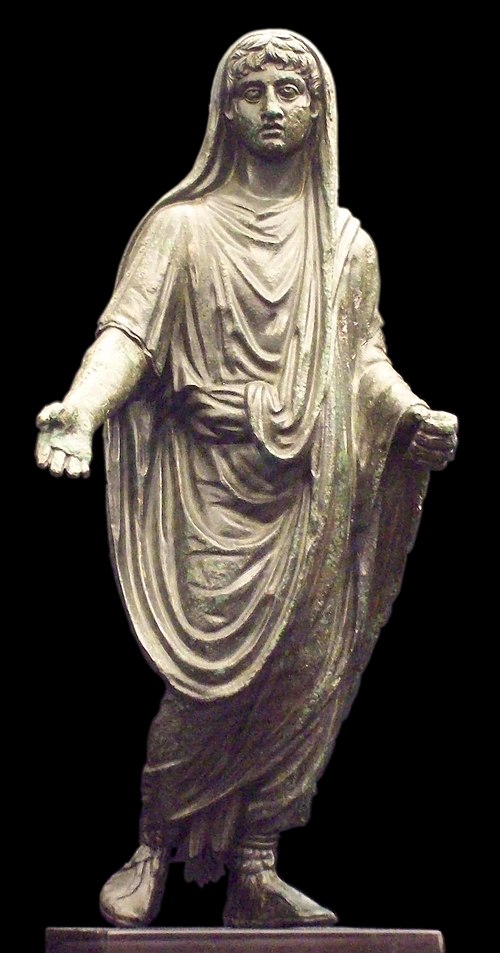
Summary: The Roman paterfamilias held total legal power over his children, including the right to punish, sell, or even kill them. Removal from the home for moral training or exile to the countryside was within his rights.
Absolute Control and Lifelong Subordination: The paterfamilias held absolute control over his legitimate descendants (liberi) and adopted children, which lasted until his death. This power was comprehensive and applied to both male and female children.
Power of Life and Death: Originally, the father even possessed the power of life and death (ius vitae et necis) over family members. However, this “inhumane right” was strictly limited under imperial legislation and ultimately extinguished under Justinian’s laws.
Liability for Wrongdoings: A father could choose to hand over children who had wronged someone to the injured party, instead of personally paying the debt. He was also liable for delicts committed by his son, with the option to pay damages or surrender the offender. This “noxal liability” would transfer to a new father or master if the son was adopted or transferred. If the son became independent (sui iuris), direct action would be brought against the wrongdoer himself.
Works Cited:
- Aristotle. (2003). The Nicomachean Ethics of Aristotle (D. P. Chase, Trans.). Project Gutenberg. https://www.gutenberg.org/8/4/3/8438/
- DeMause, L. (1974). The evolution of childhood. In L. DeMause (Ed.), The history of childhood (pp. 1–74). Psychohistory Press.
- Dingledy, F. W. (2016). The Corpus Juris Civilis: A guide to its history and use. William & Mary Law School Scholarship Repository. https://scholarship.law.wm.edu/libpubs/123
- Domingo, R. (2017). The Family in Ancient Roman Law. SSRN Electronic Journal. https://doi.org/10.2139/ssrn.2955100
- Hittinger, J. (2013). Plato and Aristotle on the Family and the Polis. Saint Anselm College.
- Kennell, N. M. (1995). The gymnasium of virtue: Education & culture in ancient Sparta. University of North Carolina Press.
- Lyman, R. B., Jr. (1974). Barbarism and religion: Late Roman and early medieval childhood. In L. DeMause (Ed.), The history of childhood (pp. 75–100). Psychohistory Press.
- Mark, J. J. (2021, June 15). Agoge, the Spartan education program. World History Encyclopedia. https://www.worldhistory.org/article/342/agoge-the-spartan-education-program/
- Mirković, M. (2015). Patria potestas or murder in the family. Annals FLB – Belgrade Law Review, 63(3), 5-17.
- Plato. (1998). The Republic (B. Jowett, Trans.). Project Gutenberg. https://www.gutenberg.org/ebooks/1497
Detailed Image Credits
- Young Spartans Exercising (NG3860) by Edgar Degas (c. 1860). Held by the National Gallery, London. This work is in the public domain due to its age and the artist’s death date (PDM 1.0). Sourced from Wikimedia Commons.
- “AR Tetradrachm of Kleomenes III, Sparta (235–221 BC).” Triton VIII, Lot 337 (10 January 2005). Image reproduced by permission of Classical Numismatic Group, LLC (CNG). For educational/non-commercial use only. Licensed under Creative Commons Attribution-ShareAlike 4.0 International (CC BY-SA 4.0). Sourced from Wikimedia Commons.
- Fresco of a young man labeled “Plato,” from the House of the Apartment, Pompeii (1st century CE). Held by the Naples National Archaeological Museum. This work is in the public domain (PDM 1.0) due to its age. Source: Wikimedia Commons.
- Detail of Plato and Aristotle from The School of Athens by Raphael (1509-1511). Black and white photograph of Vatican fresco. This photographic reproduction is in the public domain (PDM 1.0) in the United States. Original artwork in the Apostolic Palace, Vatican City. Source: Wikimedia Commons.
- “Genio romano de Ponte Puñide (M.A.N. 1928-60-1)” photographed by Luis García (Zaqarbal). Licensed under Creative Commons Attribution-ShareAlike 3.0 (CC BY-SA 3.0). Held by Museo Arqueológico Nacional, Madrid (Inventory No. 1928-60-1). Source: Wikimedia Commons.
_01.jpg)