Warehouses of Neglect
USCapitol, Public domain, via Wikimedia Commons
How Taxpayers Are Funding Systemic Abuse in Youth Residential Treatment Facilities
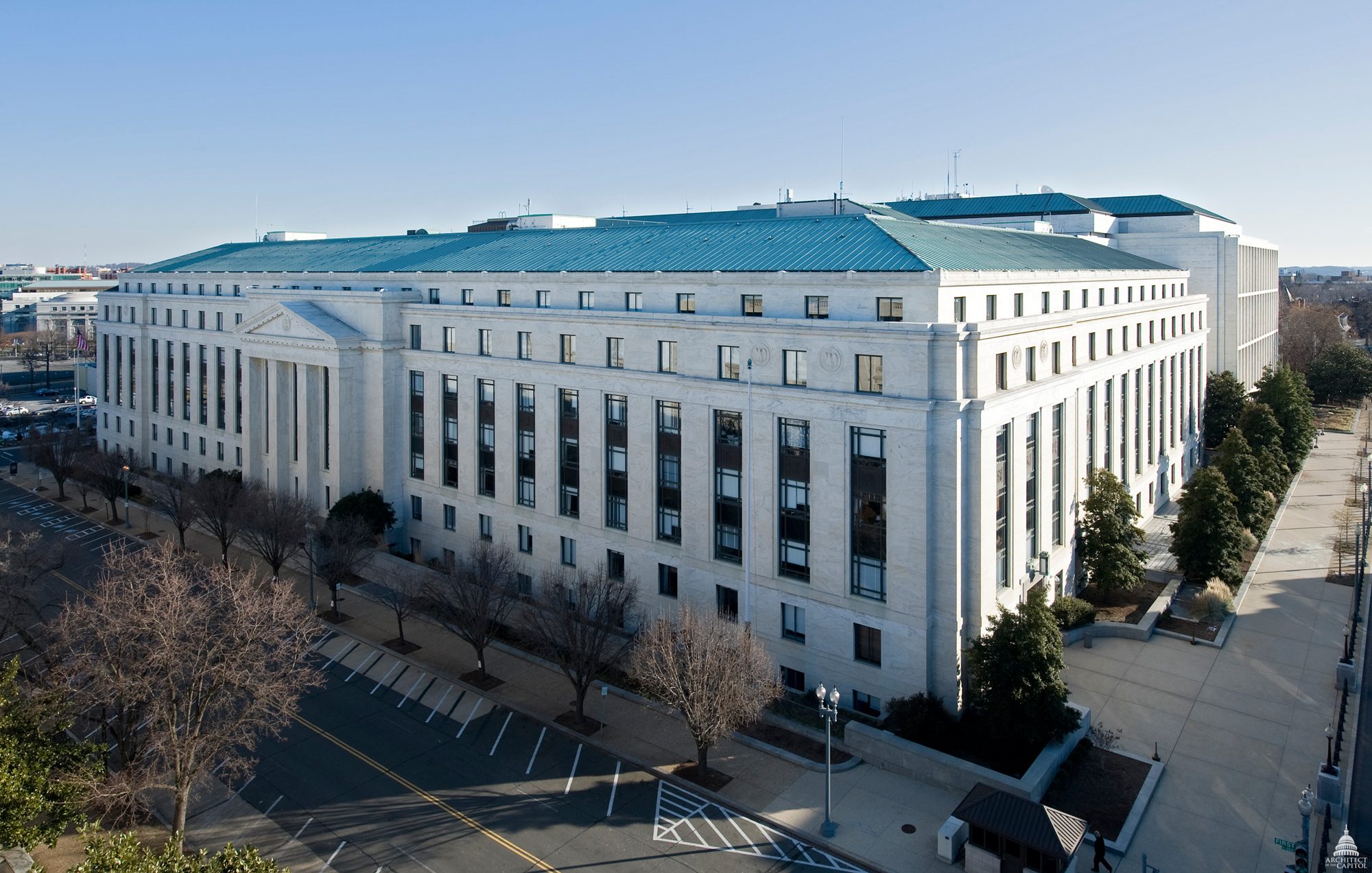
A Senate Committee on Finance Staff Report

Senate investigation into abuse and neglect at Residential Treatment Facilities operated by:
- Universal Health Services
- Acadia Healthcare
- Devereux Advanced Behavioral Health
- Vivant Behavioral Health
Investigation began July 2022
Senate Committee on Finance members: Ron Wyden (D-OR), Mike Crapo (R-ID), Debbie Stabenow (D-MI), Chuck Grassley (R- IA), Maria Cantwell (D- WA), John Cornyn (R- TX), Robert Menendez (D-NJ), John Thune (R-SD), Thomas R. Carper (D-DE), Tim Scott (R-SC), Benjamin L. Cardin (D-MD), Bill Cassidy (R-LA), Sherrod Brown (D-OH), James Lankford (R-OK), Michael F. Bennet (D-CO), Steve Daines (R-MT), Bob Casey (D-PA), Todd Young (R-IN), Mark R. Warner (D-VA), John Barrasso (R-WY), Sheldon Whitehouse (D-RI), Ron Johnson (R-WI), Maggie Hassan (D-NH), Thom Tillis (R-NC), Catherine Cortez Masto (D-NV), Marsha Blackburn (R-TN), Elizabeth Warren (D-MA)
The Senate Committee on Finance has jurisdiction over many placements in Residential Treatment Facilities (RTFs) because they are paid for by Medicaid and Social Security p. 3
Key Findings
- Things won’t get better at RTFs until we pass laws requiring them to get better. We also need to invest more money in mental health care that keeps kids at home.
- Children are routinely abused and neglected in RTFs
- RTFs are designed to prioritize profits over children. This design causes abuse and neglect of children
- RTFs are paid to provide mental health services that children do not receive
- Sexual abuse is common and not handled correctly at RTFs industry-wide
- RTFs restrain and seclude children to punish them
- There are laws about how to do restraint and seclusion more safely but RTFs ignore those laws
- RTF staff are frequently unqualified, undertrained, and incompetent
- Children have died at RTFs because staff couldn’t or wouldn’t do their jobs properly
- RTFs are frequently unsafe and unsanitary environments
- RTFs isolate children from their communities back home. RTFs do not make sure that children have the right care or support after they leave
- RTFs use technology that is typically used in prisons to monitor and control children
- State and federal authorities have not done a good enough job watching RTFs and keeping children safe from abuse
- RTF operators change the names of their businesses and shuffle ownership around to make it harder to track them and hold them accountable for wrongdoing
Kids are sent to RTFs because they have needs that won’t be accommodated in the outside world. We should all be working harder to make the outside world better for kids with behavioral needs, developmental disabilities, and mental illnesses p. 12
The federal government pays RTFs huge sums of money that should be going toward hiring qualified staff. The people who run RTFs routinely understaff their facilities and keep the extra money as profit p. 15
In 2016 and 2017, Buzzfeed News published a series of exposes about abuse, neglect, and fraud at UHS facilities p. 15
In 2020 The Philadelphia Inquirer published a story about sexual abuse of children with intellectual and developmental disabilities (I/DD) at Devereux facilities. After the story was published, the city of Philadelphia stopped doing business with Devereux pp. 15-16
When RTFs receive citations from oversight agencies, it is too easy for them to submit documentation claiming to have fixed the problem. Agencies don’t follow up to make sure that the problem is really fixed, including for serious problems like child abuse p. 17
UHS had to pay $122 million in settlement money in 2020 because they billed and received payment for services they didn’t provide. They also billed for services that may have been provided but were medically unnecessary. p. 19
“In some cases, though, child welfare agencies place children in state custody without diagnoses in RTFs because they have nowhere else to place them. In 2013, according to the Administration for Children and Families, 28.8 percent of children in congregate care had ‘No Clinical Indicators.‘” p. 21 [emphasis added] No clinical indicators means that they do not have mental illnesses or disabilities.
“[Devereux] treats children with I/DD across the 12 specialized programs it operates in Florida, Georgia, Massachusetts, and New York” p. 22
“Acadia operates 10 RTFs that treat behavioral health needs” p. 22
“Vivant provides behavioral health services to children ages 12 – 20 in four facilities in Arizona, Iowa, and South Dakota” p. 23
When this investigation began in 2022, Vivant was operating 13 RTFs. Since then, they have sold or closed 9 of them p. 23
“Vivant detailed that half of its facilities rely on public dollars for more than 75 percent of their revenue; Devereux leadership told the Committee that 95 percent of its RTF revenue came from Medicaid dollars.” p. 23 [emphasis added]
Some RTF providers prefer to enroll kids who have Medicaid coverage because it is more reliable and Medicaid tends to approve longer treatment periods than private insurers p. 23
1999 Surgeon General report – Evidence supporting RTFs are mostly outdated studies from the 1970s and 1980s, separation from family could be traumatic, children are at risk of victimization by staff, kids learn antisocial behavior from other kids at RTFs, kids have difficulty transitioning back into their communities. “When sustained improvements were identified, they depended in large part on the strength of community-based care post-discharge.” p. 24
One large longitudinal study across 6 states showed that 75% of kids ended up back in RTFs or carceral facilities within 7 years p. 24
2005 CMS showed that kids receiving home and/or community-based care had improved mental health outcomes (or at least didn’t get worse) while saving an average of 68% (compared to psychiatric RTFs) pp. 24-25
“The longer an RTF stay, the longer a child is at-risk of exposure to harms, including the use of restraints and seclusion, physical and sexual abuse, insufficient education, and substandard living conditions. This risk is heightened for children of color, LGBTQIA+ youth, and children with I/DD who are most likely to live in these settings. Any trauma experienced by children in RTFs, in addition to any life experiences a child had prior to entering a facility, will continue to impact them in adulthood.” p. 25 [emphasis added]
Vivant was founded in 2021 by John “Jay” Ripley. He had previously co-founded Sequel Youth and Family Services in 1999 and Youth Services International before that. Ripley sold majority stake in Sequel to Altamont Capital in 2017
Ripley has established, sold, and reacquired many RTFs, making it difficult to keep track of him or hold him accountable p. 26
“Public reporting has alleged that this move to private ownership has allowed providers to escape liability for serious allegations, including the death of a Sequel patient in 2020” p. 26
Jay Ripley in 2015: “You can make money in this business if you control staffing” p. 27
“UHS, headquartered in King of Prussia, Pennsylvania, is a publicly listed holding company of for-profit hospitals and behavioral health care facilities.” p. 28
“Acadia, headquartered in Franklin, Tennessee, is a publicly-traded chain of for-profit psychiatric and behavioral healthcare facilities.” p 29
Acadia was the only company under investigation that expressed intentions to continue expanding their RTF businesses, particularly by investing in surveillance technology p. 30
“Devereux, headquartered in Villanova, Pennsylvania, is a non-profit company with a network of behavioral healthcare facilities. Devereux has a supporting not-for-profit organization, called The Helena Devereux Foundation, that holds and invests assets on its behalf” p 30
Kids at RTFs are abused by staff and other kids (emotional, verbal, physical, and sexual) p. 32
Taking kids away from home and putting them in remote locations without their families makes them especially vulnerable to sexual abuse p. 32
RTFs attract predatory staff p. 32
TRIGGER WARNING pp. 33-44: graphic descriptions of child sexual abuse
Philadelphia Inquirer investigation in 2020 – more than 40 victims of sexual assault in 25 years at Devereux p. 34
UHS staff have repeatedly sexually abused kids after the kids leave facilities p. 36
It can be difficult for kids to differentiate between grooming behaviors and behavioral incentive programs, putting children at increased risk when the program includes rewards for good behavior p. 37
“As Devereux leadership stated to the Committee, adults who want to abuse children will find a way to work in the child service industry. The Committee’s review concludes that incidents of sexual abuse are endemic to RTFs” pp. 37-38 [emphasis added]
Cedar Ridge Treatment Center reassigned a sexually abusive staff member to another wing instead of firing and reporting him p. 38
Acadia does not have any specific company policy on strip searches, even though they are conducted by staff p. 39
TRIGGER WARNING: descriptions of physical child abuse pp. 44-55
Improper restraint is physical assault p. 44
Restraint is often documented incorrectly and/or not submitted to proper channels p. 44
St John’s Youth Academy (Sequel/Vivant FL) had its contract with the Florida Department of Juvenile Justice (DJJ) terminated in response to a riot that was caused by physical abuse in 2022 pp. 48-49
DJJ subsequently terminated its contract with Vivant p. 49
“When the Committee discussed physical restraint with UHS leadership, they responded that, even when properly trained, staff may respond inappropriately because of human instinct” p. 50
LGBTQIA+ kids are especially vulnerable to peer violence and bullying at RTFs p. 53
“Even when employed properly, restraint and seclusion can harm children, including trauma and physical injury. When restraint and seclusion are used improperly, risk increases exponentially – children may be deeply traumatized, seriously injured, or even die” p. 55 [emphasis added]
Restraints and seclusion on children should never be used: for discipline, for staff convenience, for long periods of time, without an order from a qualified clinician, without reporting it to authorities, without debriefing afterwards, in any way that results in injury to a child, or as anything other than a last resort to keep the child safe. Chemical restraints can cause additional harms because kids can develop a dependence on them pp. 55-56
UHS, Acadia, Vivant, and Devereux all use chemical and physical restraints p. 56
Vivant does not use seclusion p. 56
Per regulation, chemical restraints and seclusion cannot be used at the same time, but it happens anyway. UHS leadership didn’t even know it was illegal, and even said that it is sometimes necessary p. 56-57
TRIGGER WARNING: descriptions of physical harm and death from improper restraints pp. 58-65
“A chemical restraint refers to any time a child is administered a medication outside of their treatment plan as an intervention intended to restrict their normal movement. Chemical restraint is the most restrictive type of restraint and is intended only as an emergency safety intervention, when all other de-escalation methods have failed” p. 68 (emphasis added)
Kids in RTCs are often prescribed 5 or more medications at once, also known as “polypharmacy”. This is potentially dangerous for developing kids p. 68
Trigger warning: details about use of chemical restraints pp. 68-74
It concerned the investigators that rewards systems in many programs involved withholding things that are good for kids therapeutically, such as music and coloring books, until the kids could earn them p. 77
The majority of facilities are in states of disrepair and are unsanitary, including mold, trash, glass shards, food debris, bedbugs, and rotting boards p. 79-82
Medication is stored, handled, and dispensed in unsanitary and unsafe ways at RTFs p. 83
Infectious diseases spread at RTFs uncontrolled p. 84
It is more difficult to make sure children are not being abused when they are placed out-of-state for care pp. 87-88
Treatment plans at RTFs lack clear treatment goals and progress is logged inconsistently p. 88
Some kids receive treatment plans that were created prior to admission. Some kids never receive treatment plans at all p. 89
Some RTFs copy and re-use treatment plans for multiple patients p. 90
RTFs do not consider the individual nutritional needs of kids in their care p. 92
Parents and families are not involved in treatment planning to the extent that they should be pp. 93-94
RTFs do not take self-harm or suicide risk seriously, do not document it or update treatment plans to reflect it
RTFs have longer average length of stays than is therapeutically appropriate (should be short term, often ends up being years)
RTFs frequently fail to run proper background checks on staff pp. 107-108
TRIGGER WARNING: description of child sexual abuse pp. 109-110
Devereux has invested a lot of money in prison technology to monitor kids. It has also lowered its staff ratio from 1:15 to 1:10. Increased monitoring decreased incidents of kids running away, but increased the prison-like quality of the environment
TRIGGER WARNING: descriptions of self-harm and death by suicide pp. 104-125
RTFs fail to give kids adequate education for their level of development p. 126
During the 1980s, states invested in RTFs instead of community services p. 126
Kids at RTFs are frequently shown movies or given easy worksheets to complete instead of receiving appropriate education. Teachers are often unqualified and undereducated p. 126
Conclusion:
“The conditions and state of affairs outlined in this report did not arise by accident. The harms, abuses, and indignities children in RTFs have experienced and continue to experience today occur inevitably and by design: they are the direct causal result of a business model that has incentive to treat children as payouts and provide less than adequate safety and behavioral health treatment in order to maximize operating and profit margin. Facilities, often filled to capacity with dozens of children with mental health conditions, offer minimal behavioral health care by operating an intentionally lean staffing model with few and inadequately trained clinicians. The harmful and deadly conditions in these facilities are not isolated incidents– they are the result of business decisions by the owners. Despite the egregious failures outlined in this report, these companies are not failing– they are succeeding wildly in securing federal dollars by warehousing children and providing them with inadequate services to meet their needs. Providers will continue to operate this model because it’s good business, unless there is some bold intervention” p. 127 (emphasis added)
Specific programs mentioned:
Acadia Montana Treatment Facility (Acadia MT) p. 31
Alabama Clinical Schools (UHS AL) pp. 90, 108-109
Alliance Health Center (The Crossings) (UHS MS) p. 78
Behavioral Health Treatment Center (Acadia TN) p. 98
Belmont Pines (UHS OH) pp. 53, 106, 117
Brentwood Behavioral Healthcare (UHS Mississippi) p. 76
Brighter Path Tuskegee (Sequel/Vivant, AL) pp. 120-121
Brighter Transition Youth Treatment Center (Sequel/Vivant SD) p. 103
Brynn Marr Hospital (UHS NC) pp. 60, 62, 65, 77, 83, 87, 91, 99-101, 108, 113
Casa Grande Academy (Seq/Viv AZ) pp. 90, 99, 102
Cathy House Group Home (Devereux MA) p. 22
Cedar Ridge Behavioral Hospital (UHS SC) pp. 4, 18, 61-63, 65, 71, 91, 105, 117
Cedar Ridge Treatment Center (UHS OK) pp. 38, 43, 49, 60, 61, 63-64, 76, 91, 114
Cedar Springs Hospital (UHS CO) pp. 91, 93
Compass Intervention Center (UHS TN) pp. 90-93, 109
Copper Hills Youth Treatment Center (UHS UT) pp. 33, 36, 50, 52, 60-61, 67-68, 74, 87, 91-93, 101, 107-108, 114, 119
Cove PREP (Acadia PA) p. 22
Cumberland Children’s Hospital (UHS VA) p. 36
Cumberland Hospital (UHS VA) pp. 44-46, 95, 97
Desert Hills Hospital (Acadia NM) pp. 31, 62, 70-71, 84-85
Devereux Advanced Behavioral Health (GA) pp. 35, 40
Devereux Advanced Behavioral Health – Viera Campus (FL) pp. 47-48, 102
Devereux Brandywine (PA) pp. 34, 41, 47, 75, 114
Devereux Brumer Villa (PA) p. 102
Devereux Foundation (NY) pp. 114-115
Devereux Mapleton (PA) p. 34
Devereux Titusville (FL) pp. 35, 39
Devereux–Red Hook (NY) pp. 5, 102, 110
Devereux–Rutland (MA) pp. 107, 115
Devon House Group Home (Devereux MA) p. 22
First Hospital Panamericano (UHS PR) pp. 95-96, 122
Foundations Behavioral Health (UHS PA) pp. 84, 87, 92-93, 96-97, 103, 121, 126
Foundations for Living (UHS OH) pp. 60, 64-65, 77, 81, 90, 108-109
Harbor Point Behavioral Health Center (UHS VA) pp. 50, 52-54, 75, 82, 94, 96, 115
Havenwyck Hospital (UHS MI) p. 102
Heartland Behavioral Health Services (UHS MO) pp. 81, 96
Hermitage Hall (UHS TN) p. 23
Hill Crest Behavioral Health Services (UHS AL) pp. 65-66, 88, 94, 100, 106-107, 119-120, 124
Lakeside Academy (Sequel MI) p. 10
Laurel Heights Hospital (UHS GA) pp. 58, 113-114
Laurel Oaks Behavioral Health Center (UHS AL) p. 42
Lighthouse Care Center of Augusta (UHS GA) p. 33
Little Creek Behavioral Health (Acadia AR) pp. 22, 103
McDowell Center for Children (UHS TN) pp. 36, 108, 122
Millcreek Behavioral Health (Acadia AR) pp. 11, 16, 39, 41, 46, 54, 59, 63, 78, 80-82, 89, 95, 97, 101, 107-108, 115, 117, 119, 122-123
Millcreek of Pontotoc (Acadia MS) pp. 91-93, 107
Mingus Mountain Youth Treatment Center (Sequel/Vivant AZ) pp. 103, 121
Natchez Trace Youth Academy (UHS TN) p. 116
Newport News Behavioral Health Center (UHS VA) pp. 23, 111, 116
North Spring Behavioral Healthcare (UHS VA) p. 46, 59
North Star Behavioral Health System (UHS AK) pp. 23, 66-67, 106, 116, 119
North Star Debarr (UHS AK) pp. 54, 84, 88, 90, 94-95, 99-101, 115, 119, 126
North Star Palmer Residential Treatment Center (UHS AK) pp. 64, 84, 86, 93
North Star Psychiatric Hospital (UHS AK) pp. 98-99, 117
Oak Plains Academy (UHS TN) p. 112
Palmetto Pines Behavioral Health (UHS SC) pp. 54, 60, 62, 69, 74-75, 114, 118, 122-125
Palmetto Summerville Behavioral Health (UHS SC) pp. 43, 50-52, 65, 82, 95-96, 98, 104, 118, 122-125
Pavilion Behavioral Health System (UHS TX) pp. 20, 64-65, 95, 119
Piney Ridge Treatment Center (Acadia AR) pp. 4, 12, 37, 50, 56-57, 60-61, 66, 68-71, 73, 75-77, 81, 86, 92-95, 100, 103, 105, 109, 117-118
Provo Canyon School (UHS UT) pp. 33, 46, 51, 61, 70-75, 77, 98, 105, 124-125
Resource Indiana (Acadia IN) pp. 90-91
Resource Treatment Center (Acadia IN) pp. 70-71, 103-105, 108-109
River Park Hospital (UHS WV) pp. 54, 64, 69, 72-73, 83-84, 92
RTC Resource ACQ Corp (UHS IN) pp. 66, 92
San Marcos Treatment Center (UHS TX) p. 92
SandyPines (UHS FL) pp. 67-68, 82, 87, 101, 105-106
St. John’s Youth Academy (Sequel/Vivant FL) p. 48
Suncoast Behavioral Health Center (UHS FL) pp. 91, 121-122
The Hughes Center (UHS VA) p. 103
The Pines Residential Treatment Center (UHS VA) pp. 85
Village Behavioral Health (Acadia TN) pp. 82, 86, 101, 121
Willow Springs Center (UHS NV) pp. 85, 88, 90-91, 113, 121
Woodward Academy (Vivant, IA) pp. 78, 103
Wyoming Behavioral Institute (UHS WY) p. 43
YouthCare (Acadia UT) p. 22