Survivors and Families Fight Back
Fifty years of survivors and their families testifying, suing, organizing, and publishing, from the Rebekah Home hearings in 1973 to Breaking Code Silence.
Contents
1950 to 1979 #
- 1973 – Residents of Rebekah Home testify in court about brutal physical and psychological abuse.
- When parents visiting their daughter at Rebekah Home witnessed a girl being brutally abused and reported it to authorities, 16 residents testified in a court hearing to having been “whipped with leather straps, beaten with paddles, handcuffed to drainpipes, and locked in isolation cells”.
- They testified that girls who tried to run away were “confined to the lockup, a dorm room devoid of furniture or natural light where girls spent days, or weeks, alone”.
- Winter 1977–1978 – Chief Juvenile Court Judge John P. Collins of Tucson, Arizona, holds hearings to “air charges of brutality, brainwashing, and unfair imprisonment by former Rebekah residents”.
- In the following years, more girls came forward with information about their experiences, which Dr. Janet Parker summarized in her whistleblower report.
- These residents described isolation, monitored communications, censorship of mail, denial of outside information, and various “twisted punishment techniques” including “corporal punishment, lock-up, being forced to hold stress positions for hours”.
1980s and 1990s #
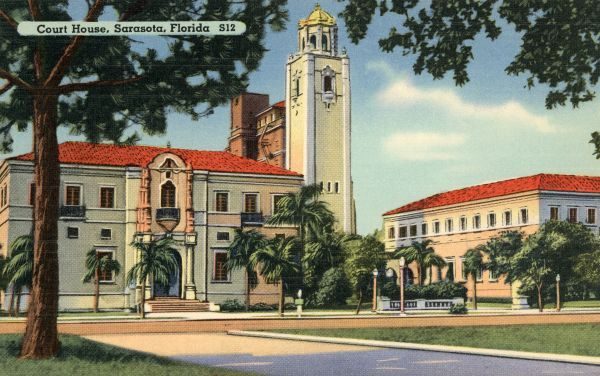
- October 1982 – Margaret Heath escapes Straight, Inc. and reports alleged torture, abuse, neglect, and kidnapping to law enforcement officials.
- This action initiated the Sarasota State Attorney’s investigation that ultimately led to the closure of Straight, Inc.-Sarasota. Heath was subsequently court-ordered OUT of the program, marking a significant legal victory for a former client.
- January 19 1983 – Following an incident where she was allegedly held against her will and threatened by Miller Newton, Hope Hyrons files a lawsuit against Straight, Inc. and Miller Newton.
- May 1983 – Fred Collins sues Straight, Inc. for false imprisonment and is awarded $220,000 in damages.
- August 1983 – Straight, Inc. and Miller Newton settle separate lawsuits with Arletha Schauteet and Hope Hyrons, who had alleged false imprisonment and other abuses.
- August 7 1983 – Benson Williams sues Straight, Inc.-Sarasota for alleged beatings and torture.
- August 4 1983 – Margaret L. sues Straight, Inc.-Sarasota for extreme physical abuse and neglect.
- October 1983 – Jacqueline A. Stallings sues Straight, Inc.-St. Petersburg for physical assaults and false imprisonment.
- She eventually won her case, with Straight, Inc. being found to have committed a “malicious act” against her.
- September 1983 – In response to widespread allegations, including those from former clients, the Florida State Attorney’s office for Sarasota County releases a damning 600-page criminal investigation report on Straight, Inc.-Sarasota, featuring statements from current and former counselors
- May 8 1988 – A 15-year-old boy, “SDL,” escapes Bethel Baptist Home for Children (BBHC) and reports abuse to the George County Sheriff’s office.
- In a youth court petition, he stated he fled because he was “tired of being locked up, slapped, and getting licks all the time”.
- June 1 1988 – In court, other boys and girls verified SDL’s story and detailed their experiences at BBHC, including forced labor, strict rationing of necessities like toilet paper, the “crew” named after a racial slur for undesirable tasks, and harsh punishments like whippings, stress positions, and confinement in the “black room”. They also described being called abusive names and homophobic slurs.
- January 3 1989 – A 13-year-old former resident testified in U.S. District Court in Gulfport that employees would whip children who refused to work for Herman Fountain’s construction company, and that school was often interrupted for forced labor.
- 1989 – A lawsuit is filed against Virginia for sexual abuse of a 13-year-old by an “oldcomer” in a Straight host home. This legal action led to Commissioner Davis closing this location for its record of child abuse.
- 1990 – Karen Norton is awarded a $720,000 settlement in a civil suit against Straight, Inc. and Miller Newton, after she was thrown against a wall.
- August 29 1991 – A Straight counselor, Arthur Nichol, is sentenced to 7 years in prison for the sexual abuse of two male teenagers, one of whom was a Straight client.
- This criminal prosecution was a direct outcome of complaints from victims.
- 1992 – Richard Bradbury, a Straight Inc. survivor, appears on Eye on Tampa (local talk show) and presents photographic evidence of severe bruises on children, accompanied by 50 survivors with supporting testimonies.
- President George H.W. Bush rescinded support for Straight Inc.
- That year, Straight Inc.’s Orlando and Columbia campuses closed.
- March 3 1993 – Jeff Messer, a 1989 survivor of Straight, Inc., writes a formal letter of complaint to the Florida Department of Health and Rehabilitative Services (HRS) detailing program demands.
- April 1993 – Richard Bradbury initiates a Florida state investigation by complaining to the governor’s office about alleged abuses, providing names of other former clients.
- This played a direct role in Straight, Inc.’s St. Petersburg center closing.
- By the end of the year, all remaining Straight facilities closed.
- 1998 – David Van Blarigan petitions the California Superior Court for his release from Tranquility Bay, challenging his detention and his parents’ authority.
- 1998 – A survivor of Miller Newton’s KIDS program sues Newton, KIDS of North Jersey, and their psychiatrists for abuse, and is awarded $4.5 million
2000 to today #
- 2001 – Joseph G. Paolillo and his father file a $5 million federal lawsuit against Bethel Boys Academy (BBA) staff, including DI Knott.
- Joseph was tortured at BBA in 1998.
- The lawsuit described vicious beatings, denial of medical treatment for a broken bone, forced interrogation, among other forms of humiliating, degrading, and painful treatment.
- 2001 – Fornits.com is established, a wiki and forum for TTI survivors.
- 2002 – HEAL (Human Earth Animal Liberation) is founded by Angela Smith, compiling a public list of abusive facilities and survivor testimonials.
- 2002 – Gini Farmer initiates a 6-month battle to bring her 12-year-old cousin back from Tranquility Bay after learning he was handcuffed and taken there.
- Three former students of Tranquility Bay testified in court about their experiences, leading to a Virginia Circuit Court Judge ordering his immediate release.
- 2002 – A sixteen-year-old boy reports abuse at BBA to law enforcement officials, prompting state welfare investigators to question six staff members and children
- December 9 2002 – The International Survivors Action Committee (ISAC Corporation) prepares “The Sembler Report,” detailing the connections of Melvin and Betty Sembler to Straight, Inc., and a timeline of alleged abuses.
- Findings were forwarded to government, law enforcement, and international press, establishing ISAC Corporation as a key advocacy group.
- February 2003 – Samuel Bardin files a lawsuit against WWASP, alleging kidnapping and “sadistic and unwarranted physical and psychological abuse” at Tranquility Bay.
- March 26, 2003 – ISAC revises and prepares the “Preliminary Investigative Report Into Pathway Family Center.”
- This report concludes that Pathway Family Center is “simply Straight, Inc. renamed” and uses “Straight Inc.’s treatment model”.
- April 8, 2003 – ISAC Corporation publishes the “Official Inquiry into the Release of Public Documents by the Florida Department of Children and Families Concerning Investigations of Abuse and Ambassador Mel Sembler.”
- In this document, ISAC formally requested a full explanation and supporting documentation for inconsistencies found in public documents and asked for all public documents regarding SAFE, Growing Together, and Straight, Inc. from 1975 to the present.
- Retaliation – June 2003: ISAC Corporation’s Director of Investigations experienced a break-in at their home, where only two compact discs labeled “WWASP Information” were stolen, leaving cash, jewelry, and other electronics untouched.
- Summer 2003 – ISAC Corporation had to replace their locked postal mailbox three times due to attempted break-ins.
- June 6 2003 – ISAC Corporation sends a detailed complaint regarding all WWASP facilities to John Ashcroft, the U.S. Attorney General, alleging physical and emotional abuse, human rights violations, and governmental “apathy”.
- June 8 2003 – The mother of a former Tranquility Bay student sends a complaint to Colin Powell, the U.S. Secretary of State, detailing alleged abuse and perceived governmental inaction.
- June 30 2003 – A former student of Tranquility Bay sends a letter to Ian Brownlee of the U.S. Department of State, describing his traumatic experience and urging an investigation to help his friends still in the facility.
- November 12 2003 – Following an attempted escape by 14 children from Tranquility Bay, ISAC Corporation issues a press release and engages in a recorded conversation with Ian Brownly of the U.S. State Department.
- ISAC publicly demanded the immediate release of the children and that all children in overseas programs be informed of their rights.
- February 3, 2004 – The “WWASP Alleged Crimes Report” is prepared by ISAC Corporation.
- April 2004 – Jayme Bahrenberg, a resident of Bethel Academy for Girls (BAG), is removed by her mother after an unnamed woman associated with the program “tipped off” her mother about “specific abuses”. Jayme then condemns the program to a reporter, hoping it would close.
- May 2004 – After 38 girls are removed from BAG, reports based on interviews with them detail forced exercise (sometimes in unsanitary conditions) and extreme physical, psychological, and spiritual abuse.
- One girl described being forced to sit alone for eight days listening to sermons.
- 2005 – Jesus Land: A Memoir by Julia Scheeres is published.
- The memoir recounts her experience at Escuela Caribe, a Christian reform school in the Dominican Republic, and becomes one of the earliest widely read survivor narratives.
- 2005 – Ruben Villa, a former resident of BBA involved in a federal lawsuit, describes to a reporter the conditions he survived, including unsanitary living conditions and being forced into long hours of physical labor.
- 2007 – The U.S. Government Accountability Office (GAO) releases Residential Treatment Programs: Concerns Regarding Abuse and Death in Certain Programs for Troubled Youth.
- October 10, 2007 – Congress holds the first of two hearings on abusive teen programs.
- Survivors Jon Martin Crawford (Family Foundation School) and Kathryn Whitehead (Mission Mountain School) testify about their experiences.
- Lawmakers cite a need for federal oversight.
- 2008 – GAO releases two reports: Residential Programs: Selected Cases of Death, Abuse and Deceptive Marketing and Residential Facilities: State and Federal Oversight Gaps May Increase Risk to Youth Well-Being.
- 2008 – A second congressional hearing is held on April 24.
- Grieving parents testified about the deaths of their children in residential programs.
- June 2008 – H.R. 5876 – Stop Child Abuse in Residential Programs for Teens Act is introduced by Rep. George Miller (D) CA and 18 cosponsors.
- Despite bipartisan concern, legislation failed to pass.
- 2008 – CAFETY (Community Alliance for the Ethical Treatment of Youth), a survivor-led advocacy group, is incorporated.
- Founders include Charles King and Kathryn Whitehead.
- 2009 – GAO publishes Seclusions and Restraints: Selected Cases of Death and Abuse at Public and Private Schools and Treatment Centers.
- 2009 – Straight Inc. survivor Christine Flannery launches survivingstraightinc.com as a public archive documenting the abuses of Straight, Inc. and its spin-offs.
- 2011 – My Imagination and Art Have Sustained Me: a memoir is published by Elan School survivor, Mary O’Brien.
- 2011 – SIA Organization (Survivors of Institutional Abuse) is founded.
- SIA organized conventions, protests, and other events for survivor advocacy.
- 2012 – WWASPSurvivors.com was launched for survivor support and advocacy.
- 2014 – Trapped in Paradise: A Memoir by Cindy Art is published.
- The book recounts the author’s experience at Tranquility Bay in Jamaica, a WWASP facility, and is one of the earliest publicly available survivor memoirs about the troubled teen industry.
- 2014 – Institutionalized Persuasion: The Technology of Reformation in Straight Incorporated and the Residential Teen Treatment Industry is published by survivor, historian, and author Marcus Chatfield.
- 2014 – Kidnapped for Christ, a documentary about Escuela Caribe premiered.
- Director Kate Logan began filming with the expectation that the program would help teens, but quickly uncovered conversion therapy and other deeply abusive practices.
- Includes interviews with Escuela Caribe survivor and author, Julia Scheere.
- 2015 – Dead, Insane, or in Jail: A CEDU Memoir is published by survivor, Zack Bonnie.
- 2017 – The Last Stop, a documentary by survivor Todd Nilssen about the Elan School, premieres.
- 2017 – Dead Inside: A True Story is published by Straight Inc. survivor, Cyndy Etler.
- 2019 – Survivors begin using #BreakingCodeSilence to share their stories across social media, catalyzing the modern digital movement.
- August 2020 – Paris Hilton releases This Is Paris, naming Provo Canyon School and detailing the abuse she experienced there.
- Includes interviews with Provo Canyon School survivors Katherine McNamara, Elizabeth Martin, Raina Lincicum, and Jessica Pike.
- September 2020 – Survivors, including Paris Hilton, organize the first large protest at Provo Canyon School. Breaking Code Silence becomes a coordinated campaign.
- February 2021 – Paris Hilton testifies before the Utah Senate in favor of SB127, calling for more oversight of teen programs.
- March 2021 – Utah passes SB127 into law, requiring improved documentation and restrictions on punishment practices.
- April 2021 – Surviving Straight Inc. podcast launches, created and hosted by Christine Flannery.
- 2021 – We Warned Them Campaign is launched by survivors, including musician, activist, and Turn-About Ranch survivor, Danielle Bregoli.
- 2022 – Trapped in Treatment, a podcast by Paris Hilton and Rebecca Mellinger, launches on iHeartMedia.
- 2022 – Breaking Code Silence and other survivor groups pushed for bills in Montana, Missouri, and Oregon.
- 2022 – Stolen: A Memoir by Carlrook survivor Elizabeth Gilpin is published.
- 2023 – The Program: Cons, Cults and Kidnapping premieres on Netflix. Directed by survivor Katherine Kubler, it investigates Ivy Ridge and the broader TTI.
- Includes interviews with Academy at Ivy Ridge survivors Katherine Kubler, Alexa Brand, Allison Chee, Dominick Bolella, and Diana Nowak.
- 2023 – Joe vs. Elan School, a webcomic by survivor Joe Nobody, launches online, chronicling the tactics and culture of Elan.
- [Author’s note: Joe vs. Elan School was hugely important to the founders of Kids Over Profits. Your story gave us strength and courage. Thank you, Joe.]
- December 2023 – Hell Camp: Teen Nightmare premieres, a documentary about Steve Cartisano’s wilderness programs.
- Features first hand survivor accounts from Challenger Camp survivors (Nadine Louise Guerrara, Kinney Drellich Edlinger, Matthew Callahan), Healthcare America Survivors (Ashley Baldwin, Adam Weinberg), and Pacific Coast Academy survivors (Kurt and Amber Michelle).
- April 2024 – Becoming Unsilenced: Surviving and Fighting the Troubled Teen Industry by Meg Applegate is published by Forefront Books.
- The memoir details her experiences at Intermountain Children’s Hospital and Chrysalis School, as well as her ongoing advocacy as the founder of Unsilenced.
- July 2024 – Teen Torture, Inc., a Max Original documentary series directed by Tara Malone, premieres.
- It examines the troubled teen industry through survivor testimony and investigates the institutional systems that protect abusive programs.
- Includes interviews with Provo Canyon School survivor Jen Robison, The Seed survivor Evan Wright, Turn-About Ranch survivor Danielle Bregoli, and Bethel Boys Academy survivor Allen Knoll.
- August 2024 – Liz Ianelli publishes I See You, Survivor: Life Inside (and Outside) the Totally F*cked-Up Troubled Teen Industry, a memoir of her 993 days at the Family Foundation School and her journey of survival and activism.
- 2024 – Survivors Unrestrained, a peer-led survivor wellness project, is founded by Tranquility Bay survivor Tabatha Petry.
- Survivors Unrestrained organizes regional in-person meetups and weekly video call sessions for peer support.
Sources #
- Brown, A. G. (2022). Fountain of Youth: Surviving Institutional Child Abuse in the Troubled Teen Industry (Doctoral dissertation, Arizona State University).
- International Survivors Action Committee. (2003, August 24). Alberta Adolescent Recovery Centre preliminary report.
- International Survivors Action Committee. (2003). Addendum to SAFE report prepared by ISAC.
- International Survivors Action Committee. (2003). The crimes report.
- International Survivors Action Committee. (2003, November 12). ISAC press release: November 12th, 2003.
- International Survivors Action Committee. (2003, March 26). Preliminary investigative report into Pathway Family Center (Revised).
- International Survivors Action Committee. (2003, April 8). Official inquiry into the release of public documents by the Florida Department of Children and Families concerning investigations of abuse and Ambassador Mel Sembler.
- International Survivors Action Committee. (2002). The Sembler report.
- International Survivors Action Committee. (2003, August 25). Tranquility Bay report (Revised).
- International Survivors Action Committee. (2004, February 3). WWASP alleged crimes report.
- Smith, A. M. (2023, February 4). HEAL Mission. Archived from heal-online.org on Wayback Machine: heal-online.org (archived 2023)
- Szalavitz, M. (2006). Help at any cost: How the troubled-teen industry cons parents and hurts kids. Riverhead Books.