
Hyde School

Professional Affiliations:
New England Association of Schools and Colleges
Small Boarding School Association
National Association of Independent Schools
Association of Independent Schools in New England
Additional former location: 150 Rte 169, Woodstock, CT 06281 (1996-2007)
616 High St. Bath, ME 04530
Founder: Joseph “Joe” Gauld
Current President
& Head of School: Laura D. Gauld
Executive Team
Bob Felt
Engagement
Laurie Hurd
Director of Community Engagement
Malcolm Gauld
Executive Director of Hyde Institute
Rich Truluck
Associate Head of School
Sarah Clifford
Chief Financial Officer
Tom Bragg
Dean of Students
Will Bridgeo
Director of Development
Partner schools:
Central Florida Leadership Academy
Orlando, FL
Hyde Leadership Charter School
Brooklyn, NY
Introduction
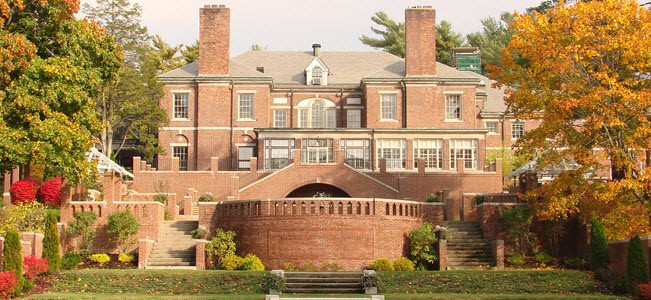
Hyde School was founded in Bath, Maine, in 1966 by Joseph Gauld. After stints in teaching and administration at Berwick Academy and New Hampton prep school, Gauld decided he could build a better school: one that reflected his personal philosophy rather than traditional academic norms. From the outset, Hyde School was a project marked by Gauld’s personal beliefs and ego. He envisioned a school rooted what he called “character development”, which he believed was more important than academic knowledge.
Though he did not originally intend to work with troubled youth, Gauld accepted them out of necessity, recognizing he could not compete with elite boarding schools for traditional students. Gauld promoted the idea that each student has a “unique potential” tied to their destiny, but this rhetoric masked a rigid system that prioritizes emotional submission over authentic growth.
Philosophy
Hyde School expresses its philosophy in its “Five Words” and “Five Principles”:
- Five Words: Courage, Integrity, Leadership, Curiosity, and Concern.
- Five Principles (adopted in 1988):
- Destiny is used to push the belief that students are meant to suffer in order to discover their “true selves,” enabling Hyde to reframe abuse as fate or purpose.
- Humility discourages students from challenging authority, masking submission as virtue.
- Conscience is redefined to mean aligning with Hyde’s values, rather than one’s own moral compass.
- Truth is not subjective or personal, but dictated by the school. Any resistance is considered dishonesty or denial.
- Brother’s Keeper enforces a regime of peer surveillance, where turning in friends for punishment is reframed as an act of care.
Hyde’s so-called “Action/Reflection Cycle” is a mechanism of further control. Students are required to act out the behaviors staff demand, then write and speak about how those behaviors prove they are growing.
- Action Components: Academics (sometimes withheld as punishment), mandatory athletics (used to enforce physical discipline and competition), performing arts (students are required to sing or dance alone in front of the school as a test of humility), community action (unpaid labor framed as service), daily campus jobs (labor enforced as character-building), and wilderness programs (physically intense trips often used for punishment and/or forced labor).
- Reflection Components: Admissions interviews probe deeply into students’ and parents’ private lives, often pushing boundaries without consent. Challenge teams function as peer confessionals, overseen not by mental health professionals but by unlicensed faculty. School meetings and seminars pressure students into disclosing trauma and self-criticism in front of peers. Senior evaluations function as public trials where the entire school community is invited to critique a student’s character, past behavior, and growth. Peers and staff air grievances, question whether the student has “earned” their diploma, and deliver feedback that often centers on shame, failure, and control. The student is then expected to respond with gratitude and agreement. These evaluations are emotionally charged, coercive, and conducted without any trained professionals present.
Hyde uses vague, motivational-sounding terms like “Motions,” “Effort,” and “Excellence” to mask a rigid behavioral system. These so-called “Building Blocks” reward obedience and punish any deviation from the school’s demands, repackaging submission as personal growth.
Extreme Discipline & Surveillance
Hyde claims to discipline “attitudes” rather than actions, giving staff total discretion to impose punishments based on a student’s perceived mindset. This vague and arbitrary standard opens the door for widespread abuse, as anything from defiance to discomfort could be labeled a bad attitude and punished accordingly.
Hyde requires students to report on each other for rule-breaking or signs of noncompliance. Those who fail to do so are punished alongside the person they didn’t report. This creates a climate of constant surveillance and fear. Large-scale confession events called “busts” pressure students to publicly disclose infractions and implicate others, reinforcing the culture of control.
Hyde reportedly operates a forced labor system under the guise of community service, using unpaid student work as both punishment and programming. These practices are documented in Hyde’s own materials. Students are required to complete physically demanding and often degrading tasks, framed as therapeutic. This includes:
- 5:30: A basic punishment requiring students to rise at 5:30 AM for chores, often involving “excessive and dangerous forced exercise”. This exercise has reportedly resulted in students passing out, vomiting, or injuring themselves, being forced to run on broken toes, with shin splints, in freezing conditions, and even with untreated asthma attacks.
- 2-4 (Work Crew): A harsher form of discipline in which students were removed entirely from academic classes and regular programming, often for weeks at a time. They were assigned physically demanding labor such as shoveling snow, digging holes, moving rocks, cleaning staff bathrooms without protective gear, or landscaping. Some tasks were intentionally meaningless, assigned to students viewed as especially resistant. 2-4 stripped students of their education and daily routine, placing them in physically demanding labor meant to wear them down and bring them into compliance.
- Wilderness Outpost / Tude Trip: For students unwilling to comply, these involved taking groups to wilderness sites or islands, where students performed projects like building campsites or hiking trails, with their return dependent on attitude. These were also reportedly used as forced labor punishments to gain free labor for property maintenance.
- Lennox Outdoor Leadership Center (Eustis) and Seguin Island: Survivors have reported that they were forced to improve and maintain these wilderness properties. At Eustis, survivors say they camped for days without adequate clothes or food and were forced to build structures and clear trails. On Seguin Island, students were forced to clear brush, move boulders, and build a stone walkway. Hyde profited from this labor by minimizing expenses and marketing these locations to increase revenue and enrollment.
Isolation, Deprivation, and Humiliation
Students at Hyde are subjected to constant surveillance, fear of public humiliation, forced self-disclosure, emotional manipulation, threats of punishment, and isolation. On 2-4, survivors say they were isolated, forbidden from speaking, and under severe food restrictions
Physical and Emotional Abuse, Racism, and Misogyny
Survivors have reported staff routinely calling students derogatory names, including homophobic and racial slurs. Joseph Gauld made racist and misogynistic comments in public settings, including suggesting in a news article that Black people have lower IQs. He was allegedly forced out by the board in the late 1970s due to “extreme teaching methods and physical abuse,” including bragging about
Edward Legg, then Headmaster, left Hyde two years after Gauld’s departure, and the school entered a “spiral of decline,” with its very survival in serious question by the fall of the 1984-85 academic year. Amid this financial crisis, a group of former Hyde parents emerged with a plan to restore the school, offering financial support on the proviso that Joe Gauld would return as the chief executive officer. This plan “generated considerable controversy” but was accepted, and the Board of Trustees resigned “en masse” to provide a fresh start. Gauld returned to Hyde in January 1985, where he remained until his retirement in 2021.
Lack of Licensed Therapeutic Professionals
Hyde runs peer counseling groups, seminars, and emotionally invasive interviews that closely resemble psychotherapy, yet none of these are overseen by licensed mental health professionals. The school’s own materials admit that its teachers are not trained therapists, yet staff routinely push students and parents to share deep personal traumas, including shame, identity, and family dynamics. Jessica Fuller, a survivor, reports that these methods led her to internalize blame for her sexual assault and mental health struggles. During a mental health crisis, she says Hyde staff denied her prescribed psychiatric medication, further endangering her well-being. This pattern reflects an institution practicing unlicensed therapy on vulnerable minors, without regulation or accountability.
Hyde’s so-called “breakthrough” was drawing parents into the same manipulative system as their children. Through the Family Learning Center (FLC), established in 1977, parents were subjected to emotional pressure, blame, and group exercises designed to reinforce Hyde’s control. The FLC helped normalize the program’s tactics by turning families into participants in the school’s culture of submission. This includes Parents Weekends with seminars and family-building exercises, and monthly regional meetings that act as support groups. Parents are coached to emotionally detach from their children and treat any resistance as proof of dysfunction. Student communication with family is tightly restricted, monitored, and weaponized. Letters are censored, calls are supervised, and emotional support is framed as enabling. Families are instructed to cut off contact entirely if a child runs away, reinforcing the school’s total control and isolating students from the only people who might advocate for them.
Survivors describe Hyde as a cult-like environment built on total control of students’ thoughts, emotions, and behavior. Isolated from outside contact and punished for connecting with peers, students were subjected to constant fear, shame, humiliation, and manipulation. This system taught them that their suffering was necessary for growth, and that questioning authority was proof of personal failure.
Lawsuits
A complaint was filed in the Superior Court for the Judicial District of Windham at Putnam on February 19, 2021, by plaintiff Jane Doe. The lawsuit is against Hyde School at South Woodstock, Inc., specifically regarding its “Summer Leadership Challenge” or “Summer Camp” at the Woodstock Campus. Jane Doe alleges negligent supervision and training by Hyde, leading to her sexual assault by two unknown male campers in a secluded spot. The complaint claims Hyde failed to properly supervise staff and campers, observe their actions, and implement safety safeguards and procedures. As a result, Jane Doe suffered injuries including post-traumatic stress disorder, depression, and pelvic pain. The legal claims include negligence, negligent infliction of emotional distress, and negligent supervision/training.
Click here for case information regarding Jane Doe v. Hyde School at Woodstock.
Hyde School has been operated by the Gauld family for nearly 60 years. Key executive positions have been held by Joseph Gauld (founder), Malcolm Gauld (Executive Director, former President and Headmaster), Laura Gauld (President, Head of School), Georgia Gauld MacMillan (Executive Director of Family Education), and Laurie Gauld Hurd (Director of Community Engagement). The school generates significant revenue and assets (e.g., $13.3 million revenue, $43 million assets in 2020) with high annual tuition (currently $68,300). Jessica Fuller’s lawsuit alleges defendants profited from the forced labor of students by minimizing expenses.
On July 11, 2025, Fuller filed a federal class action lawsuit in Portland, Maine, stating that hundreds of students endured the same patterns of abuse she experienced at Hyde. The lawsuit asserts claims under the Trafficking Victims Protection Reauthorization Act (TVPRA) for forced labor and labor trafficking (18 U.S.C. §§ 1584, 1589, 1590) and Maine’s human trafficking statute (5 M.R.S. § 4701). It also includes claims for negligence, negligence per se, and negligent infliction of emotional distress. Hyde School has denied all allegations of abuse, framing the survivor accounts as inaccurate and insisting that its program is supportive and character-driven.

Disclaimer: This overview is intended for informational and educational purposes only. It is based on publicly available materials, including news articles, archived Hyde School publications, legal documents, and survivor testimonies that have been shared publicly or directly with the author. The author makes no claim of firsthand experience with Hyde School and has taken reasonable steps to ensure the accuracy of sourced information. This content is not intended to defame, harass, or cause harm to any individual or institution and should not be interpreted as legal advice.
Resources
Hyde School Document Library
-
Fuller vs. Hyde School4
-
Yearbooks4
-
Parent Booklets11
-
Newsletters4
-
Doe vs. Hyde at Woodstock2
-
Enrollment Materials6
-
News Clippings46
-
Marketing5
-
Courage to Grow Articles5




Survivor Stories

Follow Hyde School Survivors on Twitter/X here.
News


Hyde School Video Playlist
This video is a report on a tragic manslaughter case involving a former Hyde School student. A segment beginning at 22:54 discusses Hyde School and its use of “work crew” as discipline.


Last updated: 08/01/2025
One Comment