
Medieval Child Oblation and Monastic Schools
How monasteries became the first European institutions to take children permanently, run their lives by rule, and pass that model to the Magdalene homes.

Jebulon, CC0, via Wikimedia Commons
Contents
- Desert monasticism (3rd to 4th centuries)
- Rule of St. Basil (c. 360s CE)
- John Cassian (c. 360–435 CE)
- Rule of St. Benedict and Monte Cassino (c. 529 CE)
- Child oblation (6th century onward)
- What was an oblate?
- Legal and ritual framework
- Life inside the cloister
- Female oblates
- Penitentials of Cummean (c. 650) and Theodore (668–690)
- Tenth Council of Toledo (656)
- Admonitio Generalis (789)
- Councils of Aachen (816–817)
- Peter Damian (1007–1072)
- Decretum Gratiani (c. 1140)
- Fourth Lateran Council (1215)
- Early Magdalene homes and penitential convents (13th century)
- Periculoso (1298)
- Council of Vienne (1311)
- Maison de la Madeleine, Paris (1618)
- Sources
Medieval monasteries were the first European institutions to take in children permanently on their parents’ authority and to run every hour of their lives by rule. This page follows that practice from the desert monks of the third century to the Magdalene houses that carried it into the modern era.
Desert monasticism (3rd to 4th centuries) #
Between the 3rd and 4th centuries in Egypt, Syria, and Palestine, people like St. Anthony the Great and St. Pachomius left cities to live in the desert. They created small, quiet communities focused on prayer, silence, and physical work. These early monks believed in strict self-control, giving up comfort and possessions, and resisting temptation as a kind of inner battle.
There were two main types:
- Anchorites (like Anthony) lived completely alone in the desert, practicing extreme self-denial.
- Cenobites (like Pachomius) lived together in organized groups, following strict rules.
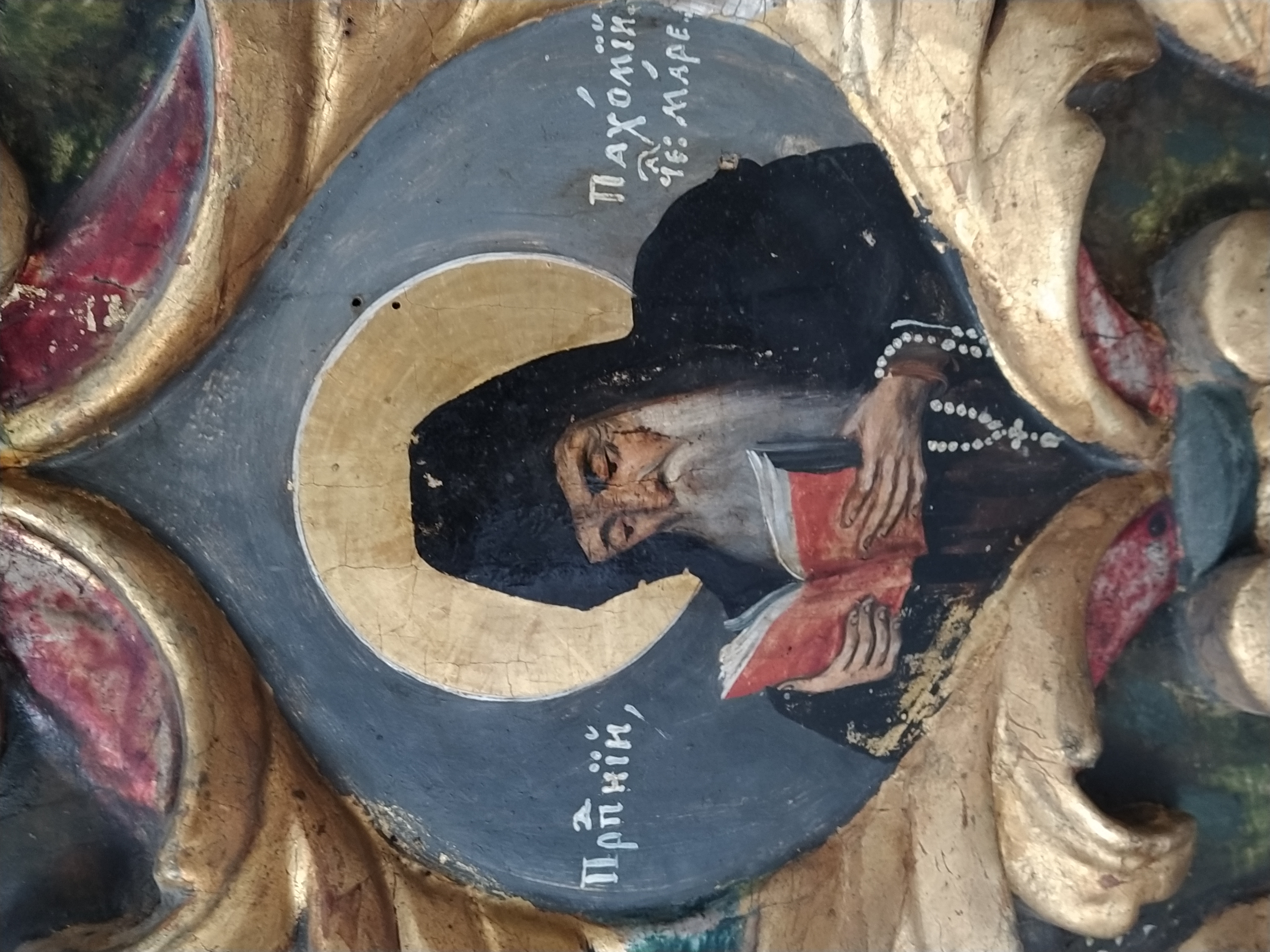
Pachomius set up a system where daily life was tightly controlled. Everyone had tasks, schedules, and had to obey a leader. It introduced things like communal labor and ranked authority, which became a model for later religious institutions.
He also taught that obedience and humiliation (like being corrected in front of others or having to admit faults) were tools to shape monks into better people. His model treated monks like children: needing structure, correction, and supervision to grow properly.
At this point, children were not officially sent to live in monasteries, but the structure was in place to make that kind of system possible later on.
Rule of St. Basil (c. 360s CE) #
Around the 360s CE, St. Basil of Caesarea took ideas from desert monks and turned them into a formal rule for monastic communities in the Eastern Roman Empire. His system focused on living together in community, following a leader, and balancing daily life between prayer, work, and learning. Key features:
- Living in groups rather than alone
- A structured routine of prayer, labor, and study
- Clear obedience to a leader
This rule would later influence Western monasticism, especially through the writings of John Cassian, who helped pass Basil’s ideas to Benedict.
John Cassian (c. 360–435 CE) #

John Cassian lived in the late 4th and early 5th centuries. After spending time with desert monks in Egypt, he brought their way of life to what is now France. He started monasteries and wrote books that became training manuals for Western monks.
Cassian taught that monks needed to constantly examine their thoughts and behavior, not just what they did, but what they felt inside. He believed even hidden sins like pride, envy, or laziness could lead someone away from spiritual growth, so these had to be closely watched.
Rule of St. Benedict and Monte Cassino (c. 529 CE) #

St. Benedict’s Rule established a strict, structured, and enduring framework for monastic life. It emphasized obedience to the abbot, regular routines, silence, work, and prayer. Monte Cassino became a model institution. The Rule framed disobedience and individual will as moral failures requiring correction.
- Chapter 59 introduces child oblation (puer oblatus): parents offering sons to the monastery.
- The child becomes a monk-in-training under lifelong vows, bound by obedience.
- The monastery becomes a custodial space as much as a spiritual one.
Child oblation (6th century onward) #
The Benedictine system expanded by accepting oblates, children given by their parents to the monastery. This practice was normalized by the 6th century and formalized in canon law. Children were socialized from a young age into absolute obedience, silence, and surveillance.
What was an oblate? #
An oblate was a child permanently offered to a monastery or convent by their parents, typically between the ages of 5 and 10, though cases of children as young as 3 years old have been documented. The practice was formally sanctioned by the Rule of St. Benedict, which allowed the community to raise children in the cloistered environment from early childhood (Lawrence, 1984; Beach, 1990). Oblates did not voluntarily enter religious life; they were treated as offerings to God, relinquished like property.
“If a child cannot understand punishment by words, let him be punished with blows.”
Rule 30, Rule of St. Benedict
Upon entry, oblates underwent a ritualized separation from their family and identity. Their hair was shaved, they were clothed in monastic garments, and their names were sometimes changed. A physical token, such as a child’s hand placed on the altar or an offering document, was presented during the ritual (Coon, 2011). They were then subject to the full discipline of monastic life, which included lifelong vows enforced even if the child resisted upon reaching adulthood (de Jong, 1996).
Legal and ritual framework #
Oblates were entered into charter books alongside donations of land, grain, or livestock, testament to how they were conceptualized as monastic assets (Beach, 1990). Some monasteries held annual chapter meetings to reaffirm the irrevocability of these offerings.

Life inside the cloister #
Daily routine: oblates followed the Divine Office, a fixed sequence of eight prayer services per day, starting before dawn (Matins at 2 to 3 a.m.) and ending with Compline at sunset (Lawrence, 1984). Children were expected to attend all hours, often standing or kneeling for hours at a time. Meals were silent and taken communally. Talking was only permitted during specific recreation hours, and even then, only in Latin. Manual labor included copying manuscripts, gardening, sweeping cloisters, and for girls, sewing altar cloths and habits (Coon, 2011).
Discipline and punishment: corporal punishment was institutionalized. Birch rods, scourges, and leather straps were common tools (de Jong, 1996). Misconduct such as daydreaming, giggling, or improper posture was punished immediately, often in public. Punishments included fasting, isolation in cells, kneeling on stone floors, or self-flagellation under supervision (McLaughlin, 2010).
Surveillance and confession: children were expected to confess thoughts and feelings, including dreams and temptations. Older oblates often acted as monitors over younger ones. Peer surveillance was encouraged and rewarded (Lawrence, 1984). Emotional attachments, whether friendships, favoritism, or physical affection, were seen as threats to obedience and chastity.
Female oblates #

Girls were placed in convents under strict cloister. In Benedictine, Cistercian, and later Cluniac houses, they were rarely permitted to speak, write, or leave (Bitel, 2002). Education for girls was restricted to religious instruction, psalm memorization, and textile work. Latin literacy was often discouraged.
Girls were often veiled during entrance rituals, symbolizing both betrothal to Christ and permanent enclosure (Coon, 2011). Theological texts warned nuns against “particular friendships,” a euphemism for emotional intimacy, which were considered gateways to sin.
“The clothing of the habit is a funeral of the girl’s self.”
12th-century monastic commentary, quoted in McNamara (1996)
Some girls entered with dowries; others were donated as spiritual payment for family sins or to prevent unwanted marriages. Enclosure was both a social solution and a disciplinary tool.
Penitentials of Cummean (c. 650) and Theodore (668–690) #

These handbooks for confession itemized sins and assigned graded penances, introducing bureaucratic moral control. Monastic and lay behavior was minutely regulated. Penitentials influenced spiritual direction and established lifelong internal surveillance as a model for discipline (McNeill, 1938). They also established manual labor as “monastic penance.”
Tenth Council of Toledo (656) #
The council forbade parents from reclaiming children who had been offered to monasteries. This ruling effectively turned oblates into the legal property of the Church (McLaughlin, 2010). It also forbade parents from devoting child oblates at age 10 or older without the child’s consent.
Admonitio Generalis (789) #
Issued by Charlemagne, the Admonitio Generalis mandated monastic schools, uniformity in religious practice, and clerical discipline across the Frankish Empire. It required monasteries to serve state education and moral order, reinforcing their role in youth control, and commanded monasteries to take in “public sinners” for penance (de Jong, 2019).
Councils of Aachen (816–817) #

Under Emperor Louis the Pious, these councils standardized Benedictine monasticism throughout the Carolingian Empire, enforcing uniform rules, hierarchical obedience, and state-church collaboration.
- Benedict’s Rule was made mandatory across the Frankish Empire.
- Monasteries became centers of literacy, labor, and containment.
- Oblates were institutionalized in monastic schools and scriptoria.
Peter Damian (1007–1072) #
Peter Damian, a reforming Benedictine monk and cardinal, vigorously defended harsh treatment of oblates. In his letters, he describes children being beaten until they bled as a form of purification (Damian, Letters, trans. Owen J. Blum).
Decretum Gratiani (c. 1140) #
A foundational canon law compilation, the Decretum codified centuries of rulings on religious life, obedience, enclosure, and penance. It gave legal weight to monastic practices and justified institutional power over the individual (Goldberg, 2000).
Fourth Lateran Council (1215) #

The council mandated confession, tightened rules on enclosure, and encouraged the formation of new religious orders. Cloistered life was institutionalized for women, with increased emphasis on surveillance, orthodoxy, and internal moral policing. The minimum age for binding vows was set at 14. The council also opened the door to placement of non-vowed girls in convents under monastic discipline, leading to the creation of early Magdalene homes.
Early Magdalene homes and penitential convents (13th century) #
These institutions were established to house and reform “fallen women,” including sex workers and unwed mothers. They borrowed monastic structures like enclosure, silence, manual labor, and forced confession, and were especially prevalent in Paris, Ghent, Rouen, Florence, and Venice. Girls were placed for moral risk, family shame, or orphan status, and lived like oblates: disciplined and enclosed, but not professed.

Examples:
- 1200 – Monastery of San Niccolo (Florence), Benedictine. Semi-carceral; included women placed by powerful family members for social control.
- 1225 – Order of Saint Mary Magdalene (Marseille, France).
- 1226 – Santa Maria delle Vergini (Venice), Augustinian. Early penitential house for reformed sex workers.
- 1230s – Poor Clares (Santa Chiara, Assisi).
- 1233 – Convertite House (Florence), a Dominican-run penitential convent.
Periculoso (1298) #

Pope Boniface VIII published the decree Periculoso, transforming pious counsels for nuns (women bound by solemn profession and living under an accepted monastic rule) into universal church law. The decree is included in the Liber Sextus (VI 3.16.1). The Poor Clares became the first order bound by cloister regulations imposed and monitored by the papacy, requiring permission from the cardinal protector for abbesses to open the monastery entrance.
Council of Vienne (1311) #
The Pope officially endorsed conversion homes for “fallen women” at the Council of Vienne.
Maison de la Madeleine, Paris (1618) #

The Maison de la Madeleine directly influenced the Magdalen Hospital for Penitent Prostitutes (London, 1758), which in turn inspired the Dublin Magdalene Asylum (1765) and the Edinburgh Magdalene Asylum (1797). The Magdalene laundries that followed are covered in the juvenile justice and fundamentalist homes timelines.
Sources #
- Aquinas, T. (1274). Summa Theologica. Translated by the Fathers of the English Dominican Province. Benziger Bros.
- Augustine of Hippo. (c. 400). Letter to Vincentius. In Nicene and Post-Nicene Fathers (Vol. 1, Series 1).
- Bitel, L. M. (2002). Women in early medieval Europe, 400–1100. Cambridge University Press. Women in Early Medieval Europe 400 1100 by Lisa M Bitel (researchgate.net)
- Coon, L. L. (2011). Dark age bodies: Gender and monastic practice in the early medieval West. University of Pennsylvania Press.
- Damian, P. (2004–). Letters (O. J. Blum, Trans.). Catholic University of America Press.
- de Jong, M. (1996). In Samuel’s image: Child oblation in the early medieval West. Brill.
- de Jong, M. (2019). The sacred palace, public penance, and the Carolingian polity. In J. M. H. Smith (Ed.), Religion, reason and the Christian polity: Essays in honour of Peter Brown (pp. 155–181). Cambridge University Press. doi.org
- Fourth Lateran Council. (1215). Twelfth Ecumenical Council: Lateran IV 1215. In Papal Encyclicals Online. Ecum12 2 (papalencyclicals.net)
- Goldberg, J. (2000). The legal persona of the child in Gratian’s Decretum. Bulletin of Medieval Canon Law, 24, 10–53.
- Lawrence, C. H. (1984). Medieval monasticism: Forms of religious life in Western Europe in the Middle Ages. Longman. Medievalmonastic0000lawr r6i1 (archive.org)
- McClain, H. G. (2018). Corporal penance in belief and practice: Medieval monastic precedents and their reception by the new and reformed religious orders of the sixteenth century. Footnotes: A Journal of History, 2, 177–198. View (journals.uair.arizona.edu)
- McLaughlin, M. M. (1974). Survivors and surrogates: Children and parents from the ninth to the thirteenth centuries. In L. DeMause (Ed.), The history of childhood (pp. 101–182). Psychohistory Press.
- McNamara, J. A. (1996). The need to give: Oblation and the bride of Christ. In S. M. Stuard (Ed.), Women in medieval society (pp. 153–182). University of Pennsylvania Press.
- McNeill, J. T. (Trans.). (1938). Medieval handbooks of penance: A translation of the principal libri poenitentiales and selections from related documents. Columbia University Press. Medieval Handbooks of Penance A Translati McNeill, John T djvu (archive.org)