Three Springs, Inc.
Founded: 1985
Founder: Mike Watson
Absorbed by Sequel Youth & Family Services in 2009
Locations
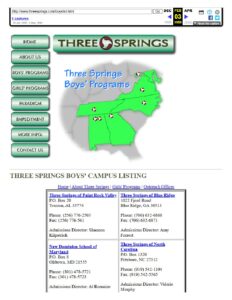
Three Springs Paint Rock Valley: Trenton, AL
Three Springs of North Carolina: Pittsboro, NC
Three Springs of Blue Ridge: Blue Ridge, GA
Three Springs of Osceola: Kissimmee, FL
Three Springs Sierra Vista Schools: Hereford, AZ
Three Springs Turning Point: Owens Cross Roads, AL
Three Springs of Duck River: Centerville, TN
Withlacoochee Juvenile Residential Facility (aka Withlacoochee STOP Camp): Lacoochee, FL
Jemison Group Home: Jemison, AL
Three Springs of Courtland: Courtland, AL
Three Springs of Madison: Madison, AL
Three Springs at Englishton Park: Lexington, IN
New Dominion School of Virginia: Dillwyn, VA
Charles Britt Academy: St. Petersburgh, FL
Three Springs New Directions: Huntsville, AL
St. Johns Juvenile Correctional Facility: St. Augustine, FL
Union Juvenile Residential Facility: Raiford, FL
Auldern Academy: Siler City, NC
Daytona Transitional Program: Daytona Beach, FL
Wayne County Girls Program: Jesup, GA
Three Springs Augusta: Augusta, GA
Tuskegee Secure Program: Tuskegee, AL
Three Springs New Beginnings: Owens Cross Roads, AL
New Dominion School of Maryland: Old Town, MD
Marion Juvenile Correctional Facility: Ocala, FL
Introduction
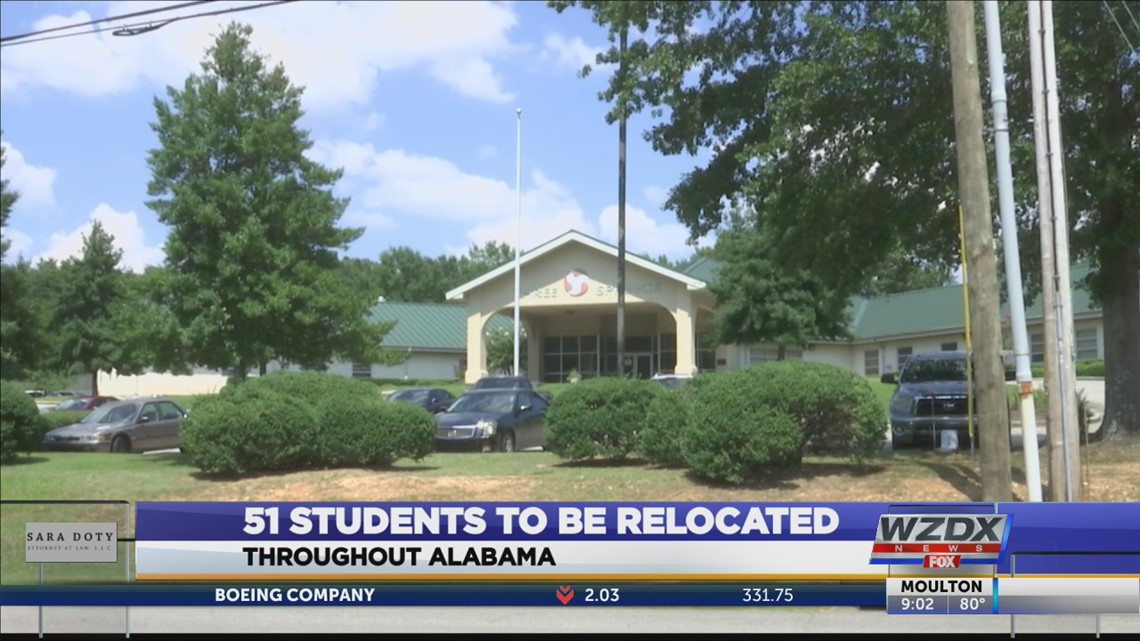
Three Springs Inc. was established in 1985, with its inaugural program being the Paint Rock Valley Boys campus located in Trenton, Alabama. This facility was inspired by the Dallas Salesmanship Club Camp, which began in 1946 and was notable for its year-round work with pre-delinquent young people, its emphasis on extended wilderness trips, and its use of the group as a therapeutic tool, notably without reliance on various mental health professionals in its core staff structure. Three Springs Inc. maintained its headquarters in Huntsville, Alabama.1
By March 2008, Three Springs had significantly expanded, operating 25 public and private facilities across 9 states and employing over 900 staff members.2 The company had been managing programs for the public sector since 1993, with facilities in states such as Alabama, Florida, Idaho, Indiana, Arizona, Maryland, Virginia, and North Carolina.3 Its programs in Georgia, serving both girls and boys, were funded by the Department of Juvenile Justice (DJJ). For instance, the Three Springs detention center in Tuskegee received $121.50 per day for each youth assigned by the state.4 On December 30, 2009, Three Springs Inc. was acquired by Sequel Youth and Family Services.5 Prior to this, in April 1996, Youth Services International Inc. (YSI) had initially planned to acquire Three Springs for approximately $27 million, but this deal fell apart by June of the same year.6 Following the Sequel acquisition, Chairman Jay Ripley stated their intention to stay true to the operating philosophy and core values shared by both Sequel and Three Springs.
Three Springs played a significant role in the early formation and launch of the National Association of Therapeutic Schools and Programs (NATSAP), which was established in 1999 and has since become notorious for abusive member programs.7 Three Springs was identified as one of the six founding programs that provided initial seed money and support to launch NATSAP.8
Rosemary Tippett, representing Three Springs, was a member of NATSAP’s first Board of Directors and served as the Conference Chair for NATSAP’s first national conference.9 Three Springs actively participated in developing NATSAP’s foundational ethics and practice standards. Sharon Laney, who held many administrative roles at Three Springs, was part of NATSAP’s inaugural Ethics and Standards Committee.10
Accounts from former residents and staff paint a picture of challenging and at times harmful conditions, indicating systemic issues within the programs. Living conditions were often substandard; a former resident of Paint Rock Valley reported periods with no running water and frozen drinking water.11 A former counselor described cabins and facilities that were unsanitary and unsafe, with pervasive issues involving filth, pests, and neglect that created serious health concerns.12
Food provided was frequently described as disgusting and unappetizing, leading to some residents experiencing weight loss.13 Weekend meals could be limited to basic sandwiches. At least one incident of disruptive behavior was attributed by a resident to dissatisfaction with the food and persistent hunger.14 Some former residents resorted to eating uncooked rice due to starvation.
Despite the organization’s stated mission emphasizing love and care and prohibiting corporal punishment, staff members reported participating in and witnessing restraints that involved excessive force.15 One self-identified counselor disclosed performing approximately 300 restraints, often not adhering to official guidelines, and admitted to lying on incident reports to justify actions.16 Other staff members were observed engaging in highly inappropriate physical actions, including
Unsupervised and unprofessional conduct among staff was also reported. A higher-up from the Huntsville office, for example, criticized a counselor for making boys carry cinder blocks as a consequence, stating it lacked meaning and suggesting a more legitimate task like moving an entire pile to clean underneath.17
Counselors often worked extended shifts, sometimes 2-4 days or even 5+, beginning at 5:45 am and frequently ending between 10:30 pm and 1:00 am, resulting in only 2-3 hours of sleep per night after paperwork. They were reportedly not allowed breaks, and requests for supervisory relief were frequently ignored.18
Staff experienced significant physical and mental stress, including panic attacks and prolonged crying episodes, with some counselors even walking out during their shifts.21 One counselor, after being beaten by a resident, was reportedly denied hospital access and required to finish her shift.22
Punitive measures were varied and often extreme. Common consequences for non-compliance included prolonged sitting on a rock, Group Ignore where a child was forbidden from speaking to their entire group, and Primitive which involved complete isolation, cooking meals over a campfire, and sleeping under a tent or tarp. Other interventions included Personal Fire Drill (random night awakenings) and Manure Therapy (shoveling horse manure). Residents deemed a run risk could be made to wear an orange reflective vest or an orange prison jumpsuit with flip flops or unlaced boots. A former resident of Paint Rock Valley endured a trek punishment which involved forced excessive water intake in hot Alabama summer heat, leading to severe sickness and blisters that required daily nurse checks. Communication with the outside world was heavily controlled; all mail was read and approved, and 8-minute phone calls were monitored and disconnected if abuse was mentioned. Being put on “non-comm” or non-communication meant residents were not allowed to speak. Survivors have reported that non-comm was extremely common and often assigned for minor offenses.
Inadequate training and oversight were consistent themes. Counselors reportedly received minimal training in medical care, violence de-escalation, or handling upset individuals. Much of the training focused on the stages system, the medicine wheel, and creed, with trainees often cheating on tests.21 Staff described themselves as glorified babysitters. Administration was largely unresponsive to staff safety concerns. Treatment teams often comprised counselors, family workers, and supervisors who lacked formal psychological training.
Direct interaction with the facility psychologist was limited, sometimes to 20 minutes or less every month.22 Therapy sessions included watching and discussing movies, and residents sometimes felt pressured to gross exaggeration about their problems to satisfy the mania for introspection.23 One former resident indicated that psychotropic medications were over-prescribed, with one individual seeing a psychiatrist only 2-3 times during an 18-month stay.24
Several former residents and staff described aspects of the program, including its unique language (e.g., non-com, express, confront), daily routines, level system, and Native American-themed ceremonies like the medicine wheel and creed, as feeling slightly cult-like or performative12. These elements were perceived as manipulative and designed to convince children they were broken.
Tragically, deaths were reported at Three Springs facilities. In October 2000, 14-year-old Dionte Pickens died by suicide at the Three Springs detention center in Tuskegee, Alabama. A lawsuit alleged inadequate supervision and that a doctor’s recommendation for a psychological evaluation was disregarded despite Pickens’ history of suicide attempts and antidepressant medication. A settlement was later reached with his mother.27 In July 2003, 15-year-old Danita Ritchie collapsed and died on the Appalachian Trail in Clarke County, Virginia, during a hike with a Three Springs group. Her death was ruled medical, with no indication of foul play.28
Three Springs programs began to decline and close over time. The programs in Georgia, both for girls and boys, were shut down in 2006 by Three Springs itself due to the withdrawal of state funding from the Department of Juvenile Justice.29 The original Three Springs program, the Paint Rock Valley Boys campus, closed effective May 31, 2011, after more than twenty-six years of operation.30 The official reason provided was the struggling economy, which made it difficult to maintain enrollment.
In Madison, Alabama, the Madison City Council revoked the business license for the Three Springs (Sequel TSI) facility in 2017. This decision followed several incidents, including police investigations into multiple escapes from the facility and a slaying linked to two young residents.31 After the Madison location’s closure in 2017, Sequel TSI continued to operate facilities in Owens Cross Roads, Montgomery, Tuskegee, and Courtland, Alabama. The program previously known as Three Springs New Beginnings in Owens Cross Roads was later shut down as Sequel TSI of Owens Cross Roads32 and has reopened under new ownership as Pathway of Madison County.33
Additional Roles Held by Notable Staff
Tere Snodgrass, Admissions & Marketing at Three Springs Inc.
Assistant Admissions Director at Silverado Boys Ranch, Admissions & Marketing at Aspen Achievement Academy, Provo Canyon School, Academy at Canyon Creek
Sharon Laney, Three Springs Inc. President
Three Springs COO, Three Springs Paint Rock Valley Program Administrator, Jacksonville County Chief Juvenile Probation Officer, NATSAP President (2004-2008), VP of Operations for the Private Division of Sequel TSI
Beth Ragland, Customer Relations at Three Springs Inc.
Therapist at Spring Ridge Academy, President of Marketing and Admissions at The Pinnacle School, Admissions Director at Greenbrier Academy for Girls, Admissions Director at Auldern Academy
Read more
Scott Boice, Clinical Director At Three Springs Paint Rock Valley Executive Clinical Director at New Haven, Therapist & Parent Communicator at Hidden Lake Academy, Senior Clinical Therapist & Treatment Team Lead at Devereux, Family Program Director Pacific Quest, CEO at Teen Counseling Solutions, Director of Clinical Operations at InnerChange, Area Mental Health Advisor for Mormon Church in Mexico City, Mexico)
Judith Rudolph Nesbitt, Regional Relations Representative at Three Springs, Inc. 2002-2004 Admission Supervisor at Aspen Health Services, Regional Representative at CEDU Family of Services, Director of Business Development at Universal Health Services, Director of Marketing & Admissions at AIM House, Director of Marketing at Shadow Mountain Recovery, National Educational Consultant Clinical Outreach Director at Elements Behavioral Health, Regional Director of Business Development at Pasadena Villa, Therapeutic Placement Consultant at One Oak Therapeutic Consulting, Therapeutic Placement Consultant at Dr. Lisa Cheyette and Associates
Rosemary Tippett, Atlanta Office Administrative Manager NATSAP Director of Public Relations; Outreach Coordinator, Director, and Board Member for Independent Educational Consultants Association (IECA), Educational Consultant with BJ Hopper & Associates, currently a private Educational Consultant
Raquel Barnes, COO & Admissions Director at Three Springs Inc.Admissions Director at LoneStar Expeditions, Admissions Director at King George School
Support Groups & Survivor Discussions


Forum Posts
My experience at Three Springs New Beginnings (Fornits)
Three Springs Veterans Questionnaire (Fornits)
Enrollment Materials


News