Experimental Group Psychology
The Oxford Group, guided group interaction, encounter groups, Synanon and its offshoots, and the large-group awareness trainings that WWASP repackaged as seminars.

San Francisco Chronicle, Public domain, via Wikimedia Commons
1500 to 1799 #
- 1738 – John Wesley’s conversion experience in England marks the beginning of Methodism. Emphasized discipline, group accountability, and moral confession.
1800s #
- 1801–1835 – The Second Great Awakening spreads across the U.S. via large frontier revivals, like Cane Ridge (KY, 1801). Promotes emotional conversion, mutual correction, and moral purification.
1900 to 1949 #

- 1908 – Frank Buchman begins forming what becomes the Oxford Group, formalized in the 1920s. Uses small-group confession, surrender to divine will, and moral inventory as tools for personal reform.
- 1913 – Little Commonwealth (UK) founded by Homer Lane.
- This self-governing home for delinquent boys was an early example of peer-enforced discipline.
- Inspired A.S. Neill’s Summerhill and later therapeutic models.
- 1917 – Boys Town (Nebraska) – Father Edward Flanagan establishes a home for homeless boys based on structure, routine, and community responsibility.
- Later used as a PR model for American youth reform.
- 1935 – Alcoholics Anonymous (AA) is founded by Bill Wilson and Dr. Bob Smith, adapting spiritual principles and practices from the Oxford Group into a mutual support fellowship for people struggling with alcoholism.
- 1936–1940 – David Wills, a Quaker and pioneer in therapeutic education, establishes Hawkspur Camp at Hawkspur Green, Essex, for young men aged 17 to 25.
- The camp serves as an experimental therapeutic community focusing on self-governance and personal responsibility.
- 1938 – John Dewey publishes Experience and Education, a key text in progressive education.
- It criticizes traditional education methods and promotes experiential learning and reflective thought as central to education reform.
- 1940–1941 – The Bicester Hostel, previously a residential settlement, is taken over by the Q Camps Committee and restructured into a therapeutic educational program for boys aged 11 to 15.
- 1940–1945 – David Wills runs the Barns Hostel near Peebles, Scotland, for boys aged 10 to 14. The hostel operates as a therapeutic community with a focus on rehabilitation through group dynamics and democratic practice.
- 1942–1944 – Northfield Military Hospital in Birmingham, UK, becomes a site of the pioneering “Northfield Experiments,” led primarily by Wilfred Bion and John Rickman.
- These initiatives introduced therapeutic community principles and group psychotherapy into a military psychiatric setting.
- Tom Main later visited Northfield and helped develop its ideas into a formalized theory.
- 1944–1946 – A second Hawkspur Camp is held on the original Essex site, now serving boys aged 11 to 16. The camp continues to explore therapeutic and educational strategies rooted in cooperation and communal living.
- 1945 – Kurt Lewin establishes the Research Center for Group Dynamics at MIT.
- He developed Field Theory (B = f(P,E)) to model behavior as a function of person and environment, and introduced the 3-Stage Change Model (unfreezing, change, refreezing).
- His earlier research at the University of Iowa focused on leadership styles in children. During WWII, Lewin’s studies informed strategies for improving military morale and organizational behavior.
- 1946 – Tom Main publishes “The Hospital as a Therapeutic Institution” in The Lancet, coining the term “therapeutic community.”
- His work draws from the Northfield Experiments and promotes the idea that hospital settings can foster psychological healing through democratic participation and shared responsibility.
- 1947 – NTL (National Training Laboratories) Founded in Bethel, Maine
- Founders: Ron Lippitt, Leland Bradford, Kenneth Benne
- Lewin died just before NTL opened
- Developed T-groups (training groups) and sensitivity training
- Emphasis on here-and-now feedback, group process, interpersonal dynamics
- Founders: Ron Lippitt, Leland Bradford, Kenneth Benne
1950 to 1979 #
- 1950s – Carl Rogers adapts T-group structure into encounter groups
- 1957 – John Shoaff founds Nutri-Bio
- Devotee of Napoleon Hill.
- MLM company selling nutritional supplements.
- Shoaff recruited and mentored Jim Rohn and William Penn Patrick here.
- 1958 – William Schutz, psychological consultant develops FIRO-B for U.S. Navy
- For team cohesion and interpersonal prediction
- Schutz joins NTL in the 1960s (runs T-groups and sensitivity trainings)
- Moves to Esalen in 1967, integrating FIRO theory into the Human Potential Movement via encounter groups and body-based methods
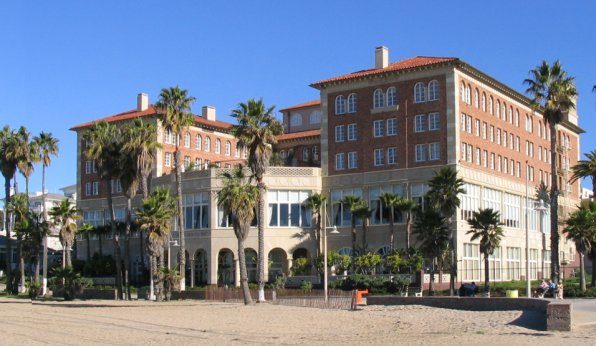
- 1958 – Synanon founded by Charles Dederich in Santa Monica, CA. Dederich, a former AA member, adds authoritarian structure and confrontational “Synanon Game.
- 1961–62 – Henderson Hospital in the UK formalizes the “democratic therapeutic community” (TC) model for psychiatric patients, led by Dr. Maxwell Jones and others.
- 1961–63 – Highfields Experiment in New Jersey tests peer-led behavior modification with delinquent boys. Influenced by Guided Group Interaction (GGI), itself adapted from U.S. Army methods at Fort Knox.
- Throughout the 1960s, more centers were established based on Highfields, using funds from the Ford Foundation; The US Department of Health, Education, and Welfare (HEW); the Office of Economic Opportunity (OEO); the Law Enforcement Assistance Administration (LEAA); and NIMH.
- 1960s – Vorrath interns at Highfields and begins reshaping GGI into what he would later call Positive Peer Culture (PPC).
- 1962 – Esalen Institute founded by Michael Murphy & Dick Price
- Became an intellectual hub for:
- Carl Rogers
- Abraham Maslow
- Will Schutz
- Will Schutz (FIRO-B) bridges NTL and Esalen
- Corporate consulting, education, and military training begin adopting T-group dynamics
- Became an intellectual hub for:
- 1964 – Fritz Perls joins Esalen Institute.
- Developed Gestalt Therapy with his wife, Laura Perls
- Originally based on psychoanalysis, Reichian work, existentialism
- Exercises include empty chair, hot seat
- Developed Gestalt Therapy with his wife, Laura Perls
- 1964 – William Penn Patrick founds Holiday Magic
- Used MLM sales techniques adapted from his time at Nutri-Bio
- Established Leadership Dynamics to train top sellers
- First known commercial large group awareness training (LGAT).
- Abusive “training” model co-founded by Patrick.
- 1965 – Daytop Village founded in New York by Daniel Harold Casriel, drawing from Synanon and psychiatry. Fuses Synanon’s model with professional therapy.
- 1966 – Hyde School founded in Bath, Maine by Joseph Gauld.
- Blended John Dewey’s experiential learning, William Heard Kilpatrick’s project method, and Carl Rogers’ encounter group dynamics.
- Emphasized “character before academics”, centering moral development and internal transformation over scholastic achievement.
- Introduced Discovery Groups (present by early 1970s), small peer accountability circles modeled after T-groups, encounter groups, and AA-style moral inventory.
- Weekly meetings included public confession, emotional challenge, and communal feedback, echoing structures from NTL and human potential movement training.
- 1966–67 – Phoenix House founded in NYC by Mitchell Rosenthal and others who split from Daytop. Emphasizes hierarchical structure, confrontational methods, and job function assignments.
- 1967 – CEDU founded by Mel Wasserman in Running Springs, CA.
- Modeled on Synanon and human potential movement philosophies; Wasserman was a former Synanon member.
- Incorporated attack therapy, emotional confession, and large-group awareness training into a residential boarding school format for teens.
- Core programming involved marathon seminars lasting several days, including Propheets, Truth, Chairwork, and guided group confrontation.
- Emphasized total personal responsibility, behavioral control, and emotional breakdown as a precondition for “breakthrough.”
- One of the earliest programs to fuse LGAT methods with youth behavior modification, predating WWASP.
- CEDU culture spread through spin-offs and offshoots, including Rocky Mountain Academy, Northwest Academy, and Ascent.
- 1967 – The Seed founded in Florida by Art Barker. Uses attack therapy and strict control. Explicitly modeled after Synanon. Spreads rapidly.
- 1967 – Carl Ransom Rogers leads encounter groups at Esalen Institute, blending education, therapy, and human potential work
- Late 1950s – Early 1960s – Adapted Deweyan/Kilpatrick principles into Encounter Groups: emotional honesty, group-based growth
- Published On Encounter Groups (1970).
- 1967 – Leadership Dynamics Institute (LDI) is founded by William Penn Patrick, a salesman and multi-level marketing magnate (Holiday Magic).
- LDI pioneered brutal, confrontational “trainings” that used military-style drills, emotional abuse, humiliation, and forced confessions.
- It drew on military training, Scientology, and motivational salesmanship.
- 1968 – Mind Dynamics founded by Alexander Everett, a mystically inclined figure who had been briefly associated with William Penn Patrick and LDI.
- Mind Dynamics took some of LDI’s confrontational aspects but blended them with New Thought, Silva Mind Control, visualization, and pseudo-ESP teachings.
- Trained Werner Erhard and John Hanley.
- 1971 – Werner Erhard launches est (Erhard Seminars Training)
- Trained under Alexander Everett at Mind Dynamics.
- Took the performative “breakdown/breakthrough” structure of LDI and repackaged it with pseudo-philosophical flair.
- est became the flagship LGAT of the 1970s, running 60-hour trainings with verbal abuse, bathroom control, sleep deprivation, and demands for total submission.
- 1971 – Elan School is founded in Poland, Maine by Joe Ricci and psychiatrist Gerald Davidson.
- Ricci, who had attended Daytop Village in 1969 but did not complete the program, falsely claimed to be a graduate and role model.
- Elan’s structure borrowed heavily from Daytop’s confrontational tactics, combined with Ricci’s personal beliefs and Davidson’s psychiatric input.
- Maine was chosen for its looser licensing requirements, allowing the program to operate with minimal oversight.
- 1971 – Senate Subcommittee on Constitutional Rights begins investigating behavior modification programs, particularly federally funded ones.
- 1974 – John Hanley co-founds Lifespring
- Hanley was a former trainer for both LDI and Mind Dynamics.
- Lifespring copied Mind Dynamic’s structure: breaking people down, confronting them publicly, and demanding total “responsibility” for all suffering.
- Hanley denied that it was therapy, but lifelong trauma and lawsuits followed participants.
- 1974 – Synanon establishes Punk Squad boot camps for troubled youth, most attendees court ordered as an alternative to juvenile detention centers
- 1973–1975 – FTC crackdown on Holiday Magic, LDI, Mind Dynamics
- William Penn Patrick dies in a 1973 plane crash.
- By 1975, federal investigators had dismantled the core companies but the trainers had already scattered.
- 1970s–1990s – Vorrath establishes the Center for Group Studies, spreading PPC across at least 20 U.S. states and several Canadian provinces, especially in juvenile justice and residential care settings.
- 1976 – Frank Zappala & Mel Sembler found Straight Inc. in St Petersburg, FL
- Funded with a $50k LEAA grant
- Several counselors quit Straight Inc in the first year, reported abuse to press and authorities
1980s and 1990s #
- Mid-1980s – Robert Lichfield, founder of WWASP, attends a LifeSpring seminar led by David Gilcrease
- Gilcrease & Lichfield decide to work together to build programming for troubled kids based around LifeSpring Seminar programming
- Connected to Gilcrease & Resource Realizations (supplied seminars & seminar leaders)
- 1986 – David Gilcrease founds Resource Realizations, later renamed Premier Educational Seminars
- Began leading seminars at Cross Creek Manor with his ex-wife and fellow former Lifespring trainer, Jeannie Courtney.
- Courtney would later found a therapeutic boarding school called Spring Ridge Academy and claim that she developed the CCM seminars herself.
- 1991 – Last Synanon community disbanded (due to outstanding taxes owed)
Sources #
- Borin, L. (n.d.). History of the Field. Rutgers University.Psychology 2 (aspoerri.comminfo.rutgers.edu)
- Brendtro, L. K., & Vorrath, H. H. (1985). Positive Peer Culture. Aldine Publishing Company.
- Cartwright, D. (Ed.). (1951). Field Theory in Social Science: Selected Theoretical Papers by Kurt Lewin. Harper & Row.
- Chatfield, M. M. (2023). That hurts you badder than punchin’: The troubled teen industry and therapeutic violence in group rehabilitation programs since World War II. Social History of Alcohol and Drugs, 37(2), 268–292.doi.org
- Chatfield, M. M. (2024). To use this word … would be absurd: How the brainwashing label threatened and enabled the troubled-teen industry. Journal of American Studies, 1–33.doi.org
- Conway, F., & Siegelman, J. (1978). Snapping: America’s Epidemic of Sudden Personality Change. Dell. Snappingamericas0000conw (archive.org)
- Curley, M. (2012). Duck in a raincoat: The Joe Ricci story (2nd ed.). Dokumen.pub. Duck in a raincoat secondnbsped (dokumen.pub)
- Dederich, C. (1962). Oral history interview with Charles Dederich (E. I. Dixon, Interviewer). UCLA Center for Oral History Research.Zz002ctdwn (oralhistory.library.ucla.edu)
- Harrison, M. (2015). The origins and evolution of therapeutic communities: From religious revival to psychosocial reform. In K. Bloom, B. S. Rawlings, & G. Rose (Eds.), Therapeutic communities: Past, present and future (pp. 17–33). Routledge.
- Hill, N. (1928). The law of success: The master wealth-builder’s complete and original lesson plan for achieving your dreams. Ralston Publishing.
- Hill, N. (1937). Think and grow rich. The Ralston Society.
- International Survivors Action Committee ISAC Corporation. (2004). WWASP alleged crimes report. ISAC Corporation.
- Kilpatrick, W. H. (1918). The project method: The use of the purposeful act in the educative process. Teachers College Record, 19(4), 319–335.
- Kinzer, S. (2019). Poisoner in chief: Sidney Gottlieb and the CIA search for mind control. Henry Holt and Co.
- Lewin, K. (1947). Frontiers in group dynamics: Concept, method and reality in social science; social equilibria and social change. Human Relations, 1(1), 5–41.
- Marie, J. (2024). Selling the dream: The billion-dollar industry bankrupting Americans. Atria Books.
- Pressman, S. (1993). Outrageous Betrayal: The dark journey of Werner Erhard from est to exile. New York: St. Martin’s Press. Mode (archive.org)
- Quigley, R. (2007). Roots of Positive Peer Culture: Harry Vorrath – The man and the myth. Reclaiming Children and Youth, 15(4), 207–209.
- U.S. Senate. (1974). Individual rights and the federal role in behavior modification: A study prepared by the staff of the Subcommittee on Constitutional Rights of the Committee on the Judiciary, United States Senate, Ninety-third Congress, second session. U.S. Government Printing Office.
- Whiteley, S. (2004). The evolution of the therapeutic community. Psychiatric Quarterly, 75(3), 233–248.