
Facility profile Florida
Okaloosa Youth Academy
Okaloosa Youth Academy is a program in Crestview, Florida, operated by Universal Health Services (UHS).
About Okaloosa Youth Academy
Florida DJJ lists Okaloosa Youth Academy as an active program run by Gulf Coast Treatment Center (October 2026).source
News coverage
-
Three Former Department of Juvenile Justice / G4S Highlands Youth Academy staff members arrested for multiple felonies
Three former staff members of the G4S Highlands Youth Academy, a juvenile residential facility in Florida, were arrested on felony charges following an investigation by the Polk County Sheriff's Office. The charges involve the intentional destruction of evidence, failure to report child abuse, willful neglect of juveniles, and the concealment of physical force incidents, escapes, and sexual misconduct.
-
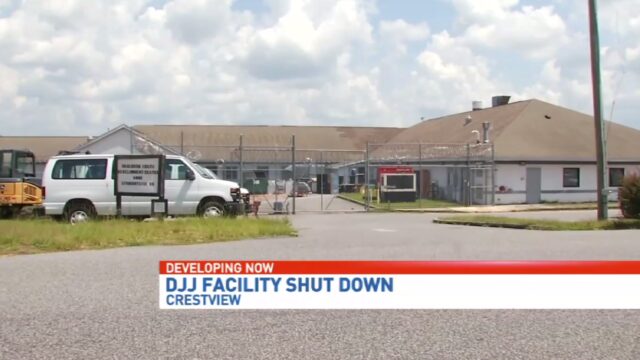
Facility helping youth offenders shut down in Crestview
The Florida Department of Juvenile Justice closed the Okaloosa Youth Development Center in Crestview after determining the facility failed to meet safety standards and maintain an abuse-free environment. Thirty-nine children residing at the facility were transferred to other locations across the state following the closure.
-
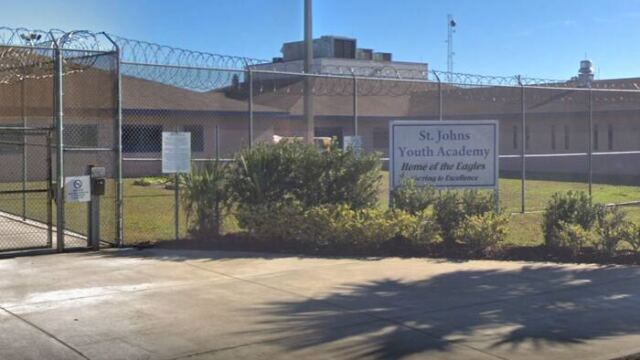
State attorney’s office investigating St. Johns Youth Academy after ‘riot situation’
State attorneys are investigating a reported riot at St. Johns Youth Academy in St. Augustine. The facility has experienced a sudden shutdown, and an 18‑year‑old resident has been accused of assaulting a staff member. COVID‑19 cases have also been documented among youths at the academy.
Licensing and inspections
- Program
- DJJ-okaloosa-youth-academy
- License category
- Moderate-risk Residential
- Executive director
- Javarus Peoples
- Licensed capacity
- 77
- Licensing action
- Active
- Phone on file
- (850) 689-1984
- Licensed address
- 4455 Straightline Road, Crestview, FL 32539
57 inspection reports on file. Search all Florida reports
The newest 25 reports, by date: 16 findings in 7 reports
- Jun 30, 2026 SPEP - FY25-26
- Jun 30, 2026 SPEP - FY25-26
- Jun 30, 2026 SPEP - FY25-26
- Jun 30, 2026 SPEP - FY25-26
- Jun 30, 2026 SPEP - FY25-26
-
Jun 30, 2026
QI Residential - FY25-26 - 2 findings
2 findings
-
Limited compliance, DJJ review : Indicator 2.19 Contract Specific Career and Technical Education
Services (Residential Contract Provider) The program shall implement all career and technical education services (formerly referred to as pre-vocational and vocational services) negotiated or outlined in the contract which are considered Contract Specific Conditions or listed within the Scope of Services Attachment. These may be referenced as the Memorandum of Negotiation (MON), Summary of Negotiated Points, Summary of Supplemental Response Request (SSRR), Best and Final Offer (BAFO), or Special Conditions. Older contracts may not have them clearly identified as a special condition. Career and technical education service instruction shall be provided so the interests, aptitudes, and skills of the youth are developed, while building upon their existing strengths, in a manner supportive of their employability goals which provide an occupational advantage and workforce readiness in their community. These items may exceed the minimum requirements outlined in Florida Statutes and Florida Administrative Code. The program has an approved contract requiring the provider and their collaborative partners to provide career and technical education (CTE) services which lead to career pathways with student outcomes resulting in Industry Certifications earned from the Master Credentials List. Within the first three months of entry into the program, each youth should complete Florida Ready to Work (FRW), cardiopulmonary resuscitation (CPR)/first-aid, and Occupational Safety and Health ...
-
Limited compliance, DJJ review : Indicator 3.11 Secure Observation (Critical)
Youth placed on suicide precautions may be maintained on secure observation when less restrictive means are not effective. Nine youth mental health and substance abuse records were reviewed for secure observation (SO) and none were applicable for being placed on secure observation. A request was made to the program to provide additional records to meet required minimum sample. The program provided three additional records for review. A total of three youth records were reviewed for SO. Each youth placement in SO was authorized by the program director (PD) and designated mental health clinician authority (DMHCA). Each record contained documentation of secure room designation, and a Health Status Checklist which was completed prior to placement. Two of three records contained documentation to confirm staff of the same gender conducted a visual check of youth to observe visible injuries. The remaining youth was visually observed by a female licensed practical nurse (LPN). Each SO room was inspected immediately prior to youth placement. Each of the three youth were placed in SO due to at-risk or suicidal behavior and each was maintained on constant supervision. Each Department Suicide Precautionary Observation Log was completed in its entirety. Two of three records contained a follow-up Assessment of Suicide Risk (FASR) completed within eight hours of placement. The remaining ASR was completed the following morning as mental health staff were not present during the evening ...
-
-
Jun 30, 2026
QI Residential - FY25-26 - 2 findings
2 findings
-
Limited compliance, DJJ review : Indicator 2.19 Contract Specific Career and Technical Education
Services (Residential Contract Provider) The program shall implement all career and technical education services (formerly referred to as pre-vocational and vocational services) negotiated or outlined in the contract which are considered Contract Specific Conditions or listed within the Scope of Services Attachment. These may be referenced as the Memorandum of Negotiation (MON), Summary of Negotiated Points, Summary of Supplemental Response Request (SSRR), Best and Final Offer (BAFO), or Special Conditions. Older contracts may not have them clearly identified as a special condition. Career and technical education service instruction shall be provided so the interests, aptitudes, and skills of the youth are developed, while building upon their existing strengths, in a manner supportive of their employability goals which provide an occupational advantage and workforce readiness in their community. These items may exceed the minimum requirements outlined in Florida Statutes and Florida Administrative Code. The program has an approved contract requiring the provider and their collaborative partners to provide career and technical education (CTE) services which lead to career pathways with student outcomes resulting in Industry Certifications earned from the Master Credentials List. Within the first three months of entry into the program, each youth should complete Florida Ready to Work (FRW), cardiopulmonary resuscitation (CPR)/first-aid, and Occupational Safety and Health ...
-
Limited compliance, DJJ review : Indicator 3.11 Secure Observation (Critical)
Youth placed on suicide precautions may be maintained on secure observation when less restrictive means are not effective. Nine youth mental health and substance abuse records were reviewed for secure observation (SO) and none were applicable for being placed on secure observation. A request was made to the program to provide additional records to meet required minimum sample. The program provided three additional records for review. A total of three youth records were reviewed for SO. Each youth placement in SO was authorized by the program director (PD) and designated mental health clinician authority (DMHCA). Each record contained documentation of secure room designation, and a Health Status Checklist which was completed prior to placement. Two of three records contained documentation to confirm staff of the same gender conducted a visual check of youth to observe visible injuries. The remaining youth was visually observed by a female licensed practical nurse (LPN). Each SO room was inspected immediately prior to youth placement. Each of the three youth were placed in SO due to at-risk or suicidal behavior and each was maintained on constant supervision. Each Department Suicide Precautionary Observation Log was completed in its entirety. Two of three records contained a follow-up Assessment of Suicide Risk (FASR) completed within eight hours of placement. The remaining ASR was completed the following morning as mental health staff were not present during the evening ...
-
- Jun 30, 2026 QI Detention - FY25-26
-
Jun 30, 2025
QI Residential - FY24-25 - 3 findings
3 findings
-
Failed compliance, DJJ review : Indicator 3.14 Suicide Prevention Training (Critical)
All staff who work with youth shall be trained to recognize verbal and behavioral cues indicating suicide risk, suicide prevention, and implementation of suicide precautions. The program maintains three suicide response kits, which include the Knife-for-life, wire cutters, and needle nose pliers. The kits are in master control. All suicide kits are co-located with first- aid kits. All eighteen reviewed staff members, nine pre-service and nine in-service staff, received training for suicide prevention. A review of suicide drills revealed they were reviewed with staff no less than quarterly on all shifts. None of the drills were simulated with staff during the annual compliance review period, only reviewed. All scenarios included suicide attempts or serious self-injury. Due to the drills not being simulated, there has not been practice of cardiopulmonary resuscitation (CPR) semi-annually. The program director was interviewed and reported the program provides suicide drills, medical drills, and safety and security drills. Nine staff were interviewed. Eight of nine staff reported medical emergency and suicide drills are conducted monthly. The remaining staff reported having participated in drills one time. An informal follow up interview was conducted with the program director who reported the program does not conduct simulated drills due to the sensitivity of the training which may cause emotional distress to some staff members who have close personal experience as it relates ...
-
Failed compliance, DJJ review : Indicator 4.16 Medication Management
Medication shall be received, stored, inventoried, and provided in a safe and effective manner which shall be demonstrated by observation, as well as review of documentation of procedures, and processes. Nine youth healthcare records were reviewed for medication administration and medication management requirements. The Facility Entry Physical Health Screening (FEPHS) forms were reviewed. Five of nine youth did not enter the program on medication, according to their FEPHS. Three of nine FEPHS forms correctly identified youth who came into the program already on prescription medication. One remaining youth entered with medication; however, it was not noted on the youth’s FEPHS as required. All prescription verifications were included in each youth’s progress notes. For all applicable records, there was documentation the designated health authority (DHA) ordered the specific medications to be resumed upon admission. All nine youth healthcare records indicated all the youth currently are taking prescribed medications at the time of the annual compliance review. All nine youth are currently classified as a medical grade five. All medications have a current, valid order, and administered pursuant to a current prescription. Orders are placed on the practitioner order form. None of the youth were applicable for restricted housing. Two of the nine youth records were applicable for having had administered over the counter (OTC) medications not listed on the Authority for Evaluations ...
-
Failed compliance, DJJ review : Indicator 6.01 Contract Specific Career and Technical Education Services
(Residential Contract Provider) The program shall implement all career and technical education services (formerly referred to as pre-vocational and vocational services) negotiated or outlined in the contract which are considered Contract Specific Conditions or listed within the Scope of Services Attachment. These may be referenced as the Memorandum of Negotiation (MON), Summary of Negotiated Points, Summary of Supplemental Response Request (SSRR), Best and Final Offer (BAFO), or Special Conditions. Older contracts may not have them clearly identified as a special condition. Career and technical education service instruction shall be provided so the interests, aptitudes, and skills of the youth are developed, while building upon their existing strengths, in a manner supportive of their employability goals which provide an occupational advantage and workforce readiness in their community. These items may exceed the minimum requirements outlined in Florida Statutes and Florida Administrative Code. The program has a contract with the Department which specifies career and technical education services required. The services are employability and career-themed courses based upon youth need and interest. The program has not provided any Florida Ready to Work soft skills spanning the annual compliance review period as required. The program has not had any contact with Florida Ready to Work since last annual compliance review. The program is currently providing ServSafe and Safe Food ...
-
-
Jun 30, 2025
QI Detention - FY24-25 - 1 finding
1 finding
-
Limited compliance, DJJ review : Indicator 5.09 Inventory of and Access to all Flammable, Toxic, Caustic,
and Poisonous Items The Superintendent is responsible for the implementation of a safety plan addressing proper use, storage, and disposal of chemicals, including flammable, toxic, caustic, and poisonous items. All flammable, toxic, caustic, and poisonous items shall be inventoried and secured when not in use. The use of hazardous material shall be consistent with the manufacturers’ instruction and all safety precautions shall be followed. All flammable, toxic, caustic, and poisonous items shall have the Safety Data Sheets (SDS) on hand in the facility. Toxic or caustic materials shall not be allowed to enter into the facility unless a SDS is on file in an SDS logbook and posted near items. A master copy of the SDS logbook shall be maintained in an accessible binder for all personnel to review at all times. No hazardous chemicals should be mixed, as this could result in an explosion or emission of toxic gas. Flammable, toxic, caustic, and poisonous fluids and other dangerous substances may only be drawn or acquired by authorized personnel. Youth shall not be permitted to use, handle, or clean-up dangerous or hazardous chemicals or respond to chemical spills. Youth shall not be permitted to clean, handle, or dispose of any other person’s bio hazardous material, bodily fluids, or human waste. The center has a written policy and procedures which outline the inventory of and access to all flammable, toxic, caustic, and poisonous items. The center’s safety plan is incorporated ...
-
- Jun 30, 2024 SPEP - FY23-24
- Jun 30, 2024 SPEP - FY23-24
- Jun 30, 2024 SPEP - FY23-24
- Jun 30, 2024 SPEP - FY23-24
- Jun 30, 2024 SPEP - FY23-24
-
Jun 30, 2024
QI Residential - FY23-24 - 3 findings
3 findings
-
Failed compliance, DJJ review : Indicator 4.13 Episodic/First-Aid and Emergency Care
The program shall have a comprehensive process for the provision of episodic care and first- aid care. A review of nine youth Individual Healthcare Records (IHCRs) was conducted for completion of an episodic, first-aid, and/or emergency care situation. Six of the nine youth reviewed were applicable for completion of episodic, first-aid, and/or emergency care. Each of the six medical incidents were conducted by licensed healthcare staff. The healthcare staff documented each case in subjective, objective, assessment, and plan (SOAP) format. There were no cases of an episodic, first-aid, and/or emergency scenario having been provided for by non-healthcare staff. There is a total of seven first-aid kits, two of which are utilized for transportation. First-aid kits are in master control, construction building, kitchen, nurses’ station, and program vans. On-site healthcare staff confirmed a monthly review of first-aid kits is conducted to ensure contents are maintained and stored in accordance with guidelines to prevent expiration and replenished as needed. A review of three first-aid kits confirmed the kits are fully stocked with designated health authority (DHA)-approved contents. Additionally, a review of monthly tracking sheets demonstrated on-going monitoring of first-aid kits occurred as required. The program has one automated external defibrillator (AED), which is kept in master control. The operating procedures for the AED are located with the AED. On-site nursing checks ...
-
Failed compliance, DJJ review : Indicator 4.15 Chronic Conditions/Periodic Evaluations
The program shall ensure youth who have chronic conditions receive regularly scheduled evaluations and necessary follow-up. A review of nine youth Individual Healthcare Records (IHCRs) was conducted for completion of chronic condition periodic evaluations. One of the nine youth were found applicable for having a chronic condition. Two additional youth records were requested. A total of three youth were reviewed for having a chronic condition. Two of the three youth were applicable and identified on the Facility Entry Physical Health Screening form upon admission. The remaining one youth was later identified with a chronic condition. None of the youth had been identified as having a communicable disease. Two youth were taking medication on an on-going basis. One youth was undergoing treatment for a physical health condition. Each of the youth were classified with a Medical Grade between two and four; however, one of the three youth did not have the proper Medical Grade annotated on the Comprehensive Physical Assessment (CPA) form. The CPA documented a Medical Grade one, when the Medical Grade should have been at a minimum two. All three youth were placed on the chronic illness list. One of the three youth were applicable for needing to receive a periodic evaluation every ninety-days. The remaining two youth had not been at the program long enough to need a periodic evaluation. The one applicable youth did not have any documentation of having completed a ninety-day periodic ...
-
Limited compliance, DJJ review : Indicator 5.04 Ten-Minute Checks (Critical)
A program shall ensure staff observe youth at least every ten minutes while the youth are in their sleeping quarters, either during sleep time or at other times, such as during an illness or room restriction. Staff shall conduct the observations in a manner to ensure the safety and security of each youth and shall document real time observations manually or electronically. The program has a total of 108 cameras, all of which were reported to be working at the time of the annual compliance review. Video recordings are stored for up to thirty days. The program staff are required to conduct youth observations for each youth while in their assigned room every ten minutes at a minimum. Staff utilize a flashlight when making rounds conducting these ten-minute observation checks of youth. Nine interviewed staff all reported these checks were done at ten-minute increments. A review of nine separate dates and times of video observations was made to confirm the fidelity of these checks. All corresponding visual observation logs for these selected times were also reviewed and compared with the video. Eight of the nine were observed with staff conducting the checks as required. Staff were seen pausing briefly, using a flashlight, to observe the youth when in their rooms. One of nine reviewed checks contained exceptions. On February 29, 2024, the staff was observed performing a check at 4:26 a.m. and then at 5:03 a.m. There were no checks observed made in between these two times. The ...
-
-
Jun 30, 2024
QI Detention - FY23-24 - 2 findings
2 findings
-
Limited compliance, DJJ review : Indicator 2.10 Educational Access (Critical)
The center shall integrate educational instruction (career and technical education, as well as academic instruction) into the daily schedule in such a way which ensures the integrity of required instructional time. The center has a policy and procedures to provide educational access for the youth. All youth at the center are provided access to education. According to reviewed documentation, school starts at 8:00 a.m. and ends at 2:00 p.m.. A review of the education schedule and school district calendar revealed the youth are provided education distributed over twelve months, with a minimum of twenty-five hours of instruction each week. Teachers are also given ten days for professional development, planning, and grading throughout the school year. Youth enrolled in educational programs have an opportunity to earn course credit for completion of the education and training experience. A review of the master control logbook and video indicated there were missed days and interference with educational instruction. Three days of logbook entries each month since the previous annual compliance review for educational access was conducted. The logbook entries compared to the activity schedule documented minimal interference with educational instruction and included documentation educational classes were being conducted with youth attending and departing class on time, apart from nine entries missing regarding school and five instances of youth beginning school late. A complete video ...
-
Limited compliance, DJJ review : Indicator 3.08 Psychiatric Services [Contract Provider] (Critical)
Psychiatric services include psychiatric evaluation, psychiatric consultation, medication management, and medical supportive counseling provided to youth with a diagnosed DSM- IV-TR or DSM-5 mental disorder and each youth receiving psychotropic medication in the program as set forth in Rule 63N-1, F.A.C. The center has a doctor of osteopathic medicine, with a specialty in child psychiatry, who serves as the psychiatrist. The psychiatrist has a clear and active license in the State of Florida which expires March 31, 2024. The center does not utilize an advanced practice registered nurse (APRN) for psychiatric services and has a back-up psychiatrist with a clear and active license in the State of Florida, which expires on January 31, 2025. The center has not utilized a back-up psychiatrist throughout the annual compliance review period. A review of the contract between the Department and the mental health and substance abuse provider found the center’s psychiatrist is authorized to provide tele-psychiatry services. Seven youth mental health records were reviewed for psychiatric services. Four of the seven records were applicable for receiving psychiatric services. Three of the four youth entered the program on psychotropic medications, one youth was later referred and subsequently placed on medication. Three of the four youth were in receipt of a psychiatric evaluation which was completed within fourteen days of referral. The remaining one youth did not receive a referral for ...
-
- Jun 30, 2023 SPEP - FY22-23
- Jun 30, 2023 SPEP - FY22-23
- Jun 30, 2022 SPEP - FY21-22
- Jun 30, 2022 SPEP - FY21-22
- Jun 30, 2022 SPEP - FY21-22
- Jun 30, 2021 SPEP - FY20-21
- Jun 30, 2021 SPEP - FY20-21
Connections on the network map
The companies, people and programs our research map ties to this program. Open it on the network map.
Ownership
- Gulf Coast Treatment Center
- Ramsay Youth Services
We have questions about Okaloosa Youth Academy
If you were there, worked there or sent your child there, you can help fill in what our records are missing. Each question takes a moment; skip anything you do not know.