Spiritual Abuse & Religious Trauma in the Troubled Teen Industry

BogTar201213, CC BY-SA 4.0, via Wikimedia Commons
Contents
- What is Spiritual Abuse?
- Defining Characteristics of Spiritual Abuse
- Impacts of Spiritual Abuse on TTI Survivors
- Where Spiritual Abuse Happens in the TTI
- Growth After Spiritual Abuse in the TTI
- Further Reading
- Resources for All Survivors
- Resources for LGBTQIA+ Survivors
- Resources for Christian Survivors & Advocates
- Legislative Loopholes
- Florida
- Medical Neglect
- Texas
- Missouri
What is Spiritual Abuse? #
In religious troubled teen programs, staff speak for God. Abuse becomes God’s will, and a complaint becomes a sin (source; source). Researchers call this spiritual abuse: “a systematic pattern of controlling and coercive behaviour in a religious context” (source). It is how these programs run: Kansas City Girls Academy, its former residents allege, “controlled residents through religious coercion, and emotional, psychological, and physical abuse” (source).
It is happening now. In December 2025, two former residents sued Kansas City Girls Academy, a Teen Challenge program in Missouri. Their complaint says the academy “told Plaintiffs that to question their conditions, or KCGA’s prognoses and commands, was to question God” (source). In April 2026, nine women sued Central Indiana Teen Challenge, by then called The Refuge Girls Academy. Their lawyers say the women were told their suffering was “God’s will” (source). By June the suit had 35 plaintiffs, and on September 10, 2026, the academy closed (source; source). The program denies the claims (source). Religious exemptions keep programs like these free of state licensing in Missouri, Florida and Indiana (source; source; source).
Defining Characteristics of Spiritual Abuse #
A 2024 review by Sarah Perry counts as religious or spiritual abuse “any instances where religious or spiritual authority is misused or exploited, resulting in significant psychological and/or spiritual harm to individuals” (source). Lisa Oakley and Justin Humphreys list its marks: “coercion and control, manipulation and pressuring of individuals, control through the misuse of religious texts and scripture and providing a ‘divine’ rationale for behaviour” (source).
Misuse of Religious Authority and Power
The programs put their leaders in God’s place. Agape Boarding School in Stockton, Missouri, told parents it was “a ministry of Agape’ Baptist Church” and that “The Pastor and Board are the final authority on all matters” (source). Its handbook set the goal of a boy “submissive to the Word Of God and the Will of God,” with “A cheerful obedience to authority” (source). Its director, Bryan Clemensen, told Rolling Stone in 2023: “If you don’t save their souls, it ain’t going to stick” (source). Chanel Mare, a former resident of Circle of Hope Girls’ Ranch in Missouri, said of its owner, Boyd Householder: “He made it sound like it was a place for praising God. But it wasn’t, really, it was about praising him” (source). Brittany Campbell, sent to New Beginnings Girls Academy in 2001, said of its pastor, Bill McNamara: “We were under his authority, as ordained by God” (source).
Manipulation and Coercion
The strongest lever is the claim that the abuse is God’s will. Kansas City Girls Academy “told Plaintiffs all of it was God’s will for them, that their illnesses were their own faults, and that they deserved whatever pain they felt,” the 2025 complaint says (source). The only way into “God’s grace,” it says, was “to unquestionably submit to KCGA’s commands and dogma” (source). Of the 35 former residents suing in Indiana, the Roys Report wrote: “According to the lawsuit, they thought they were being punished for their sins, they deserved this punishment and believed questioning anything that happened to them was the same as questioning God” (source).
Scripture is made a punishment. At New Lifehouse Academy, Teen Challenge’s girls’ program in Oklahoma, “Character Qualities required residents to handwrite scripture passages by hand hundreds of times consecutively, often for hours without rest, resulting in physical exhaustion, hand cramping, and blistering,” a 2026 lawsuit says (source). The plaintiff says she had to keep writing “after the wrist in her writing hand (right) was broken and in a cast” (source). At Wings of Faith Academy in Missouri, Kansas City Star reporting showed students were “‘whupped’ with a seven-layer leather paddle and then made to recite Bible verses,” the Missouri Independent wrote in 2026 (source). A lawsuit against Agape says staff forced Jason Britt “to stand up against a wall for hours at a time, while reciting Bible passages” (source).
Shame, Guilt, and Conditional Love
Girls were made to name their sins in public. Kansas City Girls Academy “required Plaintiffs and other residents to confess their sins in front of all other students in the ‘Great Room,'” the complaint says, and staff “shamed Plaintiffs after their admissions – calling them sinners and Jezebels” (source). New Lifehouse held “forced breakthroughs” in which staff “berated and encouraged fellow residents to berate a chosen resident until she broke and admitted alleged spiritual failings,” the lawsuit against it says (source). Olivia Lambright, five years at Hephzibah House in Indiana, said that when staff spanked her, “the one thing that they would tell me was, ‘This is the way God wants us to do it, and this is your fault this is happening'” (source).
Mental illness was blamed on demons. Kansas City Girls Academy staff told residents “that mental illness was simply a failed connection to God and was ultimately demonic,” the complaint says (source). One plaintiff was told “she was possessed by demons,” another that “her eating disorder was a demon inside her” (source). Emily Adamo, at New Lifehouse from 2022 to 2023, “said staff told students their anxiety and depression were demons and that if they prayed hard enough, their issues would go away,” The Frontier reported (source). In Indiana, WRTV reported that E.A., “then only 12 or 13 years old, was allegedly taken late at night to a church where a priest performed something akin to an exorcism by forcing her to kneel and repeatedly dunking her head into buckets of water” (source).
Being gay was treated as a sin to be driven out. Emily DuPuis “was allegedly locked in the ‘safe room’ for an anti-gay prayer session,” her lawyers’ summary of the Indiana complaint says (source). Shea Vassar, at a Teen Challenge program in Lakeland, Florida, from 2010 to 2012, said: “Whether or not we were gay or not, any kind of talk of it they would talk about in this idea of sin” (source). A former student of River View Christian Academy in California told BuzzFeed News in 2018 that she was told her “flesh would burn off my skin repeatedly for eternity in hell because I was gay” (source).
Silencing, Isolation, and Control
Even isolation had a religious name. At Central Indiana Teen Challenge, girls were held in a “safe room” or “prayer room” “for days or weeks, sometimes with no bed, blanket, pillow, reading material or human interaction beyond delivery of the same meal each day,” their lawyers say (source). Mandi MacDonald, sent there at 15, “was eventually locked alone in an isolation room for two months with nothing but a Bible and her writing assignment,” WIBC reported (source). Haven Murdock, there from age 13, said: “The longest I was in there was a month. It was horrible. It was humiliating” (source). MacDonald was also silenced: “I wasn’t allowed to speak or be spoken to for months” (source).
The programs controlled what reached home. New Lifehouse “screened all outgoing letters and would force residents to re-write letters that mentioned anything negative about TCOK,” and staff “would pause or end calls if Plaintiff mentioned anything negative about TCOK,” the 2026 lawsuit says (source). In court, Teen Challenge of Oklahoma admitted that mail was reviewed by staff and that calls with parents were monitored (source).
Parents were warned in advance not to believe their children. New Lifehouse’s 2025 handbook told them: “Students are not always accurate sources of information” (source). Kansas City Girls Academy “preemptively told parents during the admissions process that their children were lying if the children ever mentioned anything negative about KCGA,” that complaint says (source). Murdock said: “We were told and our parents were told that we were troubled girls so of course we were going to lie,” she said. “Nothing we say should be believable” (source). Outsiders who might listen were cast as enemies of God. Of the state investigators who came to New Beginnings, Brittany Campbell said McNamara “Related them (investigators) to Satan … ‘These people don’t know what we do here. The world doesn’t support God’s way'” (source).
Abuse Embedded in the System
In court, these programs use their religion as a shield. Indiana Teen Challenge’s lawyers “appealed to the constitutional prohibition of government meddling in religious organizations,” the Roys Report wrote in 2026 (source). Show-Me Christian Youth Home argued in 2026 that abuse lawsuits against it violate the First Amendment by asking the court “to rule on or excessively entangle itself in religious doctrine, policy and administration” (source). In the same filings it argued that any harm was caused by employees acting “outside the course and scope of their employment” (source). When Naomi Wood’s family sued over her death at Lakeland Girls Academy, Judge Michael McDaniel sent the case to Christian arbitration. That process “is private, shielding Adult & Teen Challenge from additional public scrutiny,” Seven Days reported in 2023 (source).
The same small circle runs the programs and vouches for them. Julio Sandoval was dean of students at Agape and later director of Lighthouse Christian Academy in Wayne County, Missouri. “Both boarding schools have closed amid allegations of abuse,” the Kansas City Star reported (source). Bryan Clemensen sat on the board of the Missouri Association of Christian Child Care Facilities as early as 1999, and his father, who founded Agape, was a founding member (source). Bud and Debbie Martin, who ran Wings of Faith, were board members too (source).
Impacts of Spiritual Abuse on TTI Survivors #
The harm outlasts the program. The New Lifehouse lawsuit lists “Loss of faith and connection to God, her family, and her church,” a “Heightened sense of shame and lower self-esteem,” and “persistent sleep disturbances” (source). The Kansas City complaint adds “Post-Traumatic Stress Disorder, severe anxiety, and social agoraphobia” (source).
Spiritual and Existential Harm
The deepest harm is that survivors believed it. The Kansas City plaintiffs “firmly believed that their time at KCGA was, in fact, God’s will and that they were solely to blame for their conditions after they left KCGA because it was their fault for not being connected to God,” their complaint says (source). Makaela, at New Lifehouse from 2011 to 2013, wrote: “I was brainwashed and neglected under the guise that they were trying to help me stop sinning and turn to God” (source).
Many survivors lose their faith. Dave Bowsher, a Bethel Boys Academy survivor, told Missouri senators in 2021: “I myself am a Christian. But so many kids that have gone to these facilities say I want nothing to do with God, I want nothing to do with religion, because these people that were supposed to be Christians were abusing me” (source). Kelly Schultz, director of Missouri’s Office of Child Advocate, named the stakes at the same hearing: “not only abusing and traumatizing a child, but separating that child from God for eternity” (source).
At New Lifehouse, students “said staff pressured them to express a belief in the Christian faith,” The Frontier reported (source). Olivia Harp said: “Even if you weren’t Christian, or you weren’t religious, you were forced to say that” (source). The program, The Frontier wrote, “doesn’t require students to worship but asks students to be respectful during mandatory chapel services” (source). Melissa, at Teen Challenge’s Columbus Girls Academy in Ohio from 2017 to 2019, wrote: “I am not a Christian but this program felt like hell” (source).
Emotional and Psychological Trauma
Girls sent for help came out with new trauma. Haven Murdock said: “I was depressed, I had suicidal ideation and self-harm including an eating disorder … If anything, it added to it severely” (source). Makaela wrote: “Myself and countless other girls that I lived with left with extreme PTSD and trauma” (source). A girl at Columbus Girls Academy from 2019 to 2020 wrote: “I now have severe anxiety about every decision I make for subconscious fear of doing something wrong” (source). Rosemary Donahue said of River View: “I didn’t come out as queer for 10 years because of it” (source).
Some did not survive it. “Jason Britt killed himself on February 4, 2022. His suicide note discussed his abuse/mistreatment at the hand of Agape employees,” his mother Kathleen Britt’s 2023 lawsuit says (source). In 2021 he had told the Kansas City Star: “I think they were trying to humiliate me in a way that I wouldn’t recover from, that would break my spirit” (source). Michelle Barnett said of her husband, Joe, a former Agape student who died by suicide in 2020: “being told he just needed to pray harder… They really messed him up” (source).
Physical and Somatic Symptoms
The trauma shows in the body years later. Makaela wrote: “I still have nightmares” (source). Melissa wrote: “It has been over 3 years since I left and I still have dreams pretty much every night that I am still stuck; still trying desperately to survive” (source). Maggie Drew, at Circle of Hope from 2007 to 2013, told Missouri lawmakers in 2021 about “the night terrors I get, or the loss of appetite and the inability to vocalize and communicate with people like I had to work through” (source). Lopez, a River View student who identified as gay, “said she was barred for months from physical contact with anyone at the academy,” BuzzFeed News reported (source). “To this day, Lopez said she recoils if someone reaches out to touch her because she feels she’s ‘doing something wrong,'” it wrote (source).
Prayer took the place of care. Naomi Wood, 17, died at Lakeland Girls Academy, an Adult & Teen Challenge program in Florida, on May 19, 2020 (source). The state’s investigation found that Wood “asked to see a doctor, but was refused and was instead offered over the counter medication, soup, and prayer,” FOX 13 reported (source). The head of Florida’s child protective team wrote that her death was “consistent with delay in seeking care and medical neglect” (source). At Kansas City Girls Academy, the complaint says, the academy “believed that psychiatric medications were an affront to God’s will” and “employed no licensed mental health professionals or physicians” (source).
Social Disconnection and Strained Relationships
The break with family outlasts the program. In Indiana, administrators “conditioned parents to dismiss their daughters’ claims of abuse as ‘manipulative behavior,'” and “To this day, many survivors remain estranged from their parents,” WIBC reported (source). Haven Murdock said: “I can count on one hand the number of times I was able to see my family throughout the three years” (source). Allen Knoll, sent to Agape at 13, told Missouri senators: “Nobody was a voice. Not politicians, not my parents, not my family” (source). Annalyse, at Columbus Girls Academy from 2011 to 2013, wrote: “I wish I would’ve told my family what was really going on before it was too late” (source).
Where Spiritual Abuse Happens in the TTI #
Two networks recur: Teen Challenge, a ministry of the Assemblies of God, and the Independent Fundamental Baptist homes in Lester Roloff’s line (source; source; source).
| Program | State | Church or network | What happened | Source |
|---|---|---|---|---|
| Central Indiana Teen Challenge (The Refuge Girls Academy) | Indiana | Teen Challenge | Sued by 9 women in April 2026, 35 plaintiffs by June; closed September 10, 2026 | source |
| New Lifehouse Academy | Oklahoma | Teen Challenge | Federal lawsuits filed July 15 and August 25, 2026 | source; source |
| Show-Me Christian Youth Home | Missouri | Missouri Association of Christian Child Care Facilities | Three abuse lawsuits, 2026; it denies the allegations | source |
| Wings of Faith Academy | Missouri | Run by former board members of the same association | Trafficking lawsuit against Bud and Debbie Martin, April 2026 | source |
| Kansas City Girls Academy | Missouri | Teen Challenge | Federal lawsuit filed December 23, 2025 | source |
| Lighthouse Christian Academy | Missouri | ABM Ministries | Owners Larry and Carmen Musgrave charged with kidnapping, March 2024 | source |
| Agape Boarding School | Missouri | Agape Baptist Church | Closure announced January 2023; 16 lawsuits settled by March 2023 | source; source |
| Triangle Cross Ranch and Trinity Teen Solutions | Wyoming | Christian ranches | Former residents alleged abuse, 2022 | source |
| Lakeland Girls Academy | Florida | Teen Challenge | Naomi Wood, 17, died May 19, 2020; closed March 2022 | source |
| Circle of Hope Girls’ Ranch | Missouri | Religious boarding school | Owners Boyd and Stephanie Householder charged; both pleaded not guilty, 2021 | source |
| Hephzibah House | Indiana | Fundamentalist Baptist | Former students spoke out, 2020; unlicensed under a religious exemption | source |
| River View Christian Academy | California | Teen Rescue Inc. | State asked a court to close it, 2019, after it refused a license | source |
Teen Challenge
Teen Challenge says outright that religion is its method. Assemblies of God pastor David Wilkerson founded Teen Challenge USA, a missionary department of the Assemblies of God U.S. Missions (source). Its network has more than 200 residential programs (source). At Kansas City Girls Academy, the complaint says, Assemblies of God doctrine is “woven through every aspect of a student’s experience” (source). Wayne Gray, executive director of Adult & Teen Challenge of Oklahoma, said in a 2026 statement to The Frontier: “Our approach is unapologetically Christian” (source). A 2026 job listing asked its direct care staff to be amenable to Assemblies of God doctrine and to have “mature and Godly character” (source). New Lifehouse “isn’t licensed to provide mental health care,” The Frontier reported (source).
Independent Fundamental Baptist Homes
Lester Roloff, a Baptist radio preacher, opened homes in the 1960s for youth he called “parent-hating, Satan-worshipping, dope-taking immoral boys and girls” (source). He was “among the first to use religion as a shield against the licensing of a reform home” (source). His New Beginnings home “left Texas for good in 2001 when that state’s Legislature decided religious homes were no longer exempt from licensing,” moved to Florida, and moved again to Missouri in 2007 (source). Agape displayed Roloff’s photo and followed “a fundamentalist Baptist belief system” (source). Allen Knoll told Missouri lawmakers in February 2021: “I was that boy that was restrained for two months straight every single day. That was me, because sometimes I didn’t want to go to church” (source). Bethel Boys Academy in Mississippi did business as “Bethel Boarding Academy or Bethel Baptist Church,” its former students’ lawsuit says (source). John Moody said of it: “They actually strung me up to a tree, and they whipped me for having a New King James Bible” (source).
Other Church-Run Ranches and Homes
Smaller programs use the same methods without a national network behind them. Andrew Scavuzzo, a former Triangle Cross Ranch resident in Wyoming, said staff members “branded his arm in the shape of a cross in 2012,” NBC News reported in 2022 (source). At the ranch and at Trinity Teen Solutions, “phone calls with parents were monitored and letters home censored,” NBC wrote (source). Michael McCarthy, at Lighthouse Christian Academy in Missouri from 2010 to 2012, said of its owners: “They made a career of abusing children and taking advantage of vulnerable parents,” McCarthy said. “All in the name of God” (source). When a 2016 California law barred facilities like River View from trying to change students’ sexual orientation, “River View said that in order to comply with new state regulations, it would have to violate its owners’ religious convictions, which treat being gay as a sin” (source).
Growth After Spiritual Abuse in the TTI #
Survivors heal when they are believed and can tell their story. Sarah Perry’s 2024 review found that “narrative sharing enables many to reclaim agency and healing through validation and the integration of the narrative into one’s life story” (source).
Naming the Abuse and Validating the Experience
For years no one listened. “Nobody was there for me,” Allen Knoll told Missouri senators in 2021 (source). James Griffey, at Agape from 1998 to 2001, said the people running these schools “are experts at covering up the abuse and silencing people like us that do speak out and discrediting us” (source). In 2020, TikTok videos by Amanda Householder, the daughter of Circle of Hope’s owners, and by former residents “amassed more than 33 million views – and finally prompted action,” NBC News reported (source). “I told everyone, ‘I can’t be silent anymore,'” she said. “No one can deny us, no one can tell us it wasn’t true anymore” (source). When Missouri passed its oversight law in May 2021, Griffey said: “After decades, we are finally being heard and believed” (source).
Telling Your Story and Reclaiming Your Voice
The testimony turned into law. Governor Mike Parson signed House Bill 557 on July 14, 2021 (source). Colton Schrag, at Agape from 2004 to 2010, said at the signing: “It makes what I went through worth it knowing we will help save other kids from abuse in these schools” (source). In January 2023, Agape announced that it would close on January 20 (source). Josh Bradney, one of the former students who settled with Agape that March, said: “Now we can feel like we got some justice,” he said. “And we’re not going to stop fighting for the safety of kids” (source).
In Indiana, survivors went public in 2026. At a protest against the Lebanon program, Emelia Neel said: “Lebanon Teen Challenge broke a lot of things inside of me … It taught me to not be silent, it taught me to be courageous, and to never give up” (source). The Refuge closed that September (source). Its lawyer, Jeffrey Roberts, said running it had become “no longer tenable due to … the resources required for a faith-based non-profit to defend a lawsuit filed by girls who were there, in some cases, up to a decade ago” (source).
Redefining Spirituality on Your Own Terms
Some survivors leave religion. Others rebuild a faith of their own. Annalyse, at Columbus Girls Academy from 2011 to 2013, wrote: “After TC I developed an addiction to drugs” (source). She also wrote: “I found God on the floor in the hallway of a secular rehab. I forgave him just like he forgave me. I did it. I got sober. I got help. I broke free. ME” (source). A girl at the same academy from 2019 to 2020 wrote that “it was my choice to change and I was able to do so through God and my own will” (source). The programs promised parents that God would change their children (source; source). It was the children, grown and finally believed, who changed Missouri’s law (source; source).
Spiritual Abuse of Indigenous Youth
Federal Indian boarding schools are outside the troubled teen industry, but they used religion to shame and control children on a national scale. “Religious institutions or organizations operated 210 of 417 Federal Indian boarding schools,” the U.S. Department of the Interior found in 2024 (source). Its 2022 report found that the schools discouraged or forbade children from “exercising their religions” in order “to compel them to adopt western practices and Christianity” (source). They did it “through punishment, including corporal punishment” (source).
The Interior Department’s 2024 report found that “the punishing indoctrination that occurred in Federal Indian boarding schools sought to instill a sense of inner badness, shame, inferiority, and doom in children” (source). A participant in its Road to Healing listening sessions in South Dakota said: “‘If you lie, you’re going to burn in hell’; or, ‘If you steal, you’re going to burn in hell.’ And you hear that all the time” (source). Our page on Indian boarding schools covers the schools in full.
Further Reading #


Resources for All Survivors #


Resources for LGBTQIA+ Survivors #


Resources for Christian Survivors & Advocates #

Legislative Loopholes #
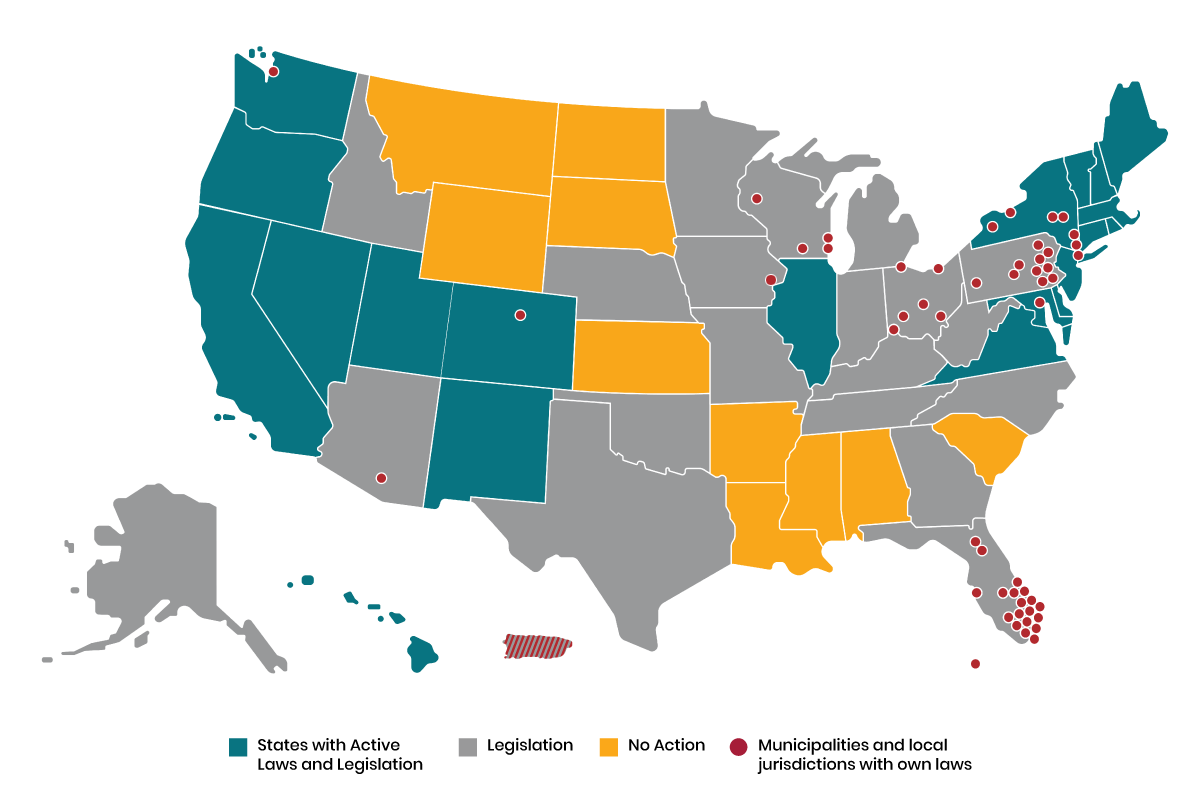
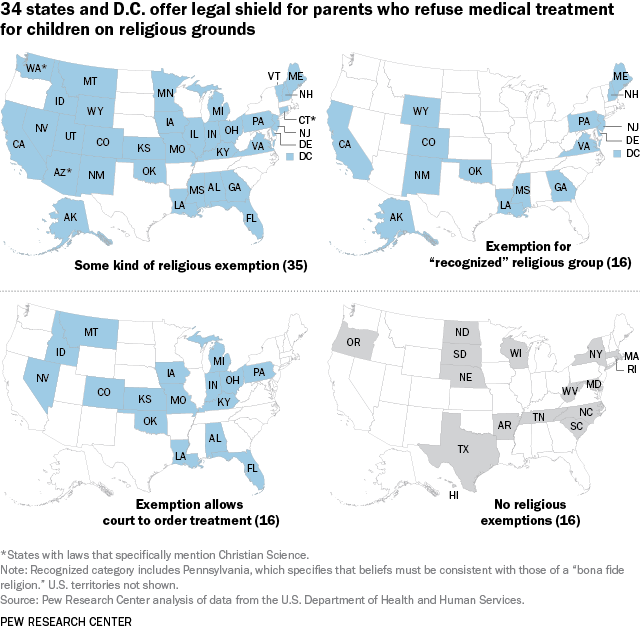
These programs run in the gaps states leave for religion. Missouri exempted faith-based residential homes from state oversight in 1982 (source). In February 2021, NBC News reported that “no state agency has the ability under Missouri law to regularly inspect how children at Agape are treated” and that its staff “don’t have to go through background checks” (source). House Bill 557, signed that July, requires faith-based boarding schools to register with the state and run federal criminal background checks (source). It lets the state close a school or remove children when abuse is suspected (source).
Lawmakers have tried since to let these homes police themselves. Rep. Adam Schnelting said his 2024 bill “allows child agencies and organizations that practice their Christian faith to continue practicing by self-regulation by doing what they’ve always done, which is operate under their own set of standards” (source). A 2026 bill would have let unlicensed Christian homes take foster children by registering with the Missouri Association of Christian Child Care Facilities instead of the state (source). The association’s president, Chad Puckett, backed it (source). He directs Show-Me Christian Youth Home, which now faces three abuse lawsuits (source). The bill stalled in committee (source).
Florida has let faith-based children’s homes answer to the Florida Association of Christian Child Caring Agencies instead of the state since 1984 (source). “The state bans spanking and severely limits the time children can be held in isolation. FACCCA does not,” the Tampa Bay Times reported in 2012 (source). Texas let its similar program expire “after a series of abuse claims at unlicensed facilities” (source). Indiana lets Hephzibah House run without a license “due to a religious exemption” (source). Missouri Rep. Keri Ingle said in 2021: “If you’re using the Bible or God to justify any of these things, that is sacrilegious. That is blasphemous” (source).
Florida #


Medical Neglect #
Texas #


Missouri #
