
Facility profile New York
Academy at Ivy Ridge
Academy at Ivy Ridge was a residential treatment center in Ogdensburg, New York, operated by World Wide Association of Specialty Programs and Schools (WWASPS). It operated from 2001 to 2009.
About Academy at Ivy Ridge
It ended its affiliation with the World Wide Association of Specialty Programs & Schools (WWASPS).source The building was bought by a Delaware corporation to teach English to Chinese students.source It was owned by Jason G. Finlinson Corporation and the Joseph and Alyn Mitchell Corporation.source Robert B. Lichfield purchased the property.source
It cost around $3,500 per month.source Remaining 60 students mostly transferred to Carolina Springs Academy.source It cost $30,000 per year (per a 2003 Watertown Daily Times story).source
It was accredited by Northwest Association of Accredited Schools (NAAS).source It was accredited by Northwest Accreditation Commission (2005 controversy).source Left the World Wide Association of Specialty Programs & Schools (WWASPS) after its withdrawal letter was accepted Nov. 29, 2005.source
Survivor testimony
What people who lived or worked here say happened. Survivors' own words are published with their permission; forum accounts are what was posted publicly and are reported as claims, not findings.
Reported on survivor forums
-
Reported November 2004 Abuse
A former student alleges cruel treatment and physical abuse by program director Jason Finlinson while enrolled at Academy at Ivy Ridge.source
-
Reported November 2004 Abuse
A student reported being subjected to cruel treatment and physical abuse, including the program director putting him on his face.source
-
Reported December 2004 Abuse
A former student at Ivy Ridge reported being physically and emotionally abused, denied medical treatment for a rash, forced to pee in water bottles during intervention, and having letters to parents blocked.source
-
Reported December 2004 Abuse
A former Ivy Ridge student reported being physically and verbally abused, denied bathroom access forcing him to pee in water bottles, and seeing another student physically abused.source
- Fornits: new WWASP school in NY, Ivy Ridge (2002-2012, 84 posts)
- Fornits: WWASPS Academic Program (2003, 10 posts)
- Fornits: WWASP CHANGES NAME OF "TASKS" CEMINARS (2003, 13 posts)
- Fornits: i am a student from the program and i love it (2003-2004, 14 posts)
- Fornits: More from the memory hole. (2003, 14 posts)
- Fornits: WWASP / Ivy Ridge / Medical News (2003, 11 posts)
- Fornits: WWASP Sues Reporter (2004, 105 posts)
- Fornits: Teen Escort service members charged with assault (2004-2005, 43 posts)
- Fornits: escorts arrested ?? anybody else see this or recognize these (2004, 11 posts)
- Fornits: Youth programs in Utah targeted (2004, 6 posts)
- Fornits: wwasp in the news (2004-2005, 64 posts)
- Fornits: To: FORMER STUDENTS OF AIR-only (2004, 1 post)
- Fornits: To: FORMER STUDENTS OF AIR-only (2004, 1 post)
- Fornits: To: FORMER STUDENTS OF AIR-only (2004, 1 post)
- Fornits: To: FORMER OF STUDENTS OF AIR-only (2004-2005, 2 posts)
- Fornits: AIR (2004, 1 post)
- Fornits: Academy at Ivy Ridge, NY WWASP Program (2004-2005, 17 posts)
- Fornits: Cultic Mind control. Am i a victim? (2004, 4 posts)
- Fornits: wwasp & ivy ridge / dog & pony show? (2005, 13 posts)
- Fornits: Utah-based group under fire (2005, 15 posts)
- Fornits: WWASPS in the news... (2005, 7 posts)
- Fornits: What is Teen Help? (2005-2006, 10 posts)
- Fornits: Ivy Ridge news artical (2005, 8 posts)
- Fornits: IVY Ridge - child abuse exposed (2005, 6 posts)
- Fornits: Accreditation.. don't let them be fooled (2005, 1 post)
- Fornits: i think this is a bunch of shit. . (2005, 43 posts)
- Fornits: GOOD ARTICLE ON IVY RIDGE!!!!! (2005, 4 posts)
- Fornits: GOOD ARTICLE ON IVY RIDGE!!!!! (2005-2006, 12 posts)
- Fornits: Ivy Ridge Settles Dispute With New York Attorney General's O (2005, 16 posts)
- Fornits: Genreal Discussion on the WWASP Parent's BBS?? (2005, 77 posts)
- Fornits: Academy at Ivy Ridge Withdraws From WWASPS (2006, 5 posts)
- Fornits: Academy at Ivy Ridge Withdraws From World Wide Association o (2006, 13 posts)
- Fornits: Let me tell you something about A.I.R...... Please READ! (2006, 4 posts)
- Fornits: Royal Peak Academy/ CO/ Hinton (2006, 4 posts)
- Fornits: No More Nightmares at Tranquility Bay? (2006, 2 posts)
- Fornits: Sister told no visit allowed for 18 year old at Ivy Ridge. (2006, 6 posts)
- Fornits: Once Agian AIR makes a Bad Choice!!! (2006, 7 posts)
- Fornits: Ivy Ridge (2006, 7 posts)
- Fornits: List of Known Abusive Programs (2006, 71 posts)
- Fornits: NEW WWASPS WEBSITE (2006, 12 posts)
- Fornits: IVY RIDGE MAKES HEADLINES AGAIN (2006, 11 posts)
- Fornits: Ivy Ridge Academy accreditation rejected (2006-2007, 7 posts)
- Fornits: Maia Szalavitz (2006, 17 posts)
- Fornits: New article in Reason (2006, 1 post)
- Fornits: The Trouble with Troubled Teen Programs (2007, 12 posts)
- Fornits: Maia's Blog on Randall Hinton (2007, 4 posts)
- Fornits: HLA Becomes the First TBS Required to Be Licensed/Regulated (2007, 23 posts)
- Fornits: Search underway for 4 Ivy Ridge students (2007, 18 posts)
- Fornits: Joe Gauld... on Education (2007-2011, 140 posts)
- Fornits: Lawsuits hit a Romney money man (2007, 8 posts)
- Fornits: Lichfield's Republican Fundraising Efforts Hit A Snag (2007, 6 posts)
- Fornits: Romney and Sembler and Straight oh yeah baby! (2007, 23 posts)
- Fornits: Romney, Torture, and Teens (2007, 4 posts)
- Fornits: Keith Allen writing puff pieces about WWASPS programs (2007, 1 post)
- Fornits: Romney fires Robert Lichfield (2007, 5 posts)
- Fornits: Fornits wiki status (2007, 44 posts)
- Fornits: SHAWN JONES (2007, 1 post)
- Fornits: Top (Bottom) 10 List of Worst Programs that still Exist (2008, 4 posts)
- Fornits: Blod and Beutiful star promotes private prison (AIR) (2008, 5 posts)
- Fornits: WWASP's Internal Phone Book (2009-2010, 11 posts)
- Fornits: WWASP entities in Turley lawsuit (consolidated) (2011, 3 posts)
Timeline
From the records: who ran it and the deals that moved it, its names, and the deaths, incidents, inspection findings, lawsuits and news stories on file. Point at an event, or tap "More about this", for the details.
2001
Opened in Ogdensburg, New York
2003
Provo Canyon School Closure
1 article in The Salt Lake Tribune.
Provo Canyon School Closure May 25, 2003
Following the arrest of director Narvin Lichfield and an exodus of students prompted by Costa Rican officials, the Academy at Dundee Ranch faced closure. The facility was part of the World Wide Association of Specialty Programs and Schools network, which faced various allegations including false imprisonment...
2005
Investigation
In 2005 Academy at Ivy Ridge entered an agreement with the New York attorney general, who accused it of fraudulent and illegal conduct in awarding unauthorized diplomas.
Investigation
Investigation
In February 2005 the New York Attorney General's office subpoenaed Ivy Ridge and began investigating allegations of physical abuse and later its academics and accreditation.
Investigation February 2005
Arrest
Police arrested 12 students on rioting and assault charges after the May 2005 riot and 48 were expelled.
Arrest May 2005
Incident
On May 16, 2005 a riot broke out at Ivy Ridge; eleven students escaped, 12 students were arrested and 48 were expelled.
Incident May 16, 2005
License action
On August 17, 2005 Ivy Ridge was ordered to pay $250,000 in civil penalties, stop issuing unauthorized diplomas, stop advertising accreditation and make partial refunds.
License action August 17, 2005
2006
Lawsuit
NAAS, which accredited the program as NWAC, was a co-defendant in a 2006 class action against the World Wide Association of Specialty Programs and Schools over...
Lawsuit
NAAS, which accredited the program as NWAC, was a co-defendant in a 2006 class action against the World Wide Association of Specialty Programs and Schools over the Academy at Ivy Ridge (U.S. District Court, Northern District of New York).
source
Lawsuit
A class action filed July 2006 for 25 plaintiffs against Academy at Ivy Ridge, WWASPS, Robert Lichfield, Premier Educational Systems, Jason Finlinson and...
Lawsuit July 2006
A class action filed July 2006 for 25 plaintiffs against Academy at Ivy Ridge, WWASPS, Robert Lichfield, Premier Educational Systems, Jason Finlinson and others alleged the school fraudulently advertised itself as accredited and licensed to issue diplomas; tuition was about $2,800 to $4,000 monthly.
Injury
Four 17-year-old boys at Academy At Ivy Ridge allegedly beat a new 14-year-old student and sent him to the hospital; the school expelled the four boys.
Injury September 12, 2006
License action
Ivy Ridge Academy's accreditation did not come up for approval at the October 2006 meeting of the New York State Board of Regents, delaying the school's...
License action October 24, 2006
Ivy Ridge Academy's accreditation did not come up for approval at the October 2006 meeting of the New York State Board of Regents, delaying the school's ability to issue high school diplomas, per NewsWatch50 in Watertown, NY.
Criminal charge
In November 2006 two dorm parents were charged with endangering the welfare of a child for failing to prevent the assault.
Criminal charge November 2006
License action
In late November 2006 the New York State Education Department denied Ivy Ridge authorization to issue diplomas, calling it principally a behavior modification...
License action November 2006
In late November 2006 the New York State Education Department denied Ivy Ridge authorization to issue diplomas, calling it principally a behavior modification center; enrollment then fell from about 500 to under 100.
Dungan, et al. v. The Academy at Ivy Ridge, et al.
Dungan, et al. v. The Academy at Ivy Ridge, et al.
Families of former students filed a class action complaint on July 25, 2006 in federal court in the Northern District of New York against The Academy at Ivy Ridge in Ogdensburg, its owners, WWASP and Robert Lichfield, an accrediting body, and several referral companies.
- Court
- U.S. District Court for the Northern District of New York
- Status
- Filed
2007
Runaway
Four students ran away from the Academy at Ivy Ridge in Ogdensburg, NY on March 19, 2007, forcing their way past dorm parents; spokesperson Tom Nichols described the escape.
Runaway March 2007
2009
Closure order
The program closed in 2009 following the 2005 Attorney General investigation, the riot and an enrollment decline.
Closure order
Investigation
The Academy at Ivy Ridge was investigated over its accreditation, resulting in $1.65 million in refunds and fines; a riot at the school led to 40 students...
Investigation Reported April 2009
The Academy at Ivy Ridge was investigated over its accreditation, resulting in $1.65 million in refunds and fines; a riot at the school led to 40 students being expelled and enrollment dropping from 500 to fewer than 100.
Lawsuit
In April 2009 a judge refused to dismiss a lawsuit over the diploma issue and the school closed later that year.
Lawsuit April 2009
Closed
2024
Justice for Jonah Bevin
1 article in The Times.

Justice for Jonah Bevin July 13, 2024
Lawsuits
-
Dungan, et al. v. The Academy at Ivy Ridge, et al.
Families of former students filed a class action complaint on July 25, 2006 in federal court in the Northern District of New York against The Academy at Ivy Ridge in Ogdensburg, its owners, WWASP and Robert Lichfield, an accrediting body, and several referral companies. The complaint alleges the defendants falsely told parents and the public that Ivy Ridge was licensed and authorized by New York State to award high school credits and diplomas. It brings claims under RICO and New York law, including fraud, conspiracy, deceptive business practices and breach of contract. The document on file is the complaint and does not show how the case ended.
-
Wood, et al. v. World Wide Association of Specialty Programs and Schools, Inc., et al.
William Chase Wood and several hundred other former students and their parents sued the World Wide Association of Specialty Programs and Schools (WWASPS), founder Robert Lichfield, his business partners and dozens of affiliated programs, marketing and billing companies in Utah's Fifth Judicial District Court in Washington County. The document on file is the plaintiffs' 228-page first amended complaint, submitted July 24, 2013, which refers to claim sheets filed in the case on December 17, 2012 in opposition to a WWASPS motion to dismiss. It alleges that students placed at WWASPS programs in Utah, other states, Mexico, Jamaica, Costa Rica, Samoa and the Czech Republic from the mid-1990s to the mid-2000s were beaten, restrained, locked in isolation and small boxes or cages, denied food and medical care, sexually abused and forced to work without pay. It alleges the programs operated as a single enterprise that deceived parents and concealed the abuse, and brings negligence, fraud, contract, conspiracy and emotional distress claims. The document does not show how the case ended.
Incidents on record
-
2005 Investigation
In 2005 Academy at Ivy Ridge entered an agreement with the New York attorney general, who accused it of fraudulent and illegal conduct in awarding unauthorized diplomas.source
-
February 2005 Investigation
In February 2005 the New York Attorney General's office subpoenaed Ivy Ridge and began investigating allegations of physical abuse and later its academics and accreditation.source
-
May 2005 Arrest
Police arrested 12 students on rioting and assault charges after the May 2005 riot and 48 were expelled.source
-
May 16, 2005 Incident
On May 16, 2005 a riot broke out at Ivy Ridge; eleven students escaped, 12 students were arrested and 48 were expelled.source
-
August 17, 2005 License action
On August 17, 2005 Ivy Ridge was ordered to pay $250,000 in civil penalties, stop issuing unauthorized diplomas, stop advertising accreditation and make partial refunds.source
-
Investigation
The Academy at Ivy Ridge agreed to pay a $250,000 fine and offer restitution to some parents in a settlement with the New York State Attorney General over its accreditation and issuing of diplomas.source
-
2006 Lawsuit
NAAS, which accredited the program as NWAC, was a co-defendant in a 2006 class action against the World Wide Association of Specialty Programs and Schools over the Academy at Ivy Ridge (U.S. District Court, Northern District of New York).source
-
July 2006 Lawsuit
A class action filed July 2006 for 25 plaintiffs against Academy at Ivy Ridge, WWASPS, Robert Lichfield, Premier Educational Systems, Jason Finlinson and others alleged the school fraudulently advertised itself as accredited and licensed to issue diplomas; tuition was about $2,800 to $4,000 monthly.source
-
September 12, 2006 Injury
Four 17-year-old boys at Academy At Ivy Ridge allegedly beat a new 14-year-old student and sent him to the hospital; the school expelled the four boys.source 1, source 2
-
October 24, 2006 License action
Ivy Ridge Academy's accreditation did not come up for approval at the October 2006 meeting of the New York State Board of Regents, delaying the school's ability to issue high school diplomas, per NewsWatch50 in Watertown, NY.source
-
November 2006 Criminal charge
In November 2006 two dorm parents were charged with endangering the welfare of a child for failing to prevent the assault.source
-
November 2006 License action
In late November 2006 the New York State Education Department denied Ivy Ridge authorization to issue diplomas, calling it principally a behavior modification center; enrollment then fell from about 500 to under 100.source
-
License action
The New York State Education Department rejected the Academy at Ivy Ridge's application and would not let it resume issuing high school diplomas, saying it was principally a behavior modification program and not a school (as quoted by HEAL from news reports).source
-
March 2007 Runaway
Four students ran away from the Academy at Ivy Ridge in Ogdensburg, NY on March 19, 2007, forcing their way past dorm parents; spokesperson Tom Nichols described the escape.source
-
2009 Closure order
The program closed in 2009 following the 2005 Attorney General investigation, the riot and an enrollment decline.source
-
Reported April 2009 Investigation
The Academy at Ivy Ridge was investigated over its accreditation, resulting in $1.65 million in refunds and fines; a riot at the school led to 40 students being expelled and enrollment dropping from 500 to fewer than 100.source
-
April 2009 Lawsuit
In April 2009 a judge refused to dismiss a lawsuit over the diploma issue and the school closed later that year.source
-
Abuse
Allegations include poor living conditions, unauthorized medical procedures, psychological torture, sexual abuse and physical abuse.source
-
Restraint
Security camera videos obtained from the school show violent restraint tactics used against students.source
-
License action
The New York Attorney General accused Ivy Ridge of issuing diplomas illegally because the accrediting association had no license to do business in New York, and of misleading parents about diplomas.source
-
License action
Settled with the NY Attorney General: $250,000 fine and restitution over illegally issued diplomas and misleading accreditation claims.source
News coverage
-
I was abandoned 2.5k miles from home at ‘Lord of the Flies’ troubled teen school – I thought I’d die any day from abuse
Survivors Allen Knoll and Dave Bowsher made a documentary together called Teen Torture Inc., which is streaming now on HBO Max. Bethel Boys Academy in Lucedale, Mississippi was closed in 2008 Many pictures of students and campus life Founded in 1978 by Reverend Herman Fountain Students were repeatedly removed from campus in connection with credible allegations of child abuse beginning in 1980 yet the school was allowed to remain open for 10 more years When the state finally intervened, Herman Fountain assaulted a police officer and consequently served 9 months in prison After prison, Fountain reopened the facility under a modified name in 1994 A staff member who was known to be particularly abusive, William Knott, was never held accountable for his crimes at Bethel. However, he was sentenced to 20 years in prison for child abuse at his next workplace, Restoration Youth Academy, in 2017 Includes stories from Bethel survivors Allen Knoll, Daniel Edwards, Dave Bowsher, Ralph Nock, Steven Caccamo, Colin Buckley Buckley and Caccamo are also survivors of Academy at Ivy Ridge Buckley and Caccamo founded a non-profit called the Troubled Teen Advocate Group to help other survivors Bethel survivors filed a class action lawsuit that failed Herman Fountain’s son, John, took over as director in the final years of the academy Parents filed a lawsuit against Bethel that was settled out of court A lawsuit filed by a survivor’s father resulted in Bethel and Knott being ordered to pay out nearly $1m Bethel rebranded as Eagle Point Christian Academy in 2005
-
Mitt Romney's Campaign Connections to Abusive Adolescent Treatment Programs
The article examines the connections between presidential candidate Mitt Romney's campaign fundraisers and residential treatment programs facing widespread allegations of abuse. Founders Robert Lichfield of the World Wide Association of Specialty Programs and Schools (WWASPS) and Mel Sembler of Straight Inc. faced numerous lawsuits and investigations regarding allegations of physical restraint, food and sleep deprivation, and psychological abuse.
-
Overview of World Wide Association of Specialty Programs and Schools Amid Costa Rica Facility Closure archived copy
Following the arrest of director Narvin Lichfield and an exodus of students prompted by Costa Rican officials, the Academy at Dundee Ranch faced closure. The facility was part of the World Wide Association of Specialty Programs and Schools network, which faced various allegations including false imprisonment, misrepresentation, and physical restraint.

Videos
Staff
Administration
-
Jason Finlinson
Former Director (2006)source
Elsewhere in the industry
- Casa by the Sea Owner, Director
- Second Chances Day Staff
- Horizon Academy Staff
- Cross Creek Manor Staff, 2018
- Never Give Up Youth Healing Services Former Day staff
-
Amy H. Ritchie
Former Assistant Director of Girls Residential Life, Assistant Residential Program Director, Assistant Residential Director (2001-2008, r/troubledteens wiki)source
Elsewhere in the industry
- Sunset Bay Academy Co-Founder, Program Director, 2008-2011
Notable staff
-
Michael F. Camillo
Psychiatrist
-
Matt Burnham
Former Therapistsource
-
Erik Brossoit
Former Assistant Director of Boys Residential Lifesource
-
George Tulip
Former Director of Boys Residential Lifesource
-
Keith E. Renaud
Former Dorm Parent (2006, r/troubledteens wiki)source
-
Robert B. Lichfield
Former Staffsource
Elsewhere in the industry
- Provo Canyon School Dorm parent, Director, Staff, Director of Residential Living, 1977-2025
- Teen Help Owner, 1991-2025
- Wwasp Owner/Founder, Founder, 1997-2025
- World Wide Association of Specialty Programs and Schools (WWASPS) Founder, 2009-2011
- Teen Mentor School Founder, Owner and Administrator, Registered the business, 2010-2016
- Cross Creek Manor Staff, 2018
- Cross Creek Programs Founder, Owner, 2025-2026
- Cross Creek Staff
- Browning Distance Learning Academy owner
-
Joseph Mitchell
Former Director of Girls Residential Life (2001, r/troubledteens wiki)source
Elsewhere in the industry
- Teen Help Recruiter, 1998
-
John E. Free
Former Dorm Parent (2006, r/troubledteens wiki)source
-
Glenn F. Bender
Former Staffsource
Elsewhere in the industry
- Carlbrook School Dean of Academics
- Cascade School Staff
- Blue Ridge School Staff
- Alldredge Wilderness Journey Director of Admissions and Marketing
- Rocky Mountain Academy Staff
- Academy at Swift River Admissions Director, before 2019
-
Alyn Mitchell
Former Defendantsource
Rules and practices
Practices
- Restraint
- Level system
- Behavior contracts
- Limits on contact with family
Treatment methods
- Large Group Awareness Training seminars
- Behavior modification
- Feedback or hotseat groups (the Game)
Program philosophy
- Positive Peer Culture
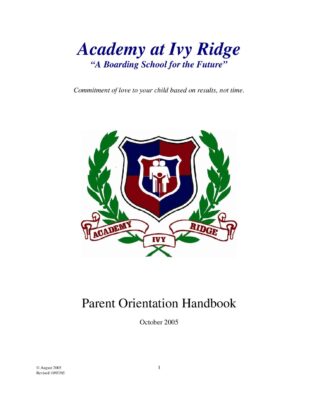
From the program's own papers in our library: Academy at Ivy Ridge Parent Orientation Handbook 2005; Ivy Ridge 2004 Upper Status Student's Handbook; Ivy Ridge 2004 Lower Status Student's Handbook Rev A.
Levels and phases
- In the "Youth Leadership Phase" students had to learn to confront their peers. source
- Student "bunk leaders" were responsible for other students' conduct, and "facility leaders" worked three days a week as staff assistants; both roles were required to complete the program. source
- Upper status students worked "on-shift" monitoring a "family" of lower status students. source
Rules
- Students stood at attention and marched single file to class and activities. source
- The code of conduct barred students from saying anything negative about the school, the staff, the country or other students. source
- Students could never interfere with staff "correction" of another student. source
- Items not on the "Things To Bring" list were confiscated with no guarantee of return. source
- Each class period began with five minutes of enforced silence in the "family"; no one could speak, ask a question or leave their seat. source
- Students had to raise a hand and ask permission to pass gas, then do so standing in a designated area with staff; failing to was a "CAT 1 Rude Manners" consequence. source
- Students could not speak in the classroom until a dorm parent or teacher acknowledged them and gave permission. source
- Even peer tutoring had to be listened to by a staff member or upper status student standing beside them; talking without a listener was "Unauthorized Communication". source
5 more
- Each student's "bunk buddy" recorded where the student was during the day, including "intervention". source
- Upper status students escorted lower status students to the bathroom in groups and could not talk with them there. source
- Students had to follow a "chain of command" and could speak only to the level directly above them; going over it could earn an "NFD". source
- Students were not allowed to touch other students; they had to be silent getting on and off buses. source
- Even upper status students' doors had to stay open at least 2 inches at night. source
Punishments
- Under the "Zero Tolerance Policy", students who were aggressive, had to be physically restrained, needed long one-to-one intervention, or tried to leave were sent at the parents' expense to Tranquility Bay (Jamaica) or another placement. source
- "Runaway Talk" was a Category 3 rule violation; "Runaway Plans" was Category 4 (loss of three statuses). source
- "Self-Inflicted Injury" was listed as a Category 5 rule violation, the most serious, alongside running away and drugs, with a move back to "Regular" status with zero merits. source
- Students placed on "Intervention" status, in an office away from peers, had to write a 1,000-word essay before returning to activities. source
- Asking a teacher to clear a failed test so it could be retaken was punished as "Manipulation". source
- In the dining room, a lower status student spoken to by an upper status student received a "BRV". source
- If an unapproved movie was watched in the lounge, everyone in the room received a "BRV". source
- Every visit or home pass required a signed contract of 3-5 goals; breaking it earned a "CAT 305, violation of visit". source
Contact with family
- No phone calls were allowed until the child earned "Advanced" status; the handbook said earlier calls would let the child try to convince parents to remove them. Even then, calls were "short and not too frequent" and collect. source
- Parents were told not to ask for an exception to speak to a child who had not earned phone privileges. source
- Students could write only to their parents; parents were asked to send return-address stamps so the school could check mail came only from or went only to parents. source
- The first recommended visit was the PC1 workshop, about seven months after enrollment, and only after both parent and child had completed the Discovery seminar. source
- Parents could tour the facility at any time, but without the child seeing them. source
- A first visit was approved only if the child's phone calls with parents had been "productive". source
- Even at "Service Status", an upper status level, a student had two phone calls a month with parents (three at Honor, four at High Honor). source
- At the PC2 and PC3 Parent-Child seminars, held off campus with parents, students could not communicate with friends, call anyone but immediate family, or use the internet or email. source
Restraint, isolation and transport
- The handbook said staff restrained students only as a last resort, while also saying highly oppositional students occasionally made physical intervention unavoidable. source
- The handbook named "run-watch" and "suicide-watch" as statuses under which students were not in uniform. source
- The handbook barred students from acting as staff on transports and from assisting staff in runaway recovery outside the school. source
Searches
- Only parents could write to students, and every letter was opened in front of staff. source
- Students' belongings were inventoried after every visit, home pass or seminar. source
Therapy and seminars
- Premier Educational Seminars barred pregnant parents, those with high blood pressure or heart care, and those in intensive therapy from its parent seminars. source
- Daily "Progress Review" was a staff-run peer group in which students gave and received feedback on their problems. source
- Medication was self-administered under non-medical staff, and the handbook warned students might go without their medication for periods. source
- The school's services included no formal individual therapy; the handbook said it was usually not needed or recommended. source
- School labs were suspended during the "Premier Education seminars" held at the school. source
- Upper status students sat in on lower status students' group and were required to give feedback. source
- Students brought a signed seminar contract to Parent-Child seminars and a "Life Contract" to PC3; an unsigned seminar contract was a Category 3 violation. source
- Upper status students were used to staff the seminars. source
Daily life
- The handbook said staff weighed cost to parents against medical need when deciding whether a child saw a doctor or dentist. source
- Medical decisions were often made by non-medical staff. source
School
- Students who completed high school requirements did not receive their diploma until they left the program. source
Admission and fees
- The handbook said students who turned out to be unsuitable would be referred to a treatment program, not sent home, and that this delayed their return home. source
- The handbook disclaimed responsibility for injuries, self-harm, suicide attempts and sexual activity despite supervision. source
What parents were told
- Parents were asked to fax or email a "Commitment Letter" saying they would keep the child in the program "regardless of how long it may take"; the family representative went over it with the child. source
- The handbook told parents that a child's complaints about the school were a "tactic" to set parents and school against each other. source
- A child who complained to parents instead of filing an internal grievance was presented as likely manipulating them. source
- The handbook listed statements such as "I'm treated like a prisoner!", "No one cares about me; staff do whatever they want to me!" and "You can't believe the staff" as the child's "Guilt Trip Phase". source
- Parents were told every phase of the child's distress (denial, guilt trip, anger, negotiation) was an effort to get them to remove the child, and to "remain strong in their resolve". source
- Parents who had promised the child a set length of stay were told to take it back and tell the child they would stay until they qualified for "Completion". source
- On off-grounds visits and home passes students had to be under 100% supervision by family, with no friends. source
- On home passes the student was to keep Ivy Ridge's hours under "continuous family structure". source
Connections on the network map
The companies, people and programs our research map ties to this program. Open it on the network map.
Other staff
Ownership
- WWASPS
Documents
Woodbury Reports Mentions (3)


From the Unsilenced archive
768 documents about Academy at Ivy Ridge that Unsilenced collected and Kids Over Profits does not hold a copy of. They open on Unsilenced's Google Drive. Their whole folder: Academy at Ivy Ridge.
Documents
- 0010 Rev A - Procedure Documentation System.doc
- 02_20050403_192006_450.avi
- 06.pdf
- 07_20050227_093432_1000.avi
- 1 - COMPLAINT against all defendants.pdf
- 1-9-04 part 2.avi
- 1004 Office Supplies Rev A.doc
- 1005 Store Supply Procedure Rev A.doc
- 11-100.avi
- 12.25.gym.avi
- 134 - MOTION to Dismiss Motion Hearing set for 1-8-2007.pdf
- 139 Supporting Affidavits.pdf
- 13_20040521_202109_100.avi
- 13_20050305_183923_500.avi
- 13_20050330_204156_1500.avi
- 145 - REQUEST FOR ENTRY OF DEFAULT as to Optimum Billing Services LLC.pdf
- 148 - MOTION to Set Aside Default Motion Hearing.pdf
- 149 TRANSCRIPT of Proceedings (Unredacted) Oral Argument held on February 12, 2007.pdf
- 153 - MOTION to Dismiss by R&B Billing LLC.pdf
- 156 - MOTION to Certify Class Motion Hearing set.pdf
- 163 - AFFIDAVIT in Opposition.pdf
- 166 - Letter Motion from Eric C. Nordby in Opposition to Defendants' Request.pdf
- 166 - Letter Motion from Eric C. Nordby in Opposition to Defendants_ Request.pdf
- 167 - ORDER TO SHOW CAUSE MOTION for Temporary Restraining Order.pdf
- 180 - AFFIDAVIT in Opposition re [157]Memorandum in support of MOTION to Certify Class.pdf
- 18_20050329_205253_300.avi
- 2001 Student Uniforms Rev A.doc
- 2002-8-19 - Bruce Wakker - Superintendent of Schools.pdf
- 2002-8-20 - David Sickler - New York Labor Services Representative.pdf
- 2003-7-29 - William D Nelson - City of Ogdensburg Mayor.pdf
- 2004-2-4 - Colleen Powes - Executive Director of Ogdensburg Chamber of Commerce.pdf
- 208-1.pdf
- 208-2.pdf
- 208-3.pdf
- 208.pdf
- 21_20050419_174335_075.avi
- 221.pdf
- 222.pdf
- 231-1.pdf
- 231-10.pdf
- 231-2.pdf
- 231-3.pdf
- 231-4.pdf
- 231-5.pdf
- 231-6.pdf
- 231-7.pdf
- 231-8.pdf
- 231-9.pdf
- 231.pdf
- 23_20040522_145112_030.avi
- 23_20040522_145143_040.avi
- 23_20050315_200727_075.avi
- 23_20050405_185528_200.avi
- 23_20050417_172304_350.avi
- 24.avi
- 24_20040522_145149_050.avi
- 26--_150.avi
- 27.pdf
- 275-1.pdf
- 275-2.pdf
- 275-3.pdf
- 275-4.pdf
- 275-5.pdf
- 275-6.pdf
- 275-7.pdf
- 275-8.pdf
- 275.pdf
- 278-1.pdf
- 278-2.pdf
- 278-3.pdf
- 278-4.pdf
- 278.pdf
- 28.pdf
- 282-1.pdf
- 282-2.pdf
- 282-3.pdf
- 282-4.pdf
- 282-5.pdf
- 282.pdf
- 289 - MOTION for Preliminary Injunction and Temporary Restraining Order.pdf
- 293 - AFFIDAVIT in Opposition to Plaintiffs' Motion by Havenridge Funding.pdf
- 293 - AFFIDAVIT in Opposition to Plaintiffs_ Motion by Havenridge Funding.pdf
- 295 - RESPONSE to Motion re [289] MOTION for Preliminary Injunction and Temporary Restraining Order.pdf
- 296 - RESPONSE to Motion re [289] MOTION for Preliminary Injunction and Temporary Restraining Order.pdf
- 297-1.pdf
- 297-2.pdf
- 297.pdf
- 3005 Release of Student Information Rev A.DOC
- 3006 Rev B Student Exit Interviews.doc
- 3008 Off Grounds and Home Passes Rev B.doc
- 3010 Red Flags Rev A.doc
- 303 - TRANSCRIPT.pdf
- 317 - MOTION to Dismiss.pdf
- 321-1.pdf
- 321-10.pdf
- 321-11.pdf
- 321-12.pdf
- 321-13.pdf
- 321-14.pdf
- 321-15.pdf
- 321-16.pdf
- 321-17.pdf
- 321-2.pdf
- 321-3.pdf
- 321-4.pdf
- 321-5.pdf
- Court filing - case 7:06-cv-00908, doc. 321-7, filed Sep 25, 2009
- 321-7.pdf
- 321-8.pdf
- 321-9.pdf
- 321.pdf
- 33 - AFFIDAVIT in Support re [32] MOTION to Dismiss filed by Robert B. Lichfield.pdf
- 34 - MEMORANDUM OF LAW filed by Robert B. Lichfield.pdf
- 39.pdf
- 4-16-04.avi
- 4001 Conducting Family Meetings & Reflections Rev B.DOC
- 4004 Runaway Recovery Operations Rev A.DOC
- 4010 Student Leaders Rev A.doc
- 4016 New Student Arrivals Rev A.doc
- 4018 Student Behavior Problems Rev A.doc
- 4019 Student Discipline Rev A.DOC
- 4020 PC Seminars Approval Process Rev B.doc
- 4500 Rev A Student Consumer Rights.DOC
- 4501 Video Policy Rev A.DOC
- 4502 Student Activities Rev A.DOC
- 4503 Student Personal Property Rev A.DOC
- 4505 Bathroom Procedures Rev A.DOC
- 4507 Bus Transportation Rev A.DOC
- 4509 Chores and Cleaning Rev A.DOC
- 4510 Dining Room Rules Rev A.DOC
- 4511 Student Dorms Rev A.DOC
- 49 - MOTION to Dismiss Motion.pdf
- 5001 Student's Personal Books Rev B.DOC
- 5002 Student Library Use Rev A.DOC
- 5003 Student's Approved Reading List Rev A.DOC
- 5006A.mp.academic.instruction.labs.DOC
- 5009A.mp.transcrpt.procedures.DOC
- 5010.A.MP.Academic.Ethics.DOC
- 5011A.MP.Academic.Goals.Requirements.DOC
- 5012A.mp.academic.guidance.DOC
- 5013A.MP.Academic.Progress.Reporting.doc
- 5014A.MP.Academic.Test.Scoring.DOC
- 5016.A.mp.peer.assistance.DOC
- 5018 Academic Course Information Rev A.DOC
- 53 - MEMORANDUM OF LAW In Opposition to Defendant Lichfield's Motion to Dismiss filed by W. Patrick Dungan,.pdf
- 55.pdf
- 56 - MOTION to Certify Class Motion Hearing.pdf
- 57-1.pdf
- 57-2.pdf
- 57.pdf
- 6--_100.avi
- 6001 Dental Care for Students Rev A.DOC
- 6004 Student Immunizations Rev A.doc
- 63.pdf
- 7-10-04 run away.avi
- 7001 Rev A Personnel Qualifications and Training.doc
- 7002 Rev A Job Descriptions.doc
- 7003 Rev A Recruiting Procedures.doc
- 7004 Rev A Performance Reviews.doc
- 7005 Rev A Salary Administration.doc
- 7006 Rev A New Employee Orientation.doc
- 7007 Leave Policy Rev F.doc
- 7008 Rev A Travel Policy.doc
- 7009 Employee Discipline Rev A.doc
- 7010 Employee Code of Conduct Rev A.doc
- 7012 Media Communications Rev A.doc
- 7013 Rev A Employee-of-the-Month.doc
- 7014 Staff Dress Code Rev B.doc
- 71-1.pdf
- 71.pdf
- 73 - MEMORANDUM OF LAW.pdf
- 74-1.pdf
- 74-10.pdf
- 74-11.pdf
- 74-12.pdf
- 74-13.pdf
- 74-14.pdf
- 74-15.pdf
- 74-16.pdf
- 74-2.pdf
- 74-3.pdf
- 74-4.pdf
- 74-5.pdf
- 74-6.pdf
- 74-7.pdf
- 74-8.pdf
- 74-9.pdf
- 74.pdf
- 7500 Rev A Director of Fam Comm Job Description.doc
- 7501 Rev A Fam Rep Job Description.doc
- 7502 Rev A FR Floater Job Description.doc
- 7503 Rev A Parent Coordinator Job Description.doc
- 7506 Media Coordinator Job Description Rev A.doc
- 7509 Admissions Coordinator Job Description Rev A.doc
- 7510 Rev A Director of Academics Job Description.doc
- 7511 Rev B Teacher Job Description.doc
- 7512 Rev B Registrar Job Description.doc
- 7513 Rev A Librarian Job Description.doc
- 7514 Rev B Teacher's Aide Job Description.doc
- 7515 Rev A Guidance Counselor Job Description.doc
- 7516 Rev A Payroll Coordinator Job Description.doc
- 7520 Rev A Director of Boys Program Job Description.doc
- 7521 Rev A Director of Girls Program Job Description.doc
- 7522 Rev A Director of Human Resources Job Description.doc
- 7523 Rev B Director of Support Operations Job Description.doc
- 7524 Rev A Dorm Parent Job Description.doc
- 7525 Rev A Dorm Parent Supervisor Job Description.doc
- 7526 Rev A Driver Job Description.doc
- 7527 Rev A Facility Maintenance Staff Job Description.doc
- 7528 Rev B HR Coordinator Job Description.doc
- 7529 Rev A Kitchen Staff Job Description.doc
- 7530 Rev A Kitchen Supervisor Job Description.doc
- 7531 Rev A Laundry Job Description.doc
- 7533 Rev A Night Watch Job Description.doc
- 7534 Rev A Office Administrator Job Description.doc
- 7535 Rev A Assistant Director of Boys Program Job Descriptio.doc
- 7539 Rev A Assistant to the Director of Support Operations J.doc
- 7540 Rev A Medical Secretary Job Description.doc
- 7542 Rev A Administrative Assistant Job Description.doc
- 7543 Rev A Assistant Academic Coordinator Job Description 1-.doc
- 7544 Academic Coordinator Job Description.doc
- 7545 Assistant Director of Academics Job Description.doc
- 7547 Rev A Registered Nurse Job Description.doc
- 7548 Rev A Licensed Practical Nurse Job Description.doc
- 7549 Rev A Medical Assistant Job Description.doc
- 7551 Rev A Public Relations Coordinator Job Description.doc
- 7552 Rev A Seminar Coordinator Job Description.doc
- 7553 Rev A Assistant Director of Support Operations Job Desc.doc
- 80-1.pdf
- 80-2.pdf
- 80-3.pdf
- 80-4.pdf
- 80-5.pdf
- 80-6.pdf
- 80-7.pdf
- 80.pdf
- 8012 Emergency Response Procedure Rev A.doc
- 8014 Student Uprising Emergency Plan Rev A.doc
- 8015 Food Service Operations Rev A.DOC
- 8016 Rev B Suicide Prevention.doc
- 85 - First MOTION for Temporary Restraining Order Not moving for TRO but Show Cause Order to Quash Subpoena by Academy at Ivy Ridge.pdf
- 88-1.pdf
- 88-2.pdf
- 88-3.pdf
- 88-4.pdf
- 88-5.pdf
- 88.pdf
- 89-1.pdf
- 89.pdf
- 91 - MOTION for Temporary Restraining Order Not moving for TRO but Show Cause Order to Quash Subpoena by Northwest Association of Schools.pdf
- 94.pdf
- 97.pdf
- 98 - RESPONSE in Opposition re [91] MOTION for Temporary Restraining Order Not moving for TRO but Show Cause Order to Quash Subpoena.pdf
- Academy at Ivy Ridge - Additional Addendums.pdf
- Academy at Ivy Ridge Cash In-Advanced Payment Plan.pdf
- Academy at Ivy Ridge Deed (1).pdf
- Academy at Ivy Ridge Deed (2).pdf
- Academy at Ivy Ridge Deed (3).pdf
- Academy at Ivy Ridge Deed (4).pdf
- Academy at Ivy Ridge Deed (5).pdf
- Academy at Ivy Ridge Deed (6).pdf
- Academy at Ivy Ridge Enrollment Agreement.pdf
- Academy at Ivy Ridge Enrollment Questionnaire.pdf
- Academy at Ivy Ridge Letter to Parents (2).pdf
- Academy at Ivy Ridge Mortgage.pdf
- Academy at Ivy Ridge Parent Checklist (2).pdf
- Academy at Ivy Ridge Parent Checklist.pdf
- Academy at Ivy Ridge promo piece.pps
- Academy at Ivy Ridge Website.pdf
- ACADEMY OF IVY RIDGE WWASP CHILD ABUSE PROGRAM 5428 NY-37 Ogdensburg, NY 13669 #1.mp4
- ACADEMY OF IVY RIDGE WWASP CHILD ABUSE PROGRAM 5428 NY-37 Ogdensburg, NY 13669 #10.mp4
- ACADEMY OF IVY RIDGE WWASP CHILD ABUSE PROGRAM 5428 NY-37 Ogdensburg, NY 13669 #11.mp4
- ACADEMY OF IVY RIDGE WWASP CHILD ABUSE PROGRAM 5428 NY-37 Ogdensburg, NY 13669 #12.mp4
- ACADEMY OF IVY RIDGE WWASP CHILD ABUSE PROGRAM 5428 NY-37 Ogdensburg, NY 13669 #13.mp4
- ACADEMY OF IVY RIDGE WWASP CHILD ABUSE PROGRAM 5428 NY-37 Ogdensburg, NY 13669 #14.mp4
- ACADEMY OF IVY RIDGE WWASP CHILD ABUSE PROGRAM 5428 NY-37 Ogdensburg, NY 13669 #15.mp4
- ACADEMY OF IVY RIDGE WWASP CHILD ABUSE PROGRAM 5428 NY-37 Ogdensburg, NY 13669 #16.mp4
- ACADEMY OF IVY RIDGE WWASP CHILD ABUSE PROGRAM 5428 NY-37 Ogdensburg, NY 13669 #17.mp4
- ACADEMY OF IVY RIDGE WWASP CHILD ABUSE PROGRAM 5428 NY-37 Ogdensburg, NY 13669 #2.mp4
- ACADEMY OF IVY RIDGE WWASP CHILD ABUSE PROGRAM 5428 NY-37 Ogdensburg, NY 13669 #3.mp4
- ACADEMY OF IVY RIDGE WWASP CHILD ABUSE PROGRAM 5428 NY-37 Ogdensburg, NY 13669 #4.mp4
- ACADEMY OF IVY RIDGE WWASP CHILD ABUSE PROGRAM 5428 NY-37 Ogdensburg, NY 13669 #5.mp4
- ACADEMY OF IVY RIDGE WWASP CHILD ABUSE PROGRAM 5428 NY-37 Ogdensburg, NY 13669 #6.mp4
- ACADEMY OF IVY RIDGE WWASP CHILD ABUSE PROGRAM 5428 NY-37 Ogdensburg, NY 13669 #7.mp4
- ACADEMY OF IVY RIDGE WWASP CHILD ABUSE PROGRAM 5428 NY-37 Ogdensburg, NY 13669 #8.mp4
- ACADEMY OF IVY RIDGE WWASP CHILD ABUSE PROGRAM 5428 NY-37 Ogdensburg, NY 13669 #9.mp4
- Additional Links for Academy at Ivy Ridge.xlsx
- Affidavit of Daniel Milliken.pdf
- Affidavit of Heidi Mock.pdf
- Affidavit of Jason Finlinson.pdf
- Affidavit of Joanne Lehnhardt.pdf
- Affidavit of Martie Tuthill.pdf
- Agreement.doc
- AIR Phone Numbers Emails 2 (9).doc
- air.flex.11.15.08.pdf
- AIR001.pdf
- air12moea.pdf
- air3moea.pdf
- air_enrollment_12.pdf
- air_info.doc
- airflex.pdf
- al.avi
- Alex D Study Hall 12-1-04.mp4
- Andrew M.mp4
- ar.avi
- arbreakout.avi
- arun1.avi
- Attorney General of the State of New York - Decision on Academy at Ivy Ridge - Findings of Fact (2).pdf
- Attorney General of the State of New York - Decision on Academy at Ivy Ridge - Findings of Fact.pdf
- Attorney General of the State of New York - Decision on Academy at Ivy Ridge.pdf
- Authorization to Furnish Information and to Release Liabilit.doc
- Background Check Acknowledgement.doc
- Basic Training.doc
- BBS and Website Info.doc
- bell.avi
- bowman.muhammad.incident.avi
- Brace Form.doc
- Brian H.mp4
- Brock L 4-23-04 Study Hall.mp4
- camera 21.avi
- Cell Phones.doc
- Certificate of Amendment of the Articles of Organization of Academy of Ivy Ridge.pdf
- CJ B 6-22-04.mp4
- Cj.avi
- Complaint by Dungan.pdf
- Complaint by Michael George.pdf
- Confidentiality Statement.doc
- Control Substance Disposal Form.doc
- Copy of AIR Phone Numbers Emails 2 (9).doc
- Cory Z.mp4
- Course Description Book 12-12-2005.pdf
- curan.avi
- D of Academy at Ivy Ridge.pdf
- Daily Communication Log PC.doc
- db1.avi
- dc.avi
- Declaration from Jason Finlinson.pdf
- Declaration of Jacquelin Silcox.pdf
- Declaration of Victoria Shevchenko.pdf
- Declaration of Abby L Parker.pdf
- Declaration of Anita Freedman.pdf
- Declaration of Anthony Mazzullo Sr.pdf
- Declaration of Bruce Dungan.pdf
- Declaration of C Richard Wyatt.pdf
- Declaration of Cecilia Eighmey.pdf
- Declaration of Cheryl Elkins.pdf
- Declaration of Chris Anne Smith.pdf
- Declaration of Christine Glomb.pdf
- Declaration of Cindy Hardesty.pdf
- Declaration of Cindy McCrary.pdf
- Declaration of Dawn M Bohnwagner.pdf
- Declaration of Dee Ahlstrand.pdf
- Declaration of Dina Flory.pdf
- Declaration of Donna Caulfield.pdf
- Declaration of Edward Curley.pdf
- Declaration of Eric Nordby.pdf
- Declaration of Erica Brown.pdf
- Declaration of Hope Gaier.pdf
- Declaration of J Christine Cornell.pdf
- Declaration of Jane Georghean.pdf
- Declaration of Jason Finlinson.pdf
- Declaration of Julie Neal.pdf
- Declaration of Karen Hammonds-Blanks.pdf
- Declaration of Kristin Janek.pdf
- Declaration of Len Brauer.pdf
- Declaration of Leslene Wallace.pdf
- Declaration of Lilma Jagnanan.pdf
- Declaration of Lisa Stocki.pdf
- Declaration of Loree Wise.pdf
- Declaration of Lori Keroack.pdf
- Declaration of Lori Lozen.pdf
- Declaration of Lynn C Lyons.pdf
- Declaration of Martha White.pdf
- Declaration of Mary O Szita.pdf
- Declaration of Mary Therese Pazdziorko.pdf
- Declaration of Nancy Tracy.pdf
- Declaration of Pam Woolery.pdf
- Declaration of Patricia MacRae (2).pdf
- Declaration of Patricia MacRae.pdf
- Declaration of Phyllis Hunstein.pdf
- Declaration of Raquel Speetzen.pdf
- Declaration of Robin Byrne.pdf
- Declaration of Ronald S Wose.pdf
- Declaration of Ronald Wose.pdf
- Declaration of Shelley Dungan.pdf
- Declaration of Stan Sherrard.pdf
- Declaration of Suzanne J Hunter.pdf
- Declaration of Teresa Marino.pdf
- Declaration of Theodore J Shatara.pdf
- Declaration of Theresa Eakman.pdf
- Declaration of Timothy Murphy.pdf
- Declaration of Vanessa Simmons.pdf
- Declaration of Vernon J Wissler.pdf
- Delivery Policy.doc
- Deposition of Laura Boatman.pdf
- disclosure.pdf
- Docket for Case.pdf
- Dress Code.doc
- Drug Test Acknowledgement.doc
- Dustin K.mp4
- Email between Thomas Houlahan to Matt Gauvreau - 9-30-2008.pdf
- Email from Laura Boatman to Ken Kay - 2-2-2004.pdf
- Email from Laura Boatright to Ken Kay - 2-2-2004.pdf
- Email from Matt Gauvreau to Thomas Houlahan - 9-28-2008.pdf
- Emergency Contact Form.doc
- Employee Verification Certification.doc
- Employment Policies.doc
- Eric H 1.mp4
- Eric H 2.mp4
- Eric H Nate F.mp4
- Financial Resources.doc
- Frequently Asked Questions.doc
- H1.avi
- hall way.avi
- Hector O 12-1-04 Study Hall.mp4
- HIV-hipaa release.pdf
- hmincident.avi
- Holiday Pay Scale 1-05-05.doc
- I-9.pdf
- Igor F Part 1.mp4
- Igor F Part 2.mp4
- Illegal Items.doc
- IMG_1737.JPG
- IMG_1738.JPG
- IMG_1739.JPG
- IMG_1740.JPG
- IMG_1741.JPG
- IMG_1742.JPG
- IMG_1743.JPG
- IMG_1745.JPG
- IMG_1760.JPG
- IMG_1761.JPG
- IMG_1762.JPG
- IMG_1763.JPG
- IMG_1764.JPG
- IMG_1765.JPG
- IMG_1766.JPG
- IMG_1767.JPG
- IMG_1768.JPG
- IMG_1774.JPG
- IMG_1775.JPG
- IMG_1777.JPG
- IMG_1778.JPG
- IMG_1779.JPG
- IMG_1780.JPG
- IMG_1781.JPG
- IMG_1782.JPG
- IMG_1783.JPG
- IMG_1784.JPG
- IMG_1785.JPG
- IMG_1786.JPG
- IMG_1798.JPG
- IMG_1799.JPG
- IMG_1804.JPG
- IMG_1805.JPG
- IMG_1806.JPG
- IMG_1807.JPG
- IMG_1808.JPG
- IMG_1809.JPG
- IMG_1810.JPG
- IMG_1811.JPG
- IMG_1814.JPG
- IMG_1815.JPG
- IMG_1816.JPG
- IMG_1817.JPG
- IMG_1818.JPG
- IMG_1819.JPG
- Individual Plaintiffs Records_Redacted.pdf
- Intervention 6-5-04.mp4
- IT-2104 NYS Tax Form.pdf
- Ivy Ridge 12 Month Addeudum.pdf
- Ivy Ridge Bathroom Procedures Rev A.pdf
- Ivy Ridge BBS and Website Info.pdf
- Ivy Ridge Chores and Cleaning Rev A.pdf
- Ivy Ridge Conducting Family Meetings.pdf
- Ivy Ridge Dining Room Rules Rev A.pdf
- Ivy Ridge Direction.pdf
- Ivy Ridge Fight.mp4
- Ivy Ridge Financial Resources.pdf
- Ivy Ridge Flex Addeudum.pdf
- Ivy Ridge Frequently Asked Questions.pdf
- Ivy Ridge Illegal Items and Cats.pdf
- Ivy Ridge Info from WWASP Info.pdf
- Ivy Ridge Lower Status Students Handbook.pdf
- Ivy Ridge Marketing.pdf
- Ivy Ridge New Student Arrivals Rev A.pdf
- Ivy Ridge Non-Compete Agreement.pdf
- Ivy Ridge Non-Disclosure Agreement.pdf
- Ivy Ridge Off Grounds and Home Passes Rev B.pdf
- Ivy Ridge Overview from WWASP Survivors.pdf
- Ivy Ridge Parent Orientation Handbook.pdf
- Ivy Ridge Parent Student Contact Sheet.pdf
- Ivy Ridge Physical Intervention Policy.pdf
- Ivy Ridge Red Flag Results Form.pdf
- Ivy Ridge Red Flags Parent Form.pdf
- Ivy Ridge Restraint Log Form.pdf
- Ivy Ridge Runaway Recovery Operations Rev A.pdf
- Ivy Ridge Staff Instruction.pdf
- Ivy Ridge Staff Rules.pdf
- Ivy Ridge Student Behavior Problems Rev A.pdf
- Ivy Ridge Student Consumer Rights.pdf
- Ivy Ridge Student Discipline Rev A.pdf
- Ivy Ridge Student Dorms Rev A.pdf
- Ivy Ridge Student Exit Interviews.pdf
- Ivy Ridge Student Information Management System User Manual.pdf
- Ivy Ridge Student Intake History.pdf
- Ivy Ridge Student Leaders Rev A.pdf
- Ivy Ridge Student Uprising Emergency Plan Rev A.pdf
- Ivy Ridge Suicide Prevention.pdf
- Ivy Ridge Trade Secrets Agreement.pdf
- Ivy Ridge Upper Status Students Handbook.pdf
- Ivy Ridge Wiki from Fornits.pdf
- Ivy Ridge-01-06-2006--Academy at Ivy Ridge Withdraws From World Wide Association of Specialty Programs _ Schools.pdf
- Ivy Ridge-02-16-2005--State agencies probe Ivy Ridge - Alleged abuse and credentials investigated.pdf
- Ivy Ridge-02-17-2005--Ivy Ridge Academy probed by NY State officials.pdf
- Ivy Ridge-03-12-2009--Director - Ivy Ridge to close until fall.pdf
- Ivy Ridge-03-13-2009--Ivy Ridge closing - will restructure operations.pdf
- Ivy Ridge-03-29-2004--Teen Escort service members charged with assault.pdf
- Ivy Ridge-04-04-2004--Utah-Based NY Workers Charged.pdf
- Ivy Ridge-04-05-2005--Ivy Ridge accreditation suspended in state probe.pdf
- Ivy Ridge-04-09-2004--NY Probing Utah-Based youth programs.pdf
- Ivy Ridge-04-09-2004--Youth programs in Utah targeted.pdf
- Ivy Ridge-04-15-2005--Ivy Ridge Accreditation suspended in state probe.pdf
- Ivy Ridge-04-17-2008--Ivy Ridge has new director in Ann Morley school says.pdf
- Ivy Ridge-04-20-2002--See Dick and Jane Weep.pdf
- Ivy Ridge-04-25-2009--Ivy Ridge home sold for $2.8m.pdf
- Ivy Ridge-04-25-2009--Judge refuses to toss suit filed in 2006.pdf
- Ivy Ridge-04-27-2005--Boise accreditation firm questioned.pdf
- Ivy Ridge-05-01-2005--WEB GIVES IVY RIDGE NET GAINS AND LOSSES.pdf
- Ivy Ridge-05-09-2008--Ivy Ridge objects to judge recommending class certification.pdf
- Ivy Ridge-05-15-2008--Ivy Ridge lawsuit won't get class-action status.pdf
- Ivy Ridge-05-15-2008--Ivy Ridge lawsuit won_t get class-action status.pdf
- Ivy Ridge-05-17-2005--Police called to Ivy Ridge to quell 'riot'.pdf
- Ivy Ridge-05-17-2005--Police called to Ivy Ridge to quell _riot_.pdf
- IVY Ridge-05-17-2005--Twelve Ivy Ridge students charged with riot 2.pdf
- IVY Ridge-05-17-2005--Twelve Ivy Ridge students charged with riot.pdf
- Ivy Ridge-05-25-2005--Parents of Ivy Ridge student denied access to records.pdf
- Ivy Ridge-06-06-2006--Woman distraught - denied visit with sister at Ivy Ridge Academy.pdf
- Ivy Ridge-06-08-2005--Melee Keeps Spotlight on Hard Life at Academy.pdf
- Ivy Ridge-07-14-2005--IVY RIDGE AMONG SCHOOLS NAMED IN NEGLIGENCE CLAIM BY 26.pdf
- Ivy Ridge-07-28-2006--Ivy Ridge Academy sued for $100 million.pdf
- Ivy Ridge-08-17-2005--Academy at Ivy Ridge settles over diploma issues.pdf
- Ivy Ridge-08-17-2005--Ivy Ridge Settles Dispute With New York Attorney General's Office.pdf
- Ivy Ridge-08-17-2005--Ivy Ridge Settles Dispute With New York Attorney General_s Office.pdf
- Ivy Ridge-08-17-2005--Ivy Ridge students claims of abuse investigated.pdf
- Ivy Ridge-08-18-2005--School For Troubled Youth To Issue Tuition Refunds.pdf
- Ivy Ridge-08-19-2005--Boarding school ordered to refund tuition.pdf
- Ivy Ridge-08-19-2005--Ivy Ridge must pay penalties.pdf
- Ivy Ridge-08-20-2005--New York boarding school ordered to refund $1 million.pdf
- Ivy Ridge-08-28-2005--WWASPS affiliated school issued substandard diplomas negotiates settlement.pdf
- Ivy Ridge-09-12-2006--Gang assault in school leaves victim in hospital.pdf
- Ivy Ridge-09-13-2005--Troubled teen turns life around.pdf
- Ivy Ridge-11-21-2006--Ivy Ridge Academy staff members charged in connection with assault on teen.pdf
- Ivy Ridge-12-01-2006--Ivy Ridge Academy accreditation rejected.pdf
- Ivy Ridge-12-01-2006--Ivy Ridge request denied.pdf
- Ivy Ridge-12-07-2006--Academy at Ivy Ridge Not A School.pdf
- Ivy Ridge6.mp4
- Ivy Ridge7.mp4
- ivy.pdf
- ivy_ridge.pdf
- JA.avi
- Jason Filinson States that Ivy Ridge is a boarding school.pdf
- Jason-1.pdf
- Jason-10.pdf
- Jason-11.pdf
- Jason-12.pdf
- Jason-13.pdf
- Jason-14.pdf
- Jason-15.pdf
- jason-16.pdf
- Jason-17.pdf
- Jason-2.pdf
- Jason-3.pdf
- Jason-4.pdf
- Jason-5.pdf
- Jason-6.pdf
- Jason-7.pdf
- Jason-8.pdf
- Jason-9.pdf
- jc.avi
- jc2.avi
- Jeff R.mp4
- JFinlinson001.pdf
- jj.avi
- jm.avi
- John A 3-30-04 Study Hall.mp4
- John E.mp4
- John Free.avi
- joshhallway.avi
- JP of Academy at Ivy Ridge.pdf
- Juiles Toussaint.avi
- K B Part 1.mp4
- K of Academy at Ivy Ridge.pdf
- Keenan W.mp4
- Kinney's Document.doc
- Kinney's Form.doc
- Kinney's Letter.doc
- Laura Boatman notes on conversation with Houlahan.pdf
- Letter from Academy at Ivy Ridge to parents (2).pdf
- Letter from Academy at Ivy Ridge to parents.pdf
- Letter from Eliot Spitzer to Academy at Ivy Ridge parents.pdf
- Letter from Ivy Ridge Lawer.pdf
- Letter from Jason Finlinson 2 (1).pdf
- Letter from Jason Finlinson 2.pdf
- Local Information.doc
- M_hamed.avi
- Martin P.mp4
- Matt I Horseplay B.mp4
- Matt I Horseplay.mp4
- May 2004-menu.doc
- Med Room Supplies.doc
- Med Runs Form.doc
- Medical Letter.doc
- Medication Count-Reverse Side.doc
- Medication Count.doc
- Medication Error Report Form.doc
- Medication Log Form.doc
- Medication Recieved Form.doc
- Medication Recieved on Enrollment.doc
- Medication Record -Homepass-OffGroudns.doc
- Medication Refill Form.doc
- Medication Release Form.doc
- Mike A Study Hall.mp4
- NEW HIRE PROCESS LIST.doc
- New Student Form(meds).doc
- New Student Form.doc
- Nick part 1.avi
- Nick, Taz and Artem.avi
- Night watch log.doc
- Non-Compete Agreement.doc
- Non-Disclosure Agreement.doc
- Nurse Request Form.doc
- Parent Coordinator Operations policy.doc
- Parent Orientation -FINAL B 10-05.pdf
- PARKING LOT PROCEEDURE.doc
- Parking Tag Form.doc
- part 2.avi
- Pat H.mp4
- Pat S - Chris M.mp4
- Phil E - Aron E 1.mp4
- Phil E - Aron E 2.mp4
- Physical Intervention Policy.doc
- Picture of the Bushes for Jason Finlinson.pdf
- Plaintiffs' AG FOIL.pdf
- Plaintiffs' SED FOIL Part 1.pdf
- Plaintiffs' SED FOIL Part 2.pdf
- Pre-employment Drug Form.doc
- pride.avi
- PRN Medication Form.doc
- PRN Permission.doc
- Ray B.mp4
- Red Flag Results Form.doc
- Red Flags.doc
- Release Authorization.pdf
- Restraint Log Form.doc
- Rob Y.mp4
- rogerandmike.avi
- run away.avi
- Runaway Trip H.mp4
- Salary Change Notice.doc
- seni.avi
- SignedAssurance.pdf
- SignedAssurance2.pdf
- Spring Creek Lodge-01-19-2006--Contraband Communications.pdf
- Spring Creek Lodge-01-30-2006--Spring Creek's Short Leash.pdf
- Spring Creek Lodge-01-30-2006--Spring Creek_s Short Leash.pdf
- Spring Creek Lodge-02-03-2005--Plains man shot multiple times and shooter kills self.pdf
- Spring Creek Lodge-03-20-2005--MEA-MFT is spending most to lobby legislature.pdf
- Spring Creek Lodge-04-04-2006--Bodies of missing mother son found near Superior.pdf
- Spring Creek Lodge-04-17-2004--Youth program under fire.pdf
- Spring Creek Lodge-06-23-2006--Taking a Beating.pdf
- Spring Creek Lodge-07-06-2006--Leaving WWASPS’ nest.pdf
- Spring Creek Lodge-07-21-1999--Teen behavioral centers push tough love.pdf
- Spring Creek Lodge-09-06-2003--Program to Help Youths Has Troubles of Its Own.pdf
- Spring Creek Lodge-09-08-2005--Keeping an eye on the kids.pdf
- Spring Creek Lodge-09-22-2005--Escape in Sanders County.pdf
- Spring Creek Lodge-10-08-2004--Student commits suicide at Montana School.pdf
- Spring Creek Lodge-10-31-2014--Reform school survivors allege abuse of their personal files too.pdf
- Spring Creek Lodge-11-22-2004--How to Save a Troubled Kid Part 1.pdf
- Spring Creek Lodge-11-22-2004--How to Save a Troubled Kid Part 2.pdf
- Spring Creek Lodge-11-22-2004--How to Save a Troubled Kid Part 3.pdf
- SR from Academy Ivy Ridge, Tranquility Bay, Gold Coast Academy West.pdf
- Staff Instruction.doc
- Staff Rules.doc
- State Education Department New York State Letter to Jason Finlinson.pdf
- Stock Med Supplies.doc
- stolen key.avi
- Student drug Test form.doc
- Student Intake History (3).doc
- Summary of Your Rights.pdf
- Survivor A of Academy at Ivy Ridge.pdf
- Survivor B of Academy at Ivy Ridge.pdf
- Tammy-Lori pc letter.doc
- Terry L 10-9-04 Pt 1 of 2.mp4
- Terry L 10-9-04 Pt 1.mp4
- Terry L 10-9-04.mp4
- Terry L TX 10-9-04.mp4
- Terry L Window 10-9-04.mp4
- tomk.avi
- tomkumroandjohnwhipple.avi
- tonymyles.avi
- Trade Secrets Agreement.doc
- Transcript of Dungan v Academy at Ivy Ridge Oral Argument (2).pdf
- Transcript of Dungan v Academy at Ivy Ridge Oral Argument (3).pdf
- Transcript of Dungan v Academy at Ivy Ridge Oral Argument (4).pdf
- Transcript of Dungan v Academy at Ivy Ridge Oral Argument.pdf
- Transport Log.doc
- Transport Policy.doc
- Transport Training.doc
- Transportation request.xls
- Travis P - Spencer M.mp4
- Travis P.mp4
- Treatment Form.doc
- TT.avi
- upstairs2.avi
- V of Academy at Ivy Ridge.pdf
- vehicle.check.xls
- W4 (2005).pdf
- Wilburn.avi
- William h..avi
- Work Order.doc
- Workers' Comp Claims.doc
- WWASP - Ivy Ridge News Articles.pdf
- WWASP INFO.doc
- Wyman T Intervention 6-5-04 2.mp4
- Wyman T Intervention 6-5-04.mp4
- wyman.avi
- Zelalen T.mp4
Program Documents
- 1001 Rev A Mailroom Procedures.doc
- 1003 Visitors to Academy at Ivy Ridge Rev A.doc
- 2000 Purchasing Rev A.doc
- 2021-06-18_15-23-10.png
- 2021-06-18_15-25-10.png
- 2021-06-18_15-25-56.png
- 2021-06-18_15-26-33.png
- 2021-06-18_15-27-12.png
- 2021-06-18_15-27-54.png
- 2021-06-18_15-29-04.png
- 2021-06-18_15-31-26.png
- 2021-06-18_15-33-54.png
- 2021-06-18_15-34-32.png
- 2021-06-18_15-35-38.png
- 2021-06-18_15-38-04.png
- Admit Data FormBlank.doc
- Boys Issued Uniforms.doc
- Copier Log.doc
- Credit Card Processing Form.doc
- Discharge Data for month.doc
- Family Rep Mail Log.doc
- Fax cover sheet.doc
- Girls Issued Uniforms.doc
- Ivy Ridge Parent Reference List.pdf
- Kinney order form.doc
- Letter from Ivy Ridge Lawyer.pdf
- office & store supply inventory.doc
- Packages Received.doc
- Parent Reference List (3).doc
- Quixtar Order Form.doc
- Request for Status Advancement 1.pdf
- Request for Status Advancement 2.pdf
- Sullivans Order codes.doc
- Supply Checkout Log Form.doc
- uniform excuse card.doc
- uniform exempt form.doc
- UPS BillingDecember 2005.xls
- UPS Letter to parents.doc
- vehicle log sheet.doc
_filename_conflicts / 1lN5bJg5b6kZg9vWy4LSeBR7fPOyKCaRO
Wiki entries
We have questions about Academy at Ivy Ridge
If you were there, worked there or sent your child there, you can help fill in what our records are missing. Each question takes a moment; skip anything you do not know.
Materials and links
Materials the project holds for this facility. Ask through the correction form to see any of them.
News and media
- News articles
Manuals and handbooks
- Parent manual
- Student or resident manual
Other documentation
- Archived website
External links
A program's own website is linked as an archived snapshot, so the page reads as it did when it was captured.
- Archived website (Wayback Machine)
- Archived website (Wayback Machine)
- Archived website (Wayback Machine)
- Archived website (Wayback Machine)
- Archived website (Wayback Machine)
- academyivyridge.com (archived copy)
- Archived website (Wayback Machine)
- Archived website (Wayback Machine)
- Archived website (Wayback Machine)
Survivor posts and discussion
- Facebook group of Ivy Airheads
- reports
- Library at Ivy Ridge after it was abandoned
- Academy at Ivy Ridge
- MrYecht
- Inside the Program Podcast: Ep. 2 - The Academy at Ivy Ridge
- Inside the Program: Ep. 3: My Journey to Hell and Back
Reference and research
- Academy at Ivy Ridge Wikipedia Page
- 269. Academy at Ivy Ridge
- Academy at Ivy Ridge
- Academy at Ivy Ridge, New York
- Academy at Ivy Ridge Dispropaganda YouTube Channel
- ESAREMone Believe ft Liz Bills Music Video (2015-01-28)
- The Truth About Academy at Ivy Ridge (2009-01-04)
6 of these from SCIAD NET.
Other links
- Reform school survivors allege abuse of their personal files too (archived copy)
- Secret Prisons for Teens - Academy at Ivy Ridge (archived copy)
- Link to Survivor Testimony - WWASP Survivor (archived copy)
- Academy at Ivy Ridge - WWASP Survivors (archived copy)
- image (archived copy)
- image (archived copy)
- reports (archived copy)
- AIR Graduate (archived copy)
- Copy of Ivy Ridge Class Action Lawsuit (archived copy)
- Ivy Ridge Academy Staff Members Charged in Connection with Assault on Teen
- Ivy Ridge request denied, 'BLINDSIDED': State says 'behavior modification center' can't be run as private school
- Julie's Story - Breaking Code Silence (archived copy)
- Photos of Ivy Ridge after it was abandoned (archived copy)